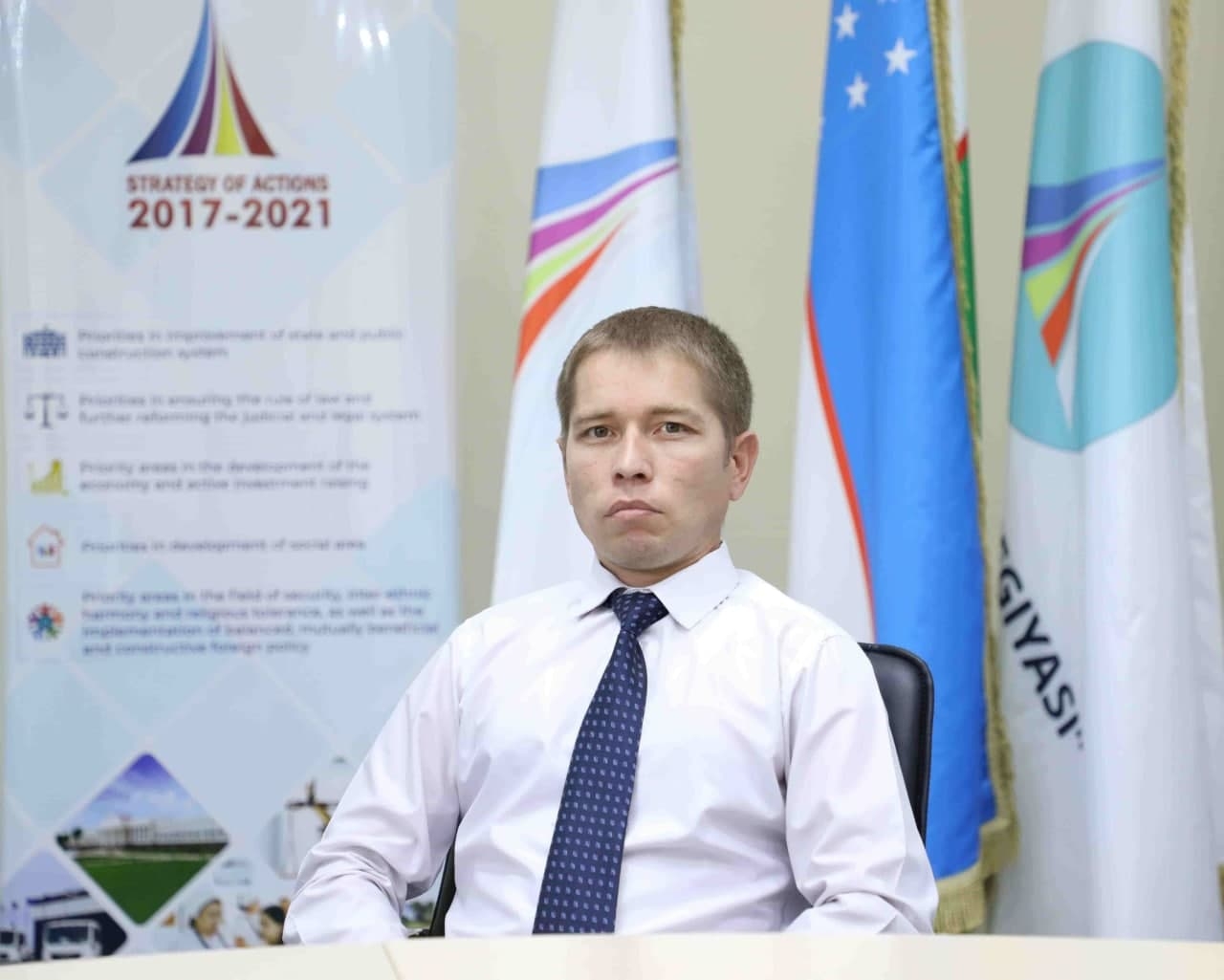
Ilkhom DJURAEV,
Development Strategy Centre
Chief specialist of the department of
State and society building
system improvement
It is well known that elections are the product of centuries of historical development of human society and are an institution that emerged in order to form improved models of state and society. To date, in almost all countries of the world (except those with absolute monarchy), democratic elections related to the formation of state power and self-government have become an integral part of the political system.
In particular, international experts also note that the elections, which are held on the basis of transparent and democratic principles, have recently become more popular. In particular, according to a special study by the International Foundation for Electoral Systems, in the 1950s there were about 200 elections to the highest authorities in the world, in the 1990s their number was 600, and in 2010s – their number was in average about 800.
In Uzbekistan elections are also an important part of the political system. During the years of independence, democratic elections in the country have become an important socio-political tradition. In particular, 5 presidential elections have been held since the independence of the Republic of Uzbekistan.
In particular, the first presidential elections were held on December 29, 1991, the number of voters was 9 million 900 thousand 958 people, while at the fifth presidential election on December 4, 2016 this number was 20 million 461 thousand 805 people.
At the same time, if initially at the first Presidential elections the People's Democratic Party of Uzbekistan and the Erk Democratic Party nominated candidates for the presidency in Uzbekistan, as a result of reforms in the political life of the country and the introduction of multi-party practices in the past years, the number of parties running in the presidential election this year has increased to five.
In particular, in accordance with Articles 14, 16 and 63 of the Electoral Code of the Republic of Uzbekistan, the documents submitted by the Ecological Party of Uzbekistan, People's Democratic Party of Uzbekistan, Movement of Entrepreneurs and Businessmen - Liberal Democratic Party of Uzbekistan, Democratic Party of Uzbekistan "Milliy Tiklanish" and Social Democratic Party of Uzbekistan "Adolat" for permission to participate in the elections of the President of the Republic of Uzbekistan were considered at the meeting of Central Election Commission of the Republic of Uzbekistan and decisions were made to allow these parties to participate in the October 24, 2021 elections of the President of the Republic of Uzbekistan.
Also, over the past five years, the life of our people, our country, our society and our national electoral legislation have undergone tremendous changes. In particular, the President of the Republic of Uzbekistan in his December 22, 2017 address to the Oliy Majlis, called for the improvement of electoral legislation and adoption of a comprehensive document that meets international norms and standards. In a short period of time, the Electoral Code was developed in our national legislation, which includes five legal documents related to elections.
The Electoral Code of the Republic of Uzbekistan, which came into force on June 26, 2019, is of great importance in the political history of our country and is the main document that combines the laws governing the organization and conduct of presidential, parliamentary and local elections.
In particular, the newly adopted Electoral Code reflects the recommendations of the OSCE Office for Democratic Institutions and Human Rights and the principles of universal suffrage, equal suffrage and the right to secret ballot. The Law of the Republic of Uzbekistan "On Amendments and Addenda to the Electoral Code of the Republic of Uzbekistan", signed on May 31, 2021, provides ample opportunities to guarantee the voting rights of citizens, ensure the rule of law in the election process and elections.
In other words, the reason for the change in the legislation is that the Presidential elections in Uzbekistan, scheduled for 2021, have been moved from December to October this year, and the voting time is set from 08.00 to 20.00. In the process of each amendment to the legislation, the wishes and suggestions of thousands of voters were taken into account. This has allowed our voters to overcome many of the negative issues they face, such as the problems they face in voting from 06.00 am on hot and cold winter days, as they used to do during the elections conducted in a traditional way.
In particular, paragraph 18 of the State Program, which is planned to be implemented in 2021 "Year of Youth Support and Health" in the framework of the Action Strategy, sets the task to define specific measures for the preparation and conduct of elections of the President of Uzbekistan at the highest level. In order to ensure the implementation of this item, on April 14, 2021, the Central Election Commission adopted a resolution "On approval of the Program of Main Measures for the preparation for the election of the President of the Republic of Uzbekistan."
This will ensure that in the Presidential elections held on the basis of the Electoral Code of the Republic of Uzbekistan the President of the Republic of Uzbekistan, i.e., the head of state, is elected on a periodic basis in accordance with the constitutional rules and international electoral standards.
At the same time, in order to determine specific measures for the preparation and conduct of elections of the President of the Republic of Uzbekistan at a high level, on June 7, 2021 there was adopted a joint resolution of the Council of the Legislative Chamber and the Senate "On the National Action Program to improve the electoral culture of the population". In this Joint Resolution, a "Road Map" consisting of 35 items in 5 directions has been developed. In particular, this roadmap sets out the exact timing of each task and the agencies responsible for it.
In particular, the resolution provides for the tasks aimed at increasing the activity of non-governmental organizations and other civil society institutions. From September 1, 2021 it foresees to hold a state grant competition "30 years of free elections" on projects of civil society institutions in the regions aimed at improving the electoral culture of citizens, to implement the social project "Road to the polling station" to promote the exercise of suffrage. From September 1, 2021, it is planned to hold a state grant competition on "30 years of free elections" on projects of civil society institutions in the regions aimed at improving the electoral culture of citizens, to implement the social project "Road to the polling station" to promote the exercise of suffrage of persons with disabilities.
In short, over the past period, Uzbekistan has created a system that fully reflects the electoral legislation and democratic principles for the conduct of elections. Many international organizations and observers, such as the OSCE Office for Democratic Institutions and Human Rights, have praised the presidential, parliamentary and local elections being conducted on the basis of these principles.
 English
 Русский
 О'zbek


