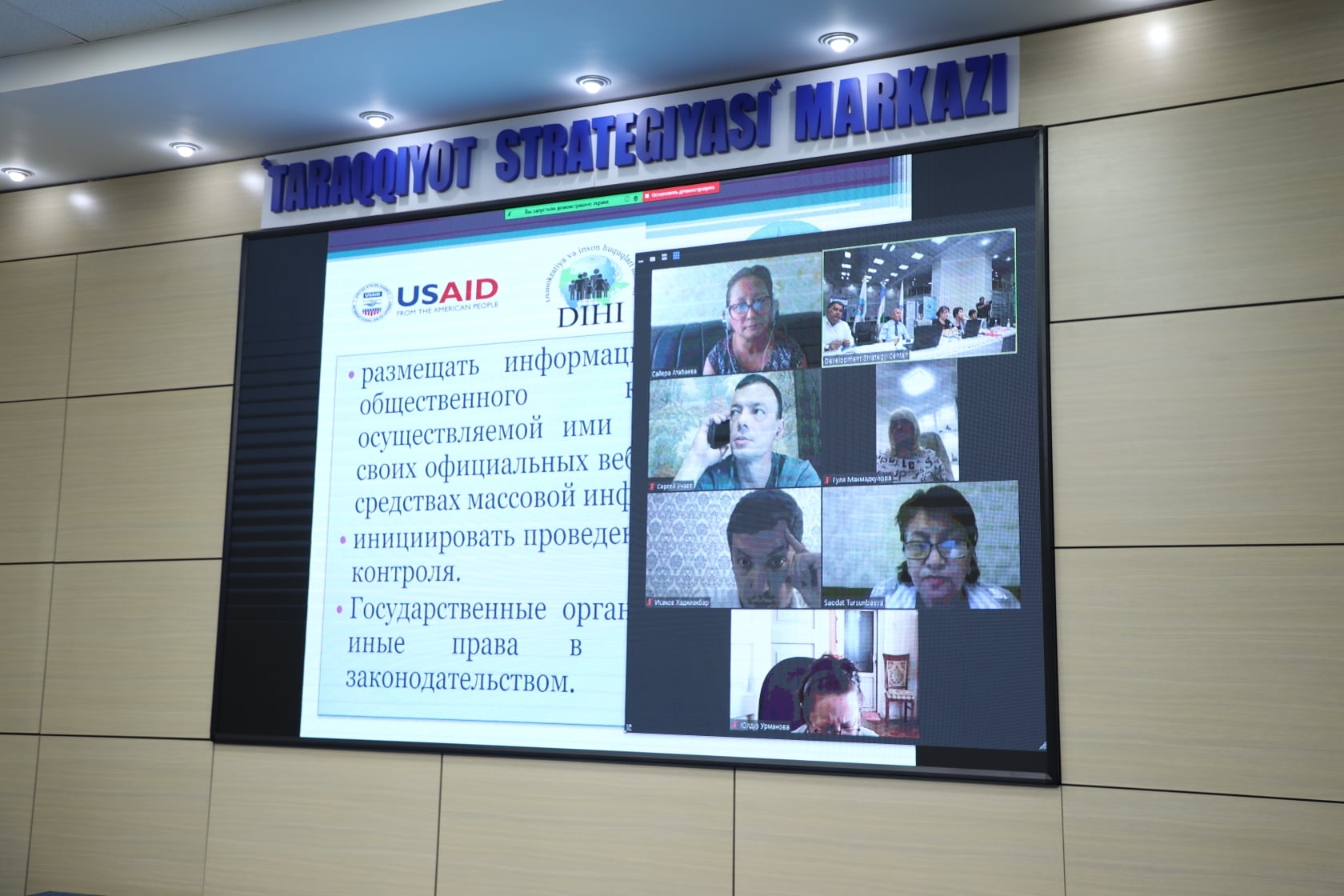
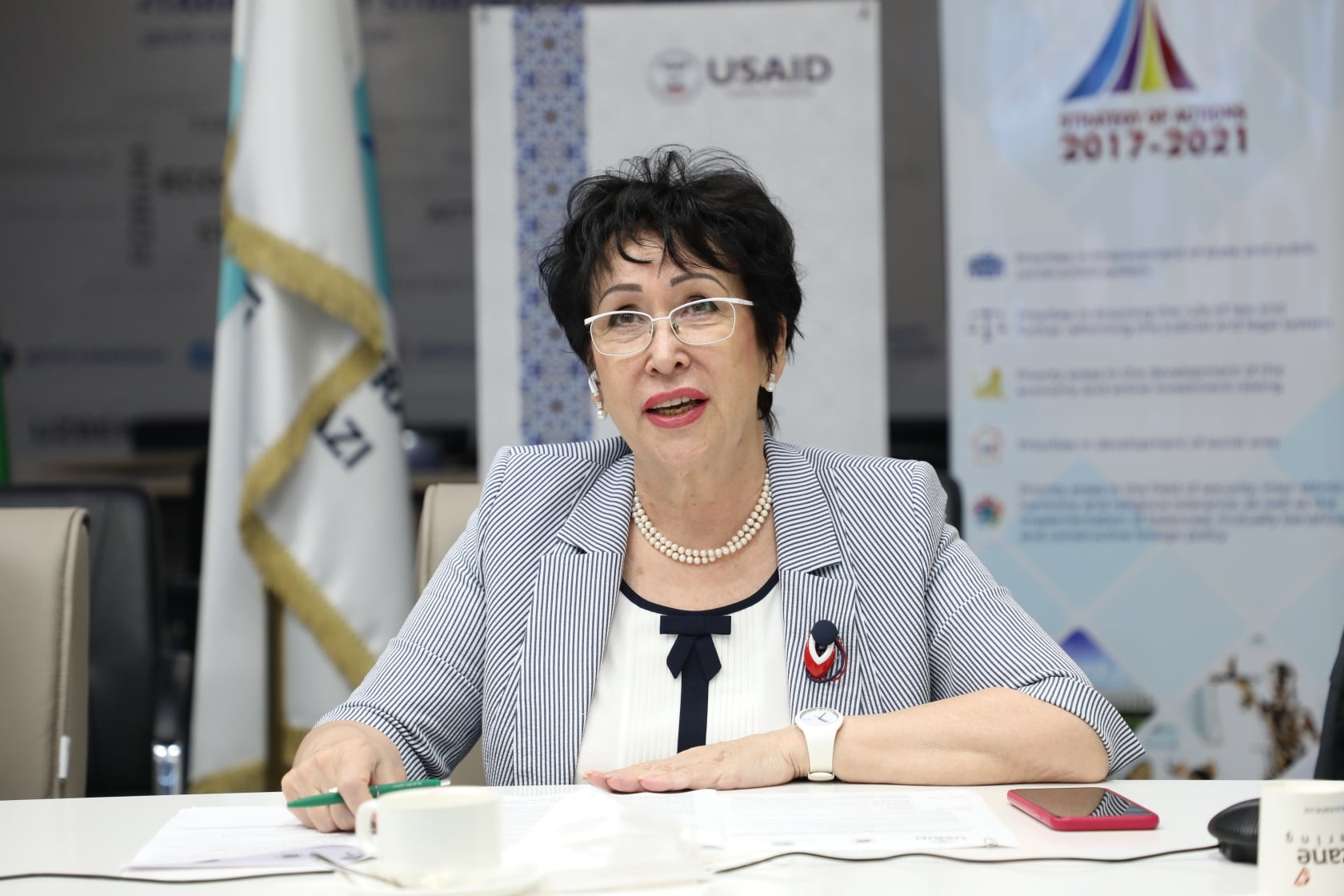
September 8-18, 2020, the Development Strategy Center, jointly with the Institute for Democracy and Human Rights, with the financial support of the USAID Judicial Reform in Uzbekistan Program, organized training workshops on ‘Cooperation between NGOs and Government Agencies in Public Oversight: Legal Aspects and Practical Mechanisms’. At the workshops, qualified experts introduced representatives of NGOs operating in the city of Tashkent, in Syrdarya, Jizak, Samarkand, Navoi, Bukhara, Kashkadarya, Surkhandarya, Khorezm, Tashkent regions, in the Republic of Karakalpakstan, to the essence, legal aspects and practical mechanisms for ensuring the implementation of the Law of the Republic of Uzbekistan ‘On Public Control’.
The document stipulates the entities, forms of public oversight, the rights and obligations of participants in public relations in this area, and also legally enshrines the results of public oversight. To date, Uzbekistan has built a legal framework for the implementation of public oversight, which is systematically streamlined.
Today, there are nearly a thousand NGOs in the republic, most of which have failed to find their place and role in the life of society, showing a completely unsatisfactory performance.
The main goal of the event is to raise the legal culture of NGOs and clarify the essence and meaning of the Law of the Republic of Uzbekistan ‘On Public Control’, as well as to interactively inform the participants about a comparative analysis of this law, foreign experience, the rights and obligations of state agencies and parties of public oversight, about control functions, basic principles and forms of public oversight.
Eldor TULYAKOV, Executive Director of the Development Strategy Center:
“Law is the major tool of public oversight. Civil society organizations monitor how state executive structures comply with laws. The conclusions of the public oversight contribute to a critical examination of performance of the executive branch, correction of shortcomings, and ensuring the principle of people’s power. Enhancing citizens’ engagement, increasing their belonging to social phenomena and a deep understanding of each public employee of being monitored by the public are critical to the process of building a civil society. That is, regular reporting by state agencies of their policies and actions is a requirement of the time.
We believe, there is a need to draw conclusions depending on the result, and not on the process of public oversight. Otherwise, public oversight puts the executive branch in an awkward position. Therefore, the public oversight should focus on the result, and not on the process.
Ultimately, the concepts of "state power" and "public oversight" complement each other. The unity of state power and social control prevents the despotism of the minority and the majority, preventing the alienation of the people from power, power from the people. Ensuring the harmonization of state power and public oversight serves the development of a democratic rule of law and civil society.”
At the workshop, the participants were introduced into a methodological guide on practical mechanisms for organizing public oversight and developed proposals on further improvement of legislation in accordance with the circumstances.
Information Service,
Development Strategy Center
 English
 Русский
 О'zbek


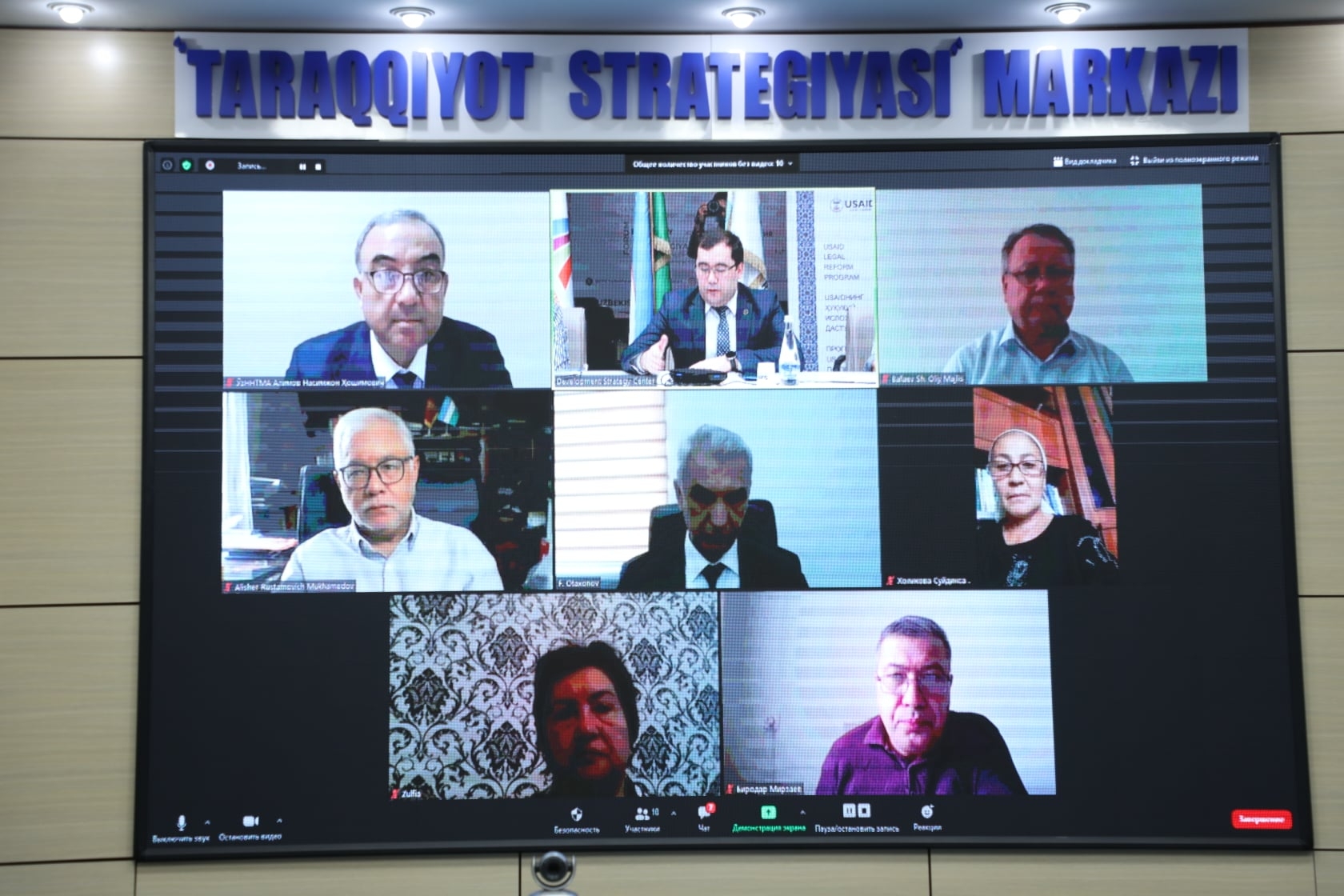
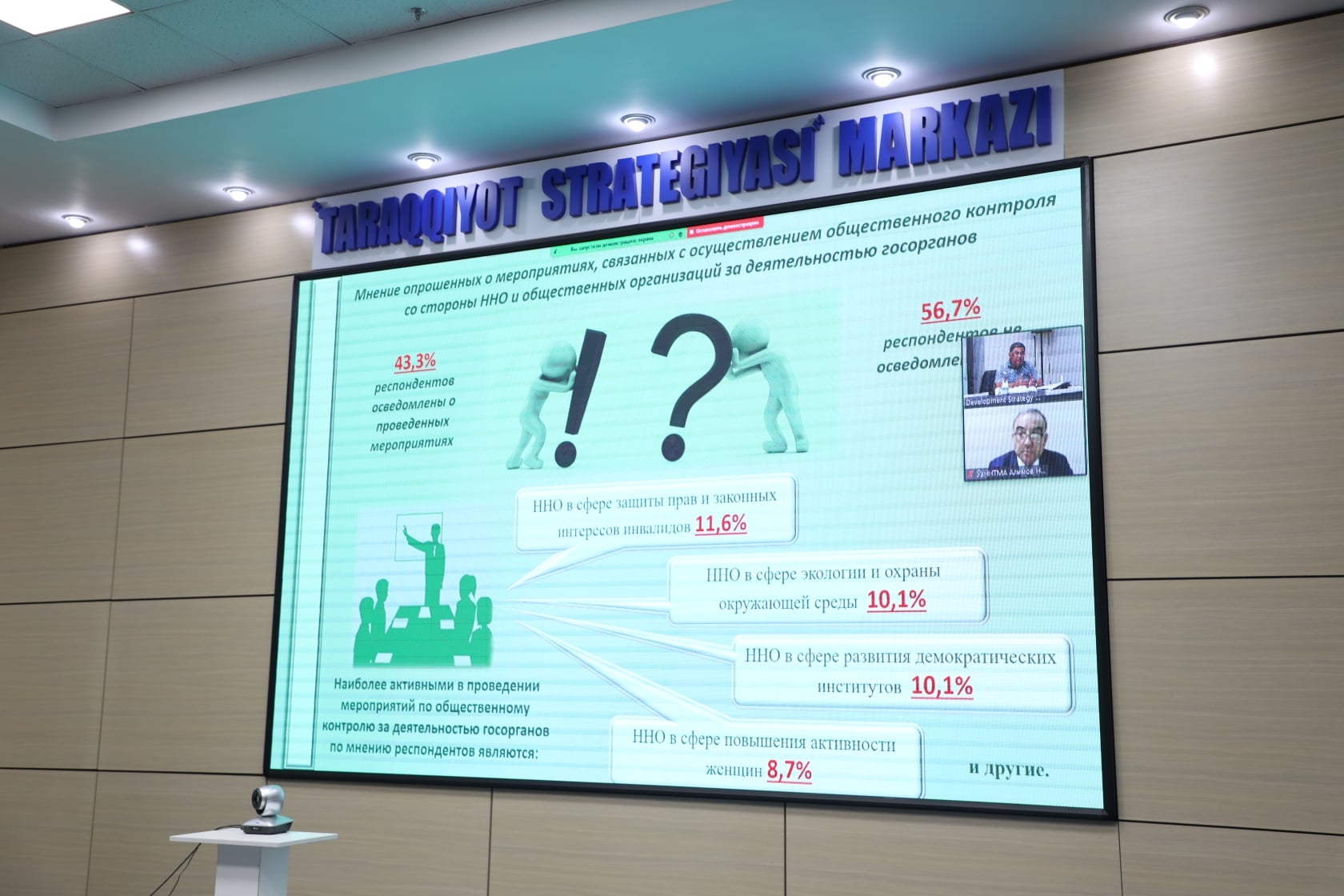
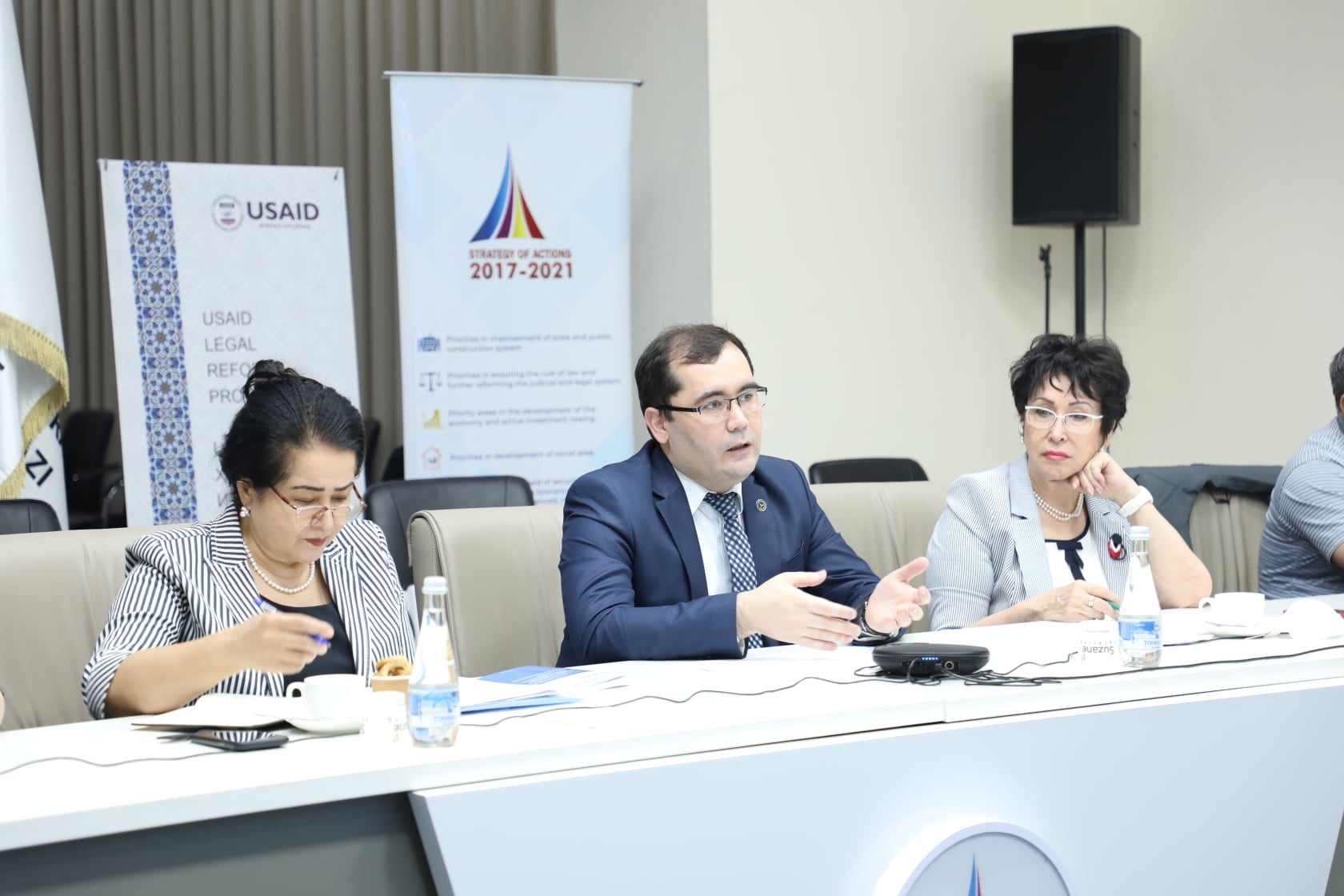
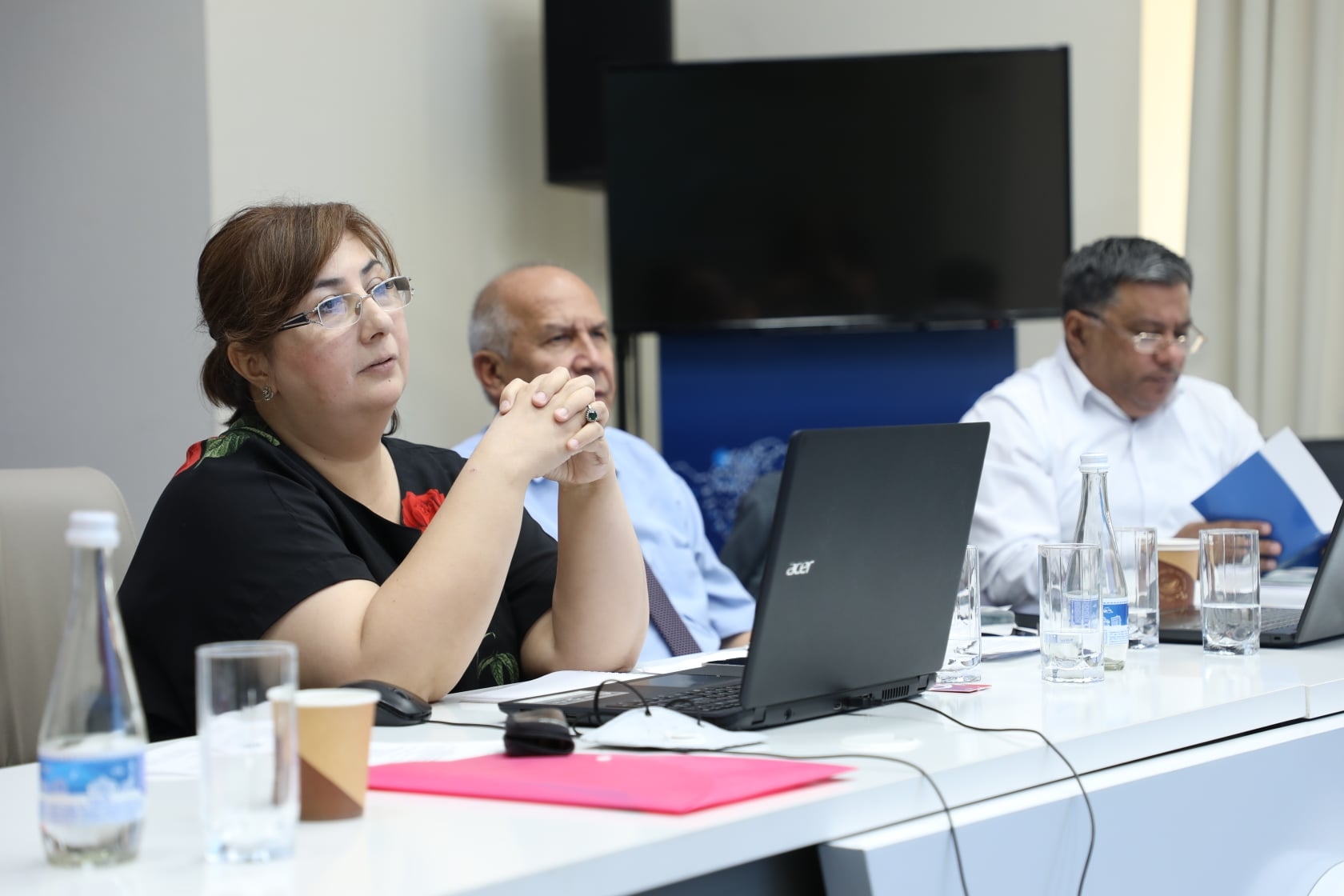
September 8-18, 2020, the Development Strategy Center, jointly with the Institute for Democracy and Human Rights, with the financial support of the USAID Judicial Reform in Uzbekistan Program, organized training workshops on ‘Cooperation between NGOs and Government Agencies in Public Oversight: Legal Aspects and Practical Mechanisms’. At the workshops, qualified experts introduced representatives of NGOs operating in the city of Tashkent, in Syrdarya, Jizak, Samarkand, Navoi, Bukhara, Kashkadarya, Surkhandarya, Khorezm, Tashkent regions, in the Republic of Karakalpakstan, to the essence, legal aspects and practical mechanisms for ensuring the implementation of the Law of the Republic of Uzbekistan ‘On Public Control’.
The document stipulates the entities, forms of public oversight, the rights and obligations of participants in public relations in this area, and also legally enshrines the results of public oversight. To date, Uzbekistan has built a legal framework for the implementation of public oversight, which is systematically streamlined.
Today, there are nearly a thousand NGOs in the republic, most of which have failed to find their place and role in the life of society, showing a completely unsatisfactory performance.
The main goal of the event is to raise the legal culture of NGOs and clarify the essence and meaning of the Law of the Republic of Uzbekistan ‘On Public Control’, as well as to interactively inform the participants about a comparative analysis of this law, foreign experience, the rights and obligations of state agencies and parties of public oversight, about control functions, basic principles and forms of public oversight.
Eldor TULYAKOV, Executive Director of the Development Strategy Center:
“Law is the major tool of public oversight. Civil society organizations monitor how state executive structures comply with laws. The conclusions of the public oversight contribute to a critical examination of performance of the executive branch, correction of shortcomings, and ensuring the principle of people’s power. Enhancing citizens’ engagement, increasing their belonging to social phenomena and a deep understanding of each public employee of being monitored by the public are critical to the process of building a civil society. That is, regular reporting by state agencies of their policies and actions is a requirement of the time.
We believe, there is a need to draw conclusions depending on the result, and not on the process of public oversight. Otherwise, public oversight puts the executive branch in an awkward position. Therefore, the public oversight should focus on the result, and not on the process.
Ultimately, the concepts of "state power" and "public oversight" complement each other. The unity of state power and social control prevents the despotism of the minority and the majority, preventing the alienation of the people from power, power from the people. Ensuring the harmonization of state power and public oversight serves the development of a democratic rule of law and civil society.”
At the workshop, the participants were introduced into a methodological guide on practical mechanisms for organizing public oversight and developed proposals on further improvement of legislation in accordance with the circumstances.
Information Service,
Development Strategy Center