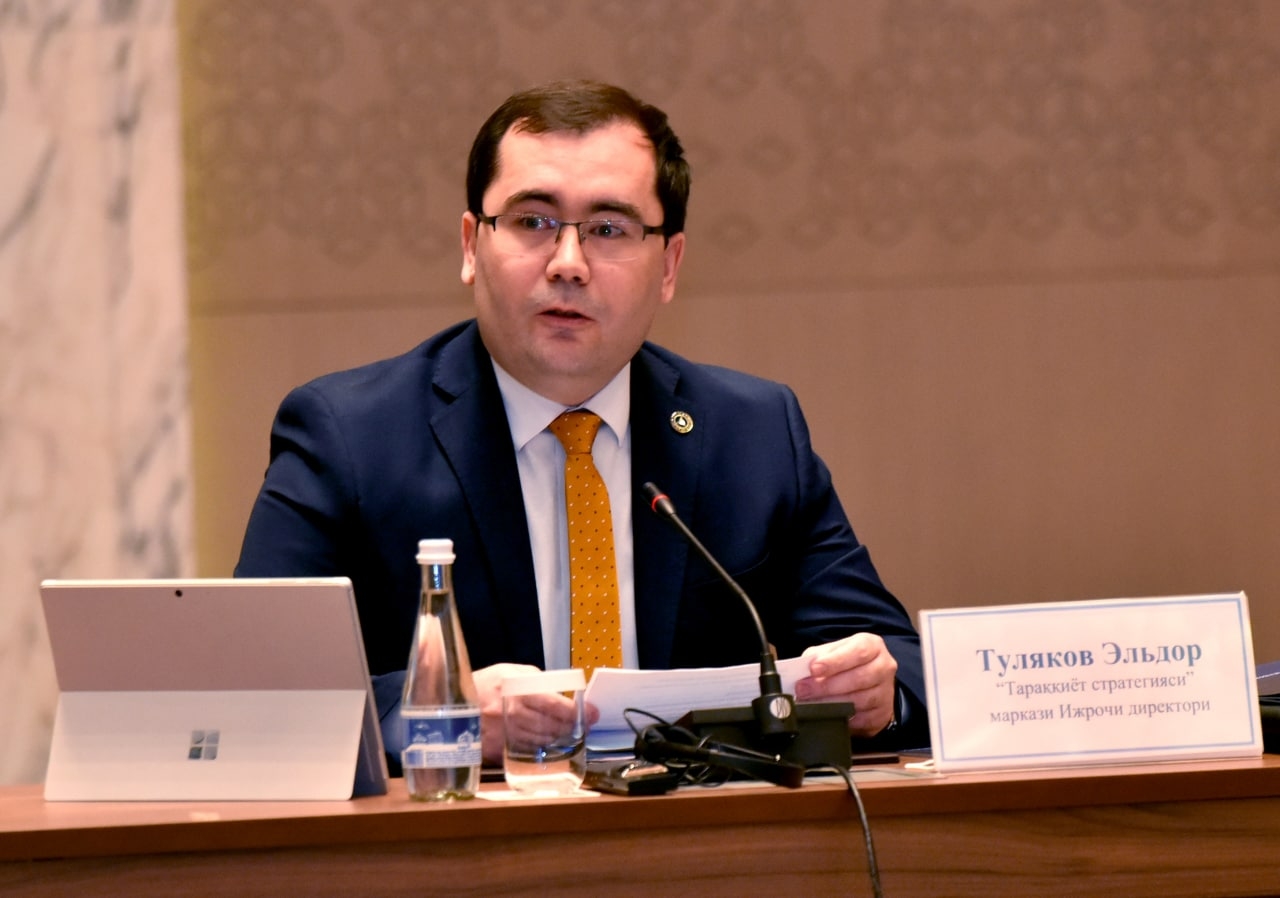
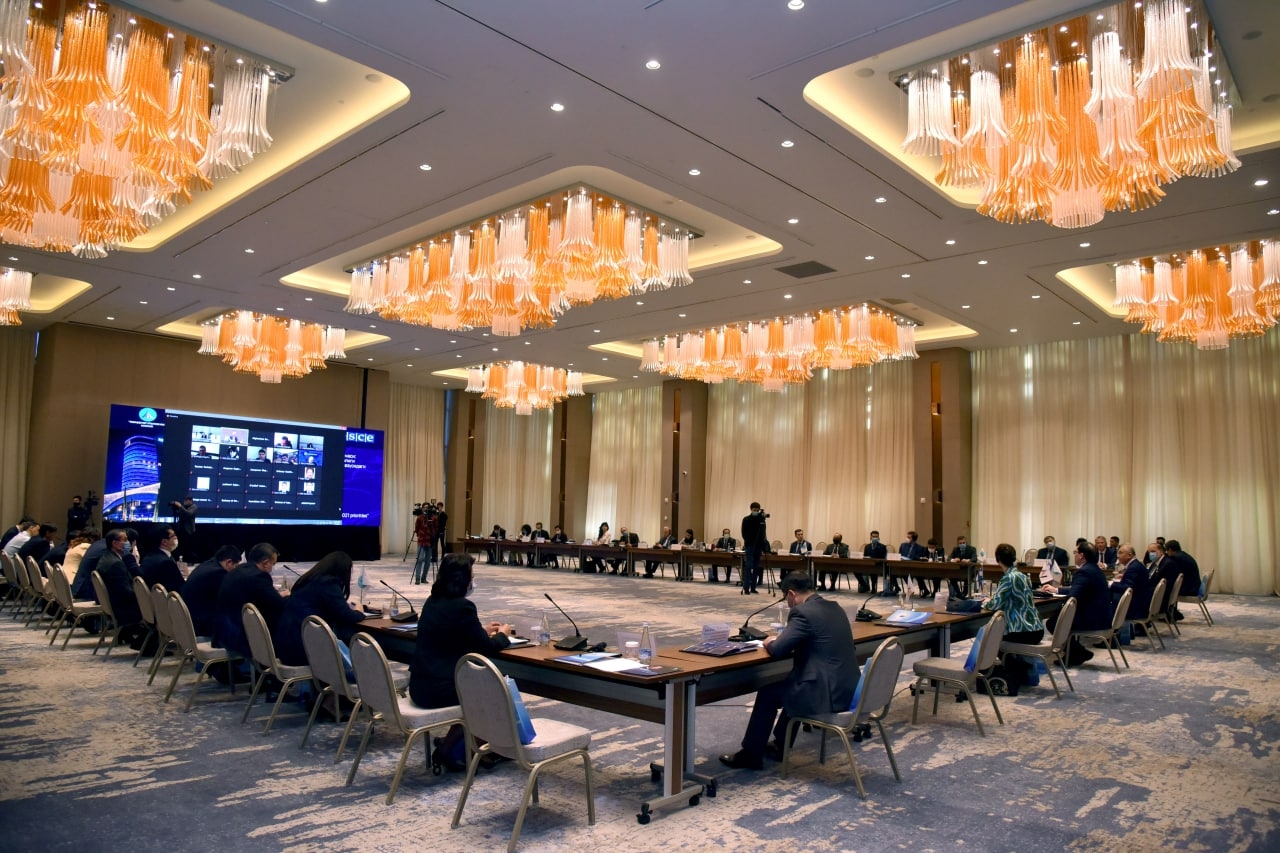
On February 5, at the initiative of the Development Strategy Center, in partnership with the Legislative Chamber of the Oliy Majlis, the Ministry of Justice, the United Nations and the World Bank in Uzbekistan, the OSCE Project Coordinator in Uzbekistan there was held an international forum on the topic «Address of the President of the Republic of Uzbekistan: four-year effectiveness of the Action Strategy and priorities for 2021».
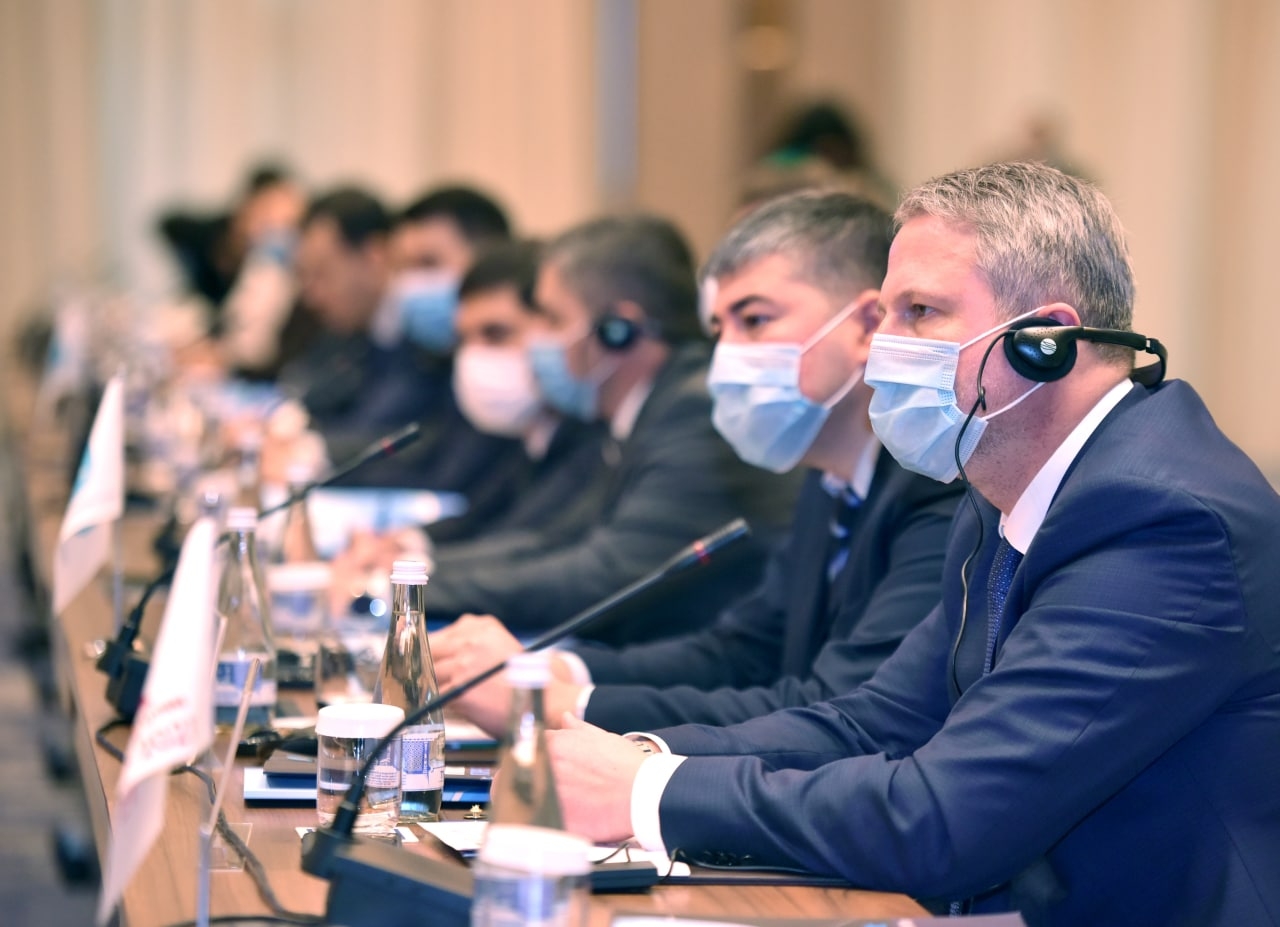
The prestigious forum was attended by representatives of government agencies, NGOs, civil society institutions, international organizations, foreign ambassadors, experts, specialists, local and foreign media.
The forum was opened and moderated by Eldor Tulyakov, Executive Director of the Development Strategy Center. In his speech, he noted that the fact, that even during the pandemic, being a test for the world community, Uzbekistan is developing rapidly, achieving stable economic growth and, most importantly, is recognized by the international community as a country whose welfare is improving as a result of a number of vital initiatives to ensure social protection.
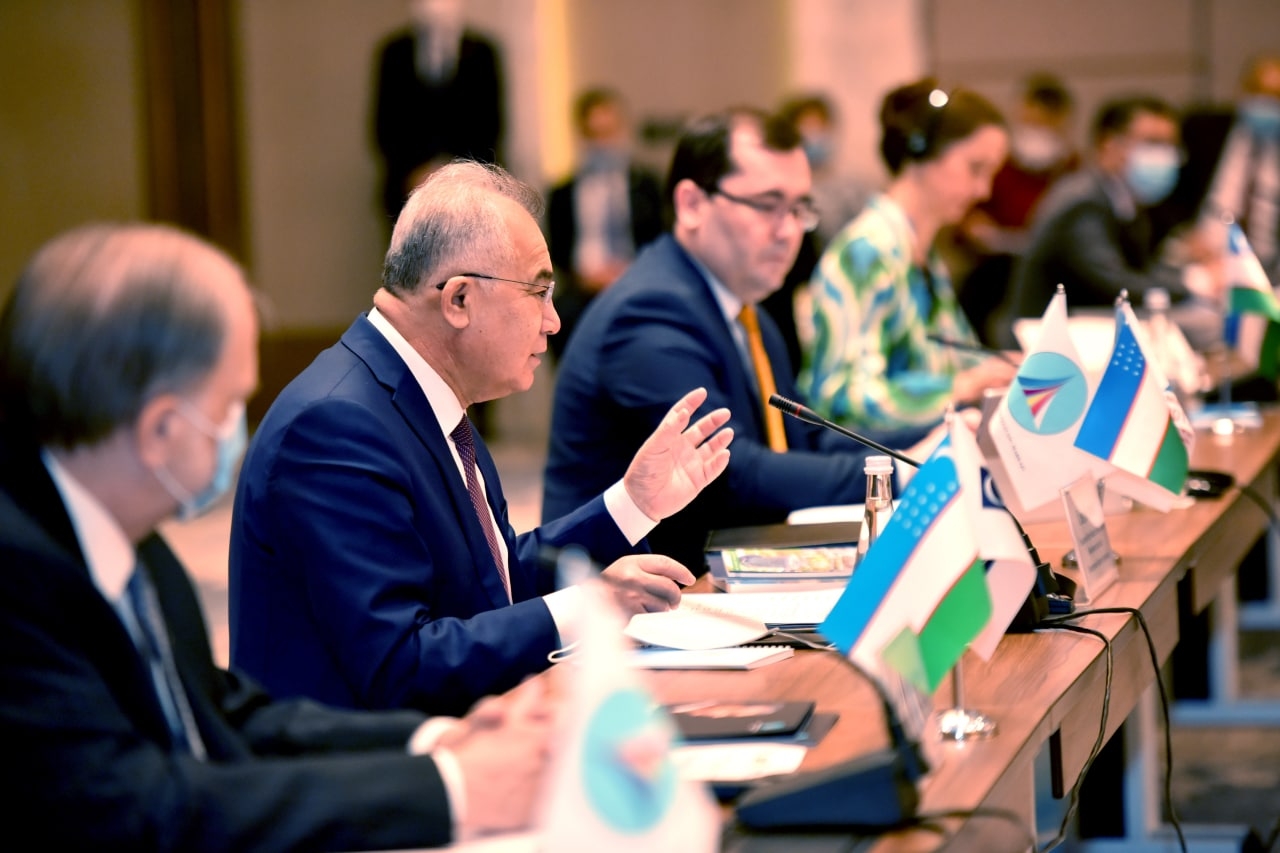
Akmal Saidov, First Deputy Speaker of the Legislative Chamber of the Oliy Majlis, Director of the National Center for Human Rights of the Republic of Uzbekistan, highlighted the priorities of the President's Address, and inter alia, stressed the following:
- As a representative of the Parliament, I believe that special attention should be paid to the following issues facing our deputies and identified in the Address, which literally have a real historical significance. The state and prospects of radical democratic reforms aimed at raising the country's development to a qualitatively new level and building a new Uzbekistan, creating a solid foundation for the Third Renaissance, launched within the Action Strategy, adopted 4 years ago as a priority policy document for sustainable development of society and the state. goals and objectives were analyzed in depth.
In 2020, for the first time in the history of Uzbekistan, it was elected a member of the UN Human Rights Council. The US State Department has removed Uzbekistan from the list of "countries under special surveillance" in the field of religious freedom. The global and regional initiatives put forward by our President from the rostrum of the 75th session of the UN General Assembly have been received with great interest and supported by the world community.
The Address provides specific initiatives and proposals to improve the unique mechanism of human rights protection. At the same time, the UN-sponsored Global Forum on Human Rights Education, the World Youth Conference on Youth Rights, and regional conferences on religious freedom are scheduled to take place.
In his report, Deputy Minister of Justice Akbar Tashkulov noted that over the past four years, on the basis of the Action Strategy and State Programs under it, important steps have been taken to improve the system of state and society building. In particular, the role of the Parliament and local authorities in the organization of public administration has significantly increased, and the process of transforming the executive branch is in full swing.
In particular, a completely new and efficient system of public services has been introduced. That is, the Agency for Public Services was established under the Ministry of Justice. The organization currently provides 150 types of public services to the population and businesses.
At the same time, the Civil Service Development Agency under the President was established in order to create a professional corps of civil servants and introduce transparent recruitment mechanisms.
In addition, in order to establish effective dialogue between the state and society, to quickly study and solve problems in the daily lives of the population, institutes were established to work directly with citizens and businesses, such as the President's Virtual and People's Receptions, the Prime Minister's Reception.
In order to free public administration from bureaucracy and reduce its costs, increase the efficiency and transparency of the management decision-making system, 11 separate functions and powers of local executive bodies were transferred to the territorial subdivisions of relevant public administration bodies. The practice of requiring 28 types of certificates from citizens has been abolished by government agencies and organizations.
In her report, Gulruh Agzamova, a deputy of the Legislative Chamber of the Oliy Majlis, drew attention to the effectiveness of parliamentary reforms over the past four years. In particular, the role of parliament and political parties has been strengthened. The role and place of the deputies in the life of the society has been strengthened, and the practice of deputies and senators not only reviewing the introduced bills, but also visiting the constituency directly in the first ten days of each month to get acquainted with the living standards of the people, systematically analyze and solve problems. In the Legislative Chamber, the procedure for public discussion of draft laws has been introduced, the practice of systematization of the legal framework, the adoption of directly applicable laws has begun.
Parliamentary oversight has emerged as the most important institution that increases the accountability of public authorities for the performance of their functions. As a result, more than 100 parliamentary hearings have been held over the past four years. Parliamentary and parliamentary inquiries have become an effective tool for ensuring the implementation of laws and decisions, as well as the effectiveness of reforms.
It was noted at the event that the role of Parliament and political parties has been strengthened over the past four years. In addition, there have been adopted a procedure, by which deputies and senators not only review the introduced bills, but also go directly to their constituencies in the first ten days of each month to get acquainted with the living standards of the people, to participate in the systematic analysis and solution of problems. In the work of the Parliament, the practice of "Government Hour" and "Parliamentary Hearing" was established, and anti-corruption committees were established in both chambers.
Judge of the Supreme Court - Deputy Chairman of the Judicial Board for Economic Affairs Qobiljon Komilov noted that the Action Strategy is aimed at improving the judiciary in the context of ensuring the rule of law and further reform of the judicial system, including the resolution of unresolved issues in the field. Three codes aimed at improving the quality and efficiency of the judiciary were re-adopted, amendments and additions were made to a number of laws, more than a dozen Presidential decrees and resolutions, as well as more than 40 laws, decrees and resolutions on priority issues in this area.
In particular, the Supreme Council of Judges of the Republic of Uzbekistan was established to promote the observance of the constitutional principle of independence of the judiciary. In order to eliminate duplication in the management of the judicial system and to form a single judicial practice, the Supreme Court of the Republic of Uzbekistan and the Supreme Economic Court were merged to form the Supreme Court of the Republic of Uzbekistan.
For the first time in the history of the country, administrative courts were established to ensure the exercise of the constitutional right to appeal against the illegal actions of state bodies and their officials. The institute of returning a criminal case for additional investigation was abolished, and the institute of evidence evaluation was improved. This, in turn, led to an increase in acquittals with all aspects of the case being thoroughly investigated by the court and an objective assessment of the evidence.
It is noteworthy that in the past four years, 2,770 citizens were acquitted, 2,687 people were released from the courtroom, and the baseless charges against 5,225 citizens were dropped.
In recent years, the opportunities of digital technologies are widely used in the activities of the courts. For example, the exchange of information and proceedings between courts has been computerized, the practice of automatic distribution of cases among judges, video conferencing, publication of court decisions on the Internet, electronic submission of enforcement documents for enforcement. A single electronic payment system for keeping records of state duties and other fees, as well as a portal of interactive services for individuals and legal entities have been launched. These facilities have allowed citizens and businesses to liberalize access to justice to protect their rights and interests, to achieve justice in general, and to ensure openness and transparency in the work of the courts. In particular, over the past four years, more than 24,000 court hearings were held by videoconference, saving time and money for more than 52,000 parties.
In order to ensure full human rights, amendments and additions have been made to the Administrative Liability Code, the Administrative Procedure Code, the Criminal Procedure Code, the Economic Procedure Code and the Civil Procedure Code to improve the institution of judicial review.
As a result, the principle of "one court - one instance" was created, which solved the problems that have accumulated over the years in the system of review of court decisions. This principle laid the foundation for a radical improvement of this system. Duplicate trials have been shortened. A three-tier judicial system has been established in accordance with international standards.
Deputy Minister of Finance Odilbek Isoqov, who took a floor on the forum, spoke about the results of comprehensive measures being taken in the last four years on priorities of economic development and attraction of foreign investments to liberalize the foreign exchange market, paid special attention to the results of comprehensive measures aimed at liberalizing the foreign exchange market, which have been implemented since 2017. In particular, the free exchange of the national currency - the soum, the right of businesses to freely dispose of their foreign exchange resources and the abolition of their obligations to sell foreign exchange earnings, free purchase of foreign currency for imports of products for legal entities and creation of opportunity for foreign investors to freely export their profit was an important factor in ensuring the stability of the economy.
In turn, significant work has been done in the areas of reduction of state participation in the economy, increasing the role and importance of the private sector in the economy, a complete change in state property management, benefits and preferences for investment and job creation in business entities, creation of wide opportunities and legal guarantees for attracting foreign investments, reforming the state budget and ensuring transparency, to strengthening the budget execution discipline, reducing the shadow economy, and transforming the enterprises with a state share.
Deputy Minister of Economic Development and Poverty Reduction Bobur Abdinazarov said in his speech about increasing incomes, reducing poverty, investing in businesses and creating new jobs, maintaining the external debt burden at an acceptable level, training young people and women in professional and entrepreneurial skills, improving the competitive environment, liberalizing markets, ensuring price stability, privatization of large state-owned enterprises, in general, about the effectiveness of measures taken to achieve rapid economic development through high and sustainable economic growth.
At the international forum, officials of the Ministries of Employment and Labor Relations, Health, Higher and Secondary Special Education also took a floor and spoke in detail about the results achieved over the past four years in the priorities of the development of the social sphere. In particular, as a result of reforms in the field of education, the coverage by the preschool education has reached almost 61%. Today, 4 Presidential schools of and 9 creativity schools as well as 3 schools specializing in computer science and mathematics, physics and astronomy, chemistry and biology have been launched.
In 2016, there were 77 higher education institutions in Uzbekistan, and today their number has reached 132. It is noteworthy that most of the newly established higher education institutions were established in regional and remote district centers due to the social status of young people and the population. Part-time education was introduced in 71 higher education institutions, and evening education in 18.
As a result of reforms in the field, the number of professors and teachers has increased from 24,386 to 29,998 in four years. The coverage of young people with higher education has increased from 9% to 25%, the admission parameters of higher education from 58,022 to 148,114.
Consistent efforts have also been made to ensure employment and full protection of labor rights. In 2016, branches of the Agency for External Labor Migration were established in five regions of the country, and today they operate in all 14 regions of the country. To ensure the full rights of migrant workers, 29 representative offices have been established in foreign countries.
Also, taking into account the pandemic and modern requirements for workers and employers, the current "Labor Code" was developed in a new edition at the end of 2020.
Representatives of the Ministry of Foreign Affairs, Committee on International Relations and Friendship with Foreign Countries under the Cabinet of Ministers took a floor and spoke on the ongoing reforms in the areas of security, interethnic harmony and religious tolerance, as well as the implementation of well-thought-out, mutually beneficial and practical foreign policy, drew attention to the point that in the recent years, Uzbekistan's active efforts in the field of foreign policy and security have attracted the attention of the world community.
As a result of the reforms in this area Uzbekistan has widened its opportunities to express its position in the international arena. On December 12, 2018, at the initiative of Uzbekistan, a special resolution of the UN General Assembly "Enlightenment and religious tolerance" was adopted.
The Forum on Human Rights "Youth 2020: Global Solidarity, Sustainable Development and Human Rights", held in Samarkand on August 12-13, 2020, is a vivid example of the state youth policy in Uzbekistan.
A new page has been opened in Uzbekistan's cooperation with international organizations in the field of human rights. For the first time, Uzbekistan was elected a member of the UN Human Rights Council. An active policy has been pursued in relations with the Central Asian countries, which is a key priority of Uzbekistan's foreign policy. As a result, a comfortable communication environment was created. More than 600 high-level and interdepartmental visits, meetings and online dialogues were organized in this regard.
Uzbekistan has signed 32 bilateral documents at various events and through diplomatic channels. In particular, agreements on financial and technical cooperation (grants, soft loans) were signed with Germany, Switzerland, the European Union and India.
The Republic of Uzbekistan actively cooperates with regional organizations such as the Commonwealth of Independent States (CIS) and Central Asian states, as well as the CIS, the Shanghai Cooperation Organization (SCO), the Cooperation Council of Turkic Speaking States (Turkic Council) and the Conference on Confidence-Building Measures in Asia.
At the same time, Uzbekistan has acceded to 6 universal and 5 regional multilateral international agreements. Consistent efforts have been made to sign an expanded partnership and cooperation agreement with the European Union, to become a member of the World Trade Organization, and to achieve EU GSP + beneficiary status.
At the international conference, there have been summarized the results of the reforms implemented over the past four years, as well as the measures set for 2021.
It has been recognized, that the priorities, like supporting youth, strengthening public health, further developing entrepreneurship and mitigating the impact of the pandemic on the economy, recorded amongst priority tasks in the Address of the President of Uzbekistan to the Parliament on December 29, 2020 are expressed in the State Program “2021 - the Year of Youth Support and Public Health”, adopted yesterday.
The representatives of international organizations participated at the Forum - Helena Fraser, UN Resident Coordinator in Uzbekistan, John McGregor, OSCE Project Coordinator in Uzbekistan, Marco Mantovanelli, Head of the World Bank Country Office in Uzbekistan, and others noted in their speeches, that the proposals and initiatives put forward in the appeal are in line with modern international principles.
The participants of the international forum noted that the “Strategy of Action” is an important national strategic document for Uzbekistan in the near future to implement the five most important priorities of political, legal, economic and social reforms in a complex situation of globalization. It was noted that this document plays a key role in improving the state and society building in the country, enhancing the image of Uzbekistan in the international arena, ensuring and protecting human rights and interests, and most importantly, pleasing the people and ensuring the well-being of the population.
The international forum, which was held in an open and constructive spirit, was followed by lively discussions after each presentation. During the conference, foreign and local experts also shared their views.
Information Service of the
“Development Strategy” Center.
 English
 Русский
 О'zbek


