On February 23, the Second Uzbek-Indian Think-Tanks Forum was held in the form of a video conference.
It was attended by representatives of the Ministry of Foreign Affairs of the Republic of Uzbekistan and Ministry of External Affairs, India, the Embassy of Uzbekistan in India, the Embassy of India in Uzbekistan, the analytical centers of both countries and well-known experts.
The forum was opened by First Deputy Foreign Minister of the Republic of Uzbekistan Farhod Arziev, who noted the centuries-old cultural, trade and economic ties between the two peoples, the creation of a solid legal framework for relations between Uzbekistan and India, and on this basis, there is further expanding mutually beneficial cooperation in political, economic, cultural and humanitarian spheres.
In turn, the Secretary (West), Ministry of External Affairs of State of India, Ambassador Vikas Swarup, noted the similarity of the two countries' approaches to key regional and global issues, the high level of Uzbek-Indian relations and the huge potential for deepening and expanding mutually beneficial ties. He noted that these events will play a special role in exchanging experiences and expanding cooperation.
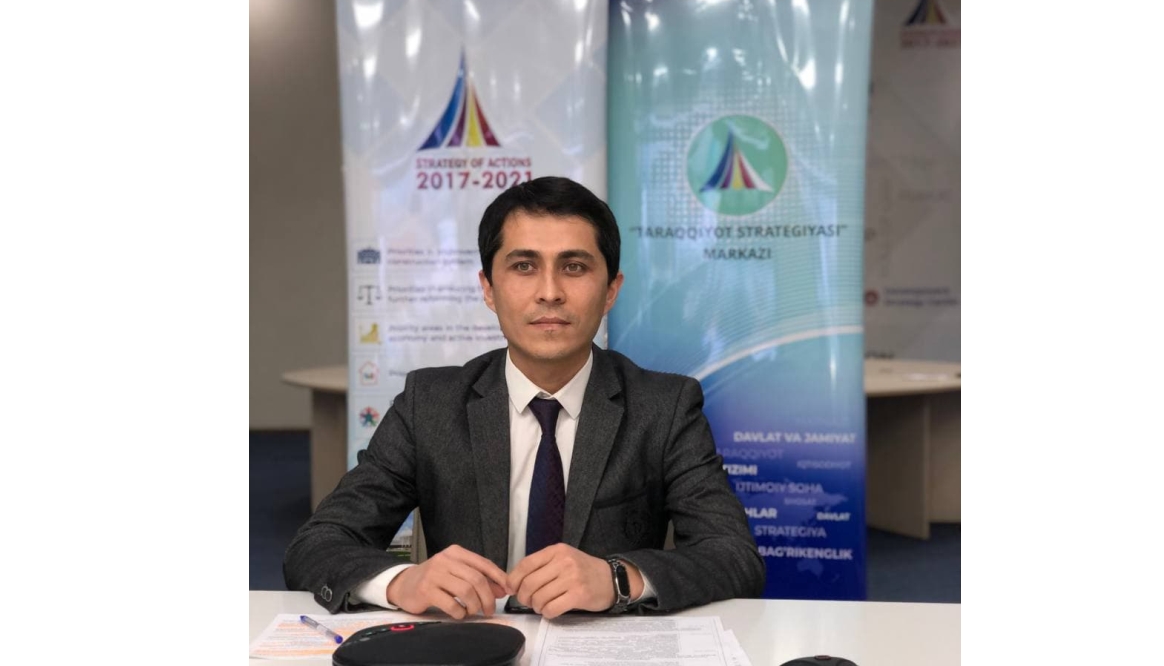
Farrukh Khakimov, Head of Department at the Development Strategy Center, also spoke at the forum. He informed about the reforms implemented in Uzbekistan over the past four years in the framework of the Action Strategy, the results achieved in various fields. Mr. Khakimov noted that annual State Programs that are endorsed under the Action Strategy are of high importance for improving the legal framework for international cooperation and strengthening regulatory framework for foreign economic activities, which plays important role in strengthening cooperation with other countries, including India.
The event also provided information on the cooperation between the “Development Strategy” Center and Indian think-tanks, and discussed issues of further intensification of collaboration, exchange of experiences and joint implementation of research projects.
“Development Strategy” Center
Information service
 English
 Русский
 О'zbek


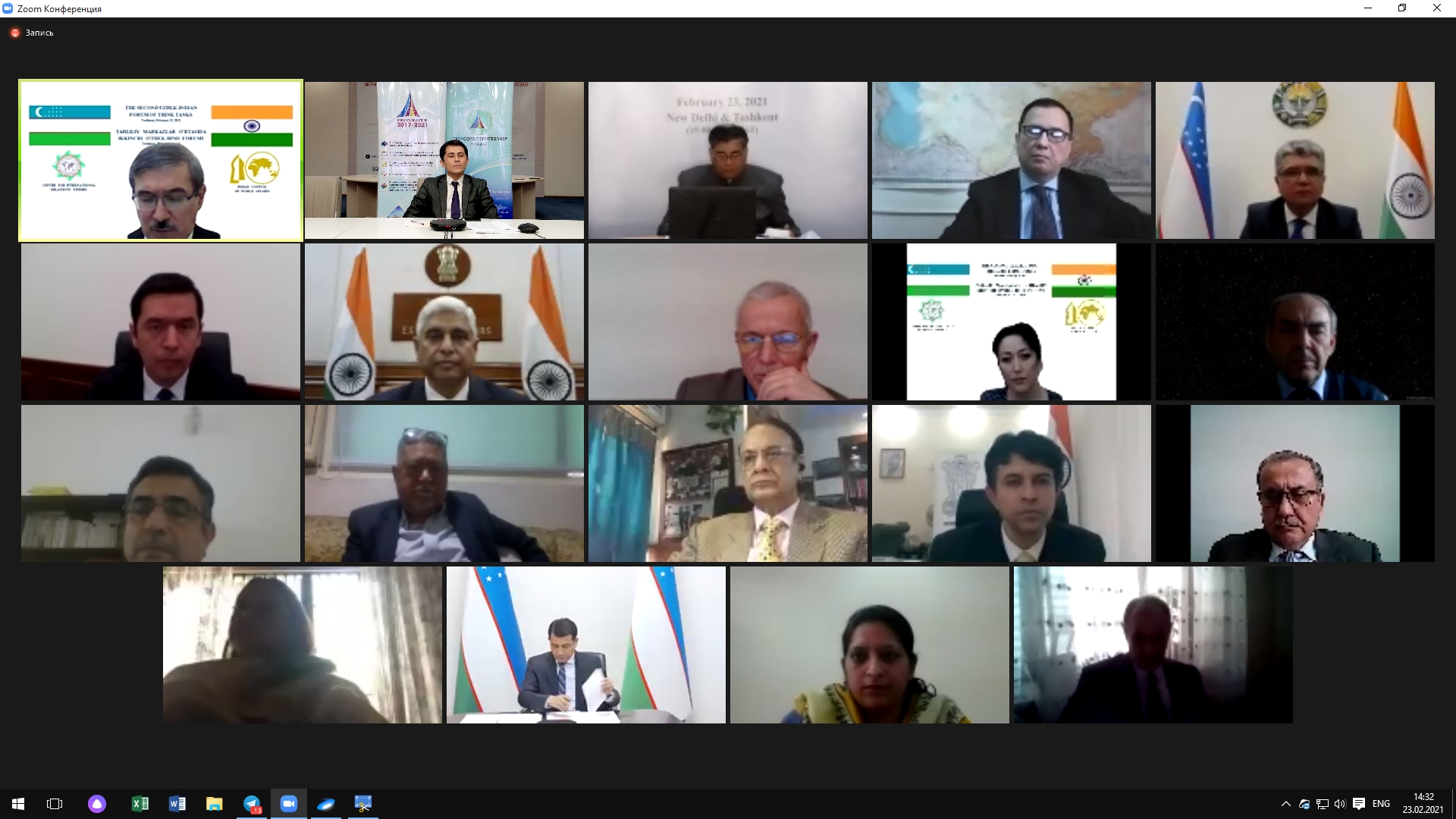
On February 23, the Second Uzbek-Indian Think-Tanks Forum was held in the form of a video conference.
It was attended by representatives of the Ministry of Foreign Affairs of the Republic of Uzbekistan and Ministry of External Affairs, India, the Embassy of Uzbekistan in India, the Embassy of India in Uzbekistan, the analytical centers of both countries and well-known experts.
The forum was opened by First Deputy Foreign Minister of the Republic of Uzbekistan Farhod Arziev, who noted the centuries-old cultural, trade and economic ties between the two peoples, the creation of a solid legal framework for relations between Uzbekistan and India, and on this basis, there is further expanding mutually beneficial cooperation in political, economic, cultural and humanitarian spheres.
In turn, the Secretary (West), Ministry of External Affairs of State of India, Ambassador Vikas Swarup, noted the similarity of the two countries' approaches to key regional and global issues, the high level of Uzbek-Indian relations and the huge potential for deepening and expanding mutually beneficial ties. He noted that these events will play a special role in exchanging experiences and expanding cooperation.
Farrukh Khakimov, Head of Department at the Development Strategy Center, also spoke at the forum. He informed about the reforms implemented in Uzbekistan over the past four years in the framework of the Action Strategy, the results achieved in various fields. Mr. Khakimov noted that annual State Programs that are endorsed under the Action Strategy are of high importance for improving the legal framework for international cooperation and strengthening regulatory framework for foreign economic activities, which plays important role in strengthening cooperation with other countries, including India.
The event also provided information on the cooperation between the “Development Strategy” Center and Indian think-tanks, and discussed issues of further intensification of collaboration, exchange of experiences and joint implementation of research projects.
“Development Strategy” Center
Information service