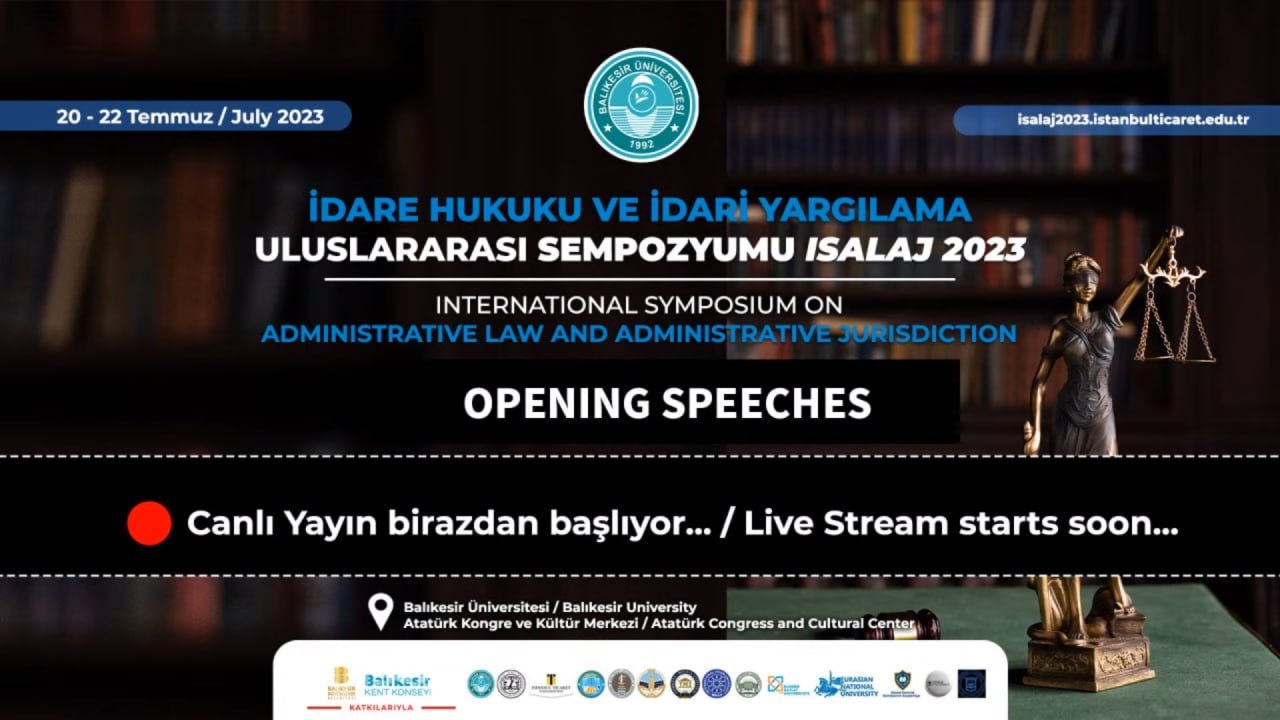
On July 20-22, 2023 in Balıkesir, Turkey, the Third International Symposium on Administrative Law and Administrative Jurisdiction on the topic “Protection of Cultural and Historical Monuments” began its work.
The international symposium, which takes place both online and offline, was organized with the support of a number of international higher education institutions, such as Balikesir University, the Centre for Administrative Law, Science and Applied Research at the Faculty of Law of Istanbul University, Istanbul Commercial University, Tashkent Financial Institute and Tashkent University of Economics, Faculty of Law of Baku State University, Academy of the State Customs Committee of Azerbaijan, Eurasian National University named after L.N. Gumilyov, Al-Farabi Kazakh National University.
The main goal of the international symposium is to create a space for scientific discussions and exchange of information about new developments in the field of administrative law and administrative jurisdiction.
The symposium is attended by staff scientists and researchers with experience in the field of administrative law and administrative jurisdiction, as well as practitioners.
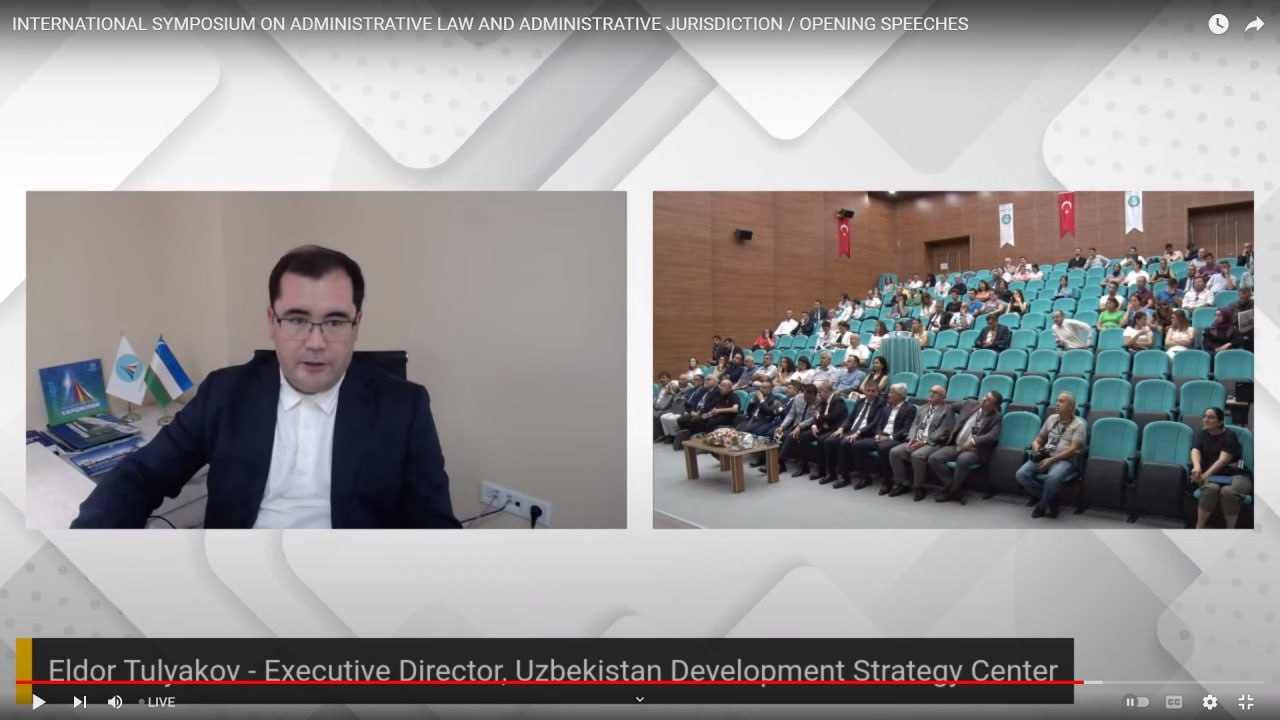
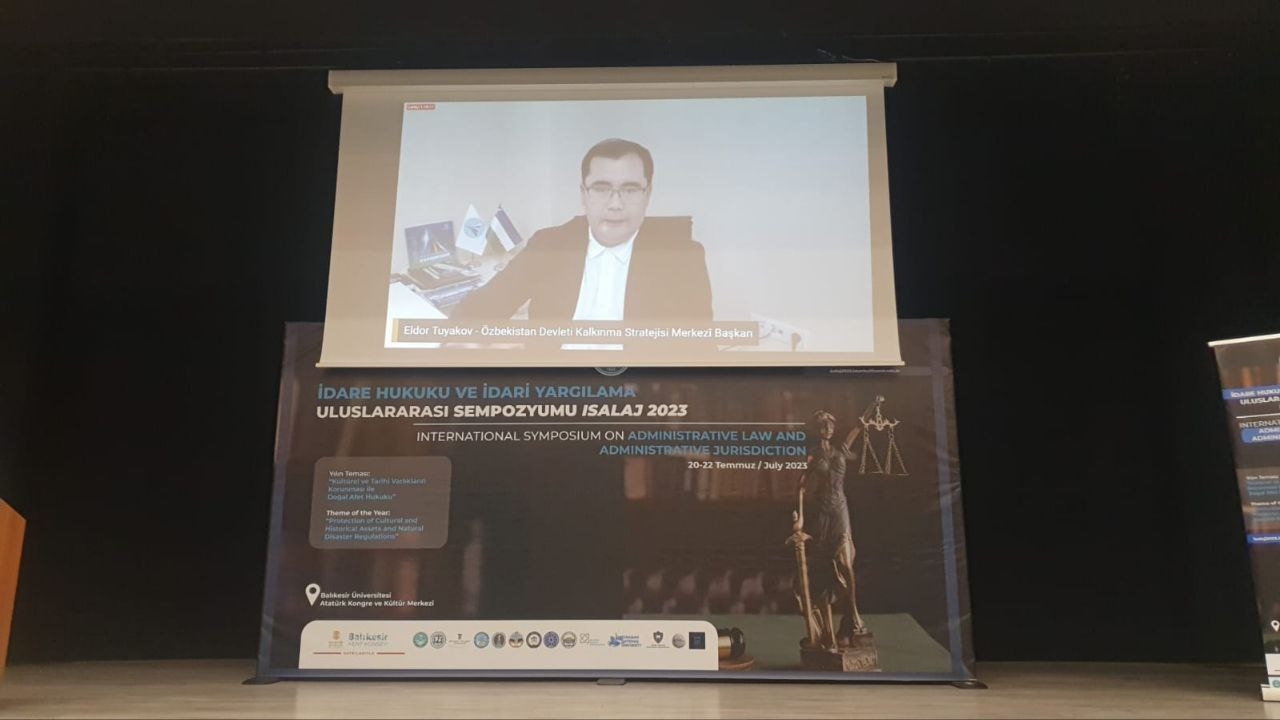
At the opening of the International Symposium, Eldor Tulyakov, Executive Director of the Development Strategy Center, made a presentation. The speaker fixed upon the state policy in the field of protection of cultural heritage in Uzbekistan, legislation and practice in this area, familiarized the participants with the practical work carried out by Uzbekistan to preserve and transfer cultural heritage to future generations.
– As we all know, Uzbekistan is one of the countries that has made a great contribution to the development of science and culture of world civilization and has a rich history of national statehood, — said E. Tulyakov. It should be noted that Uzbekistan has 8,210 cultural heritage sites as of January 1, 2023, 209 of which are included in the UNESCO World Heritage List. Also, the number of archaeological monuments in Uzbekistan is 4,748, the number of architectural monuments is 2,252, the number of monumental art memorials is 678, and the number of attractions is 532.
Finally, in our country, a solid legal base is formed for the preservation of historical and architectural monuments, places of pilgrimage, monuments and sacred places, and it is constantly improved in order to transfer them in entirety and good condition to next generation.
In order to regulate relations in the field of protection and use of cultural heritage objects, which are the national property of the people of Uzbekistan, a number of legal acts have been adopted. In particular, the laws of the Republic of Uzbekistan “On the protection and use of objects of cultural heritage”, “On bringing out and bringing in the cultural values”, “On museums”, “On the protection and use of objects of archaeological heritage” and the resolution of the Cabinet of Ministers of the Republic of Uzbekistan “On measures to strengthening the protection of intangible cultural heritage sites and territories inscribed on the UNESCO World Heritage List”.
Speaking about the protection of cultural objects, it is worth noting that in recent years in Uzbekistan, the civic position of society in activities related to the preservation of historical and cultural heritage has significantly increased. In particular, public control has increased, which is a general indicator of the formation of civil society in the country. More importantly, the participation of civil self-government bodies, NGOs, the media, journalists, bloggers and citizens in the preservation and rational use of material cultural heritage in the country has also significantly increased.
The third international symposium continues its work.
Information Service
"Development Strategy" Center
 English
 Русский
 О'zbek


On July 20-22, 2023 in Balıkesir, Turkey, the Third International Symposium on Administrative Law and Administrative Jurisdiction on the topic “Protection of Cultural and Historical Monuments” began its work.
The international symposium, which takes place both online and offline, was organized with the support of a number of international higher education institutions, such as Balikesir University, the Centre for Administrative Law, Science and Applied Research at the Faculty of Law of Istanbul University, Istanbul Commercial University, Tashkent Financial Institute and Tashkent University of Economics, Faculty of Law of Baku State University, Academy of the State Customs Committee of Azerbaijan, Eurasian National University named after L.N. Gumilyov, Al-Farabi Kazakh National University.
The main goal of the international symposium is to create a space for scientific discussions and exchange of information about new developments in the field of administrative law and administrative jurisdiction.
The symposium is attended by staff scientists and researchers with experience in the field of administrative law and administrative jurisdiction, as well as practitioners.
At the opening of the International Symposium, Eldor Tulyakov, Executive Director of the Development Strategy Center, made a presentation. The speaker fixed upon the state policy in the field of protection of cultural heritage in Uzbekistan, legislation and practice in this area, familiarized the participants with the practical work carried out by Uzbekistan to preserve and transfer cultural heritage to future generations.
– As we all know, Uzbekistan is one of the countries that has made a great contribution to the development of science and culture of world civilization and has a rich history of national statehood, — said E. Tulyakov. It should be noted that Uzbekistan has 8,210 cultural heritage sites as of January 1, 2023, 209 of which are included in the UNESCO World Heritage List. Also, the number of archaeological monuments in Uzbekistan is 4,748, the number of architectural monuments is 2,252, the number of monumental art memorials is 678, and the number of attractions is 532.
Finally, in our country, a solid legal base is formed for the preservation of historical and architectural monuments, places of pilgrimage, monuments and sacred places, and it is constantly improved in order to transfer them in entirety and good condition to next generation.
In order to regulate relations in the field of protection and use of cultural heritage objects, which are the national property of the people of Uzbekistan, a number of legal acts have been adopted. In particular, the laws of the Republic of Uzbekistan “On the protection and use of objects of cultural heritage”, “On bringing out and bringing in the cultural values”, “On museums”, “On the protection and use of objects of archaeological heritage” and the resolution of the Cabinet of Ministers of the Republic of Uzbekistan “On measures to strengthening the protection of intangible cultural heritage sites and territories inscribed on the UNESCO World Heritage List”.
Speaking about the protection of cultural objects, it is worth noting that in recent years in Uzbekistan, the civic position of society in activities related to the preservation of historical and cultural heritage has significantly increased. In particular, public control has increased, which is a general indicator of the formation of civil society in the country. More importantly, the participation of civil self-government bodies, NGOs, the media, journalists, bloggers and citizens in the preservation and rational use of material cultural heritage in the country has also significantly increased.
The third international symposium continues its work.
Information Service
"Development Strategy" Center