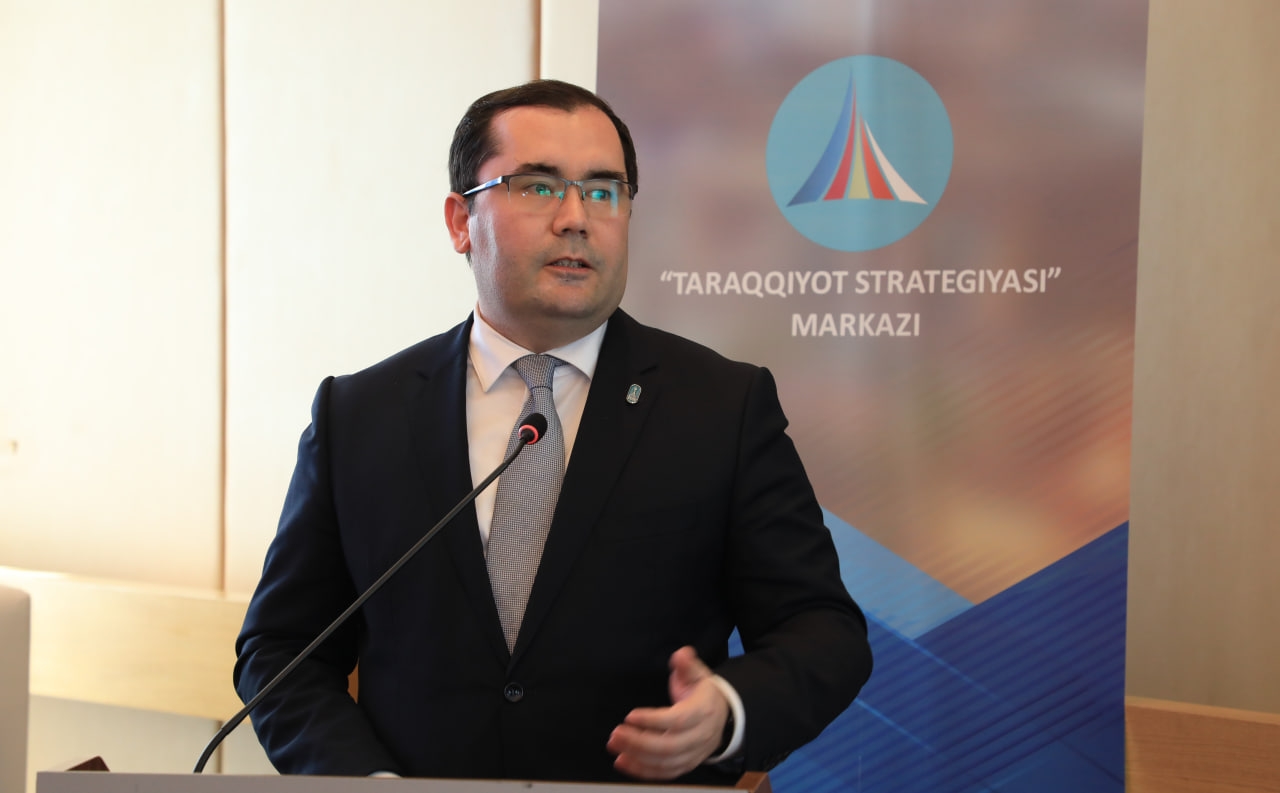
Eldor Tulyakov,
Executive Director of the Development Strategy Center
The second summit of the Gulf Cooperation Council and Central Asian states (GCC – C5), to be held in Uzbekistan, will serve as an important political platform for bringing relations between the two regions to a new level.
In today's complex conditions, not only intergovernmental, but also intersocietal rapprochement is becoming the cornerstone of stability and mutual trust. Within the framework of the summit, strengthening links between people, developing cooperation between civil society institutions, particularly think-tanks, is becoming even more important.
In recent years, cooperation between the Central Asian and the Gulf countries in the fields of energy, trade, transport, and security has been consistently developing. However, the strength and long-term nature of these political agreements should be supported by interpersonal relationships. According to world experience, interpersonal relations create a social basis for diplomatic communication, ensure an atmosphere of stability and strengthens mutual trust. Therefore, this issue has been identified as one of the priority areas of the summit’s agenda.
Central Asian and Gulf countries are major centers of Islamic civilization. Initiatives linking places such as Bukhara, Samarkand, and Khiva to Mecca, Medina, and Dubai will strengthen not only tourism but also spiritual and historical unity. This will allow us to become more closely acquainted with the rich culture and history of our peoples, and will also contribute to the positive perception of interstate cooperation by the public.
Uzbekistan is implementing a number of initiatives in this direction. In 2023, a visa-free regime was introduced for citizens of Saudi Arabia. Starting from 2024, a mutual visa exemption agreement with the UAE came into force. Furthermore, negotiations are underway with other Gulf countries to implement a similar procedure.
Civil society institutions, especially non-governmental non-profit organizations, play an important role in the development of dialogue and cooperation between people. There may be certain limitations in interstate relations, but NGOs have the opportunity to take an innovative approach to important problems in society, involve the general public, and expand international cooperation.
NGOs are becoming a means of ensuring effective dialogue in such areas as environmental protection, inclusive education, youth issues, digital equality, and gender equality. Through these organizations, it is necessary to deepen the dialogue between the government and the public, to bring cooperation to the institutional level. In some cases, civil society institutions can act as a bridge by bringing sensitive issues to public discussion before official discussions. The role of the expert community and think-tanks in this process is invaluable.
In the context of geopolitical instability and global challenges, cooperation between think-tanks is acquiring а strategic importance. Analytical centres operating in the countries of the Gulf and Central Asia can serve as an intellectual basis for issues of stability, security, economic diversification, and social policy. Through joint analyses, scientific articles, and expert exchanges, the quality of mutual understanding and political decisions increases.
Along with various initiatives and projects in the development of interethnic cooperation, attention should be paid to the development of cooperation between border regions.
Thanks to the positive changes observed in our region in the recent years, new areas of interaction are being formed in the border regions. From this point of view, the issue of further intensification of ties between the countries of the two regions at the level of border regions is of great importance. This, first of all, can create an opportunity for such regions to exchange experience, as well as lay the foundation for implementation of various socio-economic projects based on their specifics.
In addition, there are opportunities to expand cultural festivals, youth exchange programs, educational partnerships, and municipal cooperation on the basis of local-level collaboration. Such initiatives not only strengthen active ties in border regions but also contribute to fostering mutual trust and closeness between peoples. These regions may become exemplary centers of public diplomacy and play a significant role in implementing strategic agreements in practice.
The positive results of the issues discussed within the framework of the summit will be relevant for the population of each region. In this process, the convergence of societies, people, and ideas is manifested as an important factor. In this context, the development of a constructive dialogue through NGOs and think-tanks serves as an important and promising resource that will determine the future of the two regions for the effective implementation of efforts at the official level and their proper understanding by the general public.
 English
 Русский
 О'zbek


