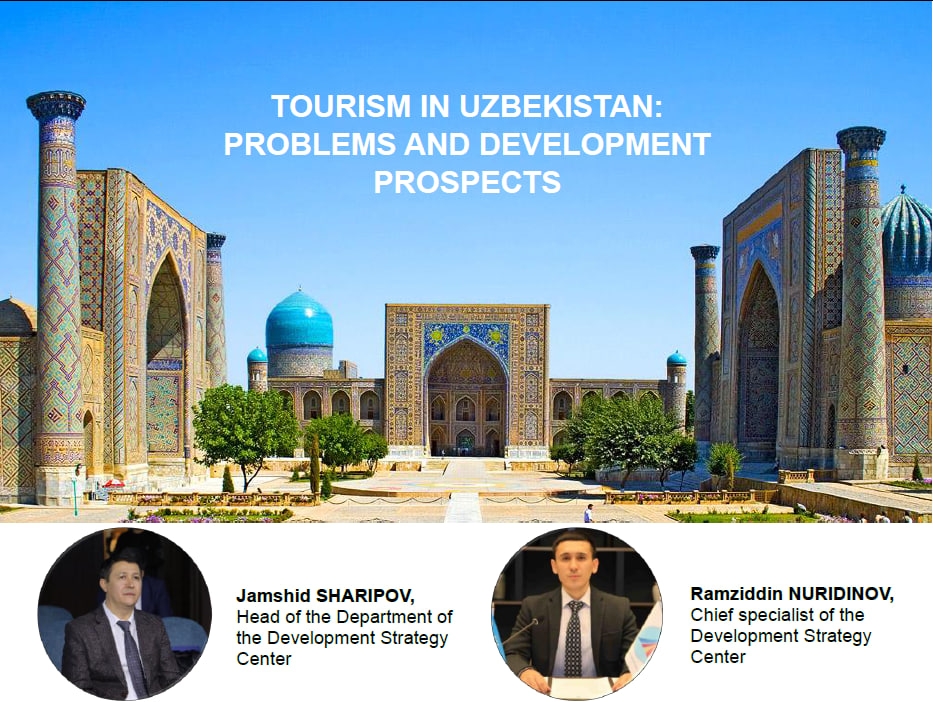
Jamshid SHARIPOV,
Head of the Department of the Development Strategy Center
Ramziddin NURIDINOV,
Chief specialist of the Development Strategy Center
According to the “Global Tourism Barometer” report of the UN World Tourism Organization (UNWTO), by 2024 the international tourist flow has fully recovered from the consequences of the COVID-19 pandemic. Four years after the start of the crisis, the number of international trips reached 99% of the 2019 level. This means that the industry has overcome the most difficult period.
The "Global Tourism Barometer" tracks short-term destinations in the global tourism sector and provides all interested parties with a current analytical review of the situation.
Current status analysis
According to UNWTO estimates, the number of international tourists worldwide reached approximately 1.4 billion people in 2024, an 11% increase compared to 2023, adding 140 million tourists. In 2025, positive changes are expected to continue: the number of international tourists is expected to grow by another 3-5%.
From this point of view, it is worth noting the stable development of the tourism sector in Uzbekistan. In recent years, the volume of tourism services exports has increased 1.6 times and reached $3.5 billion. This testifies to the growing attractiveness of the country in the international arena.
According to data of the State Committee for Tourism Development, the number of foreign tourists visiting Uzbekistan exceeded 10 million for the first time, and this figure continues to grow. Domestic tourism is also showing high activity, with more than 20 million citizens traveling around the country each year.
A particularly significant step was Uzbekistan's official accession to the International Code for the Protection of Tourists, developed under the auspices of the UNWTO. This underscores the country's commitment to complying with international standards, transparency, and protecting the rights of tourists.
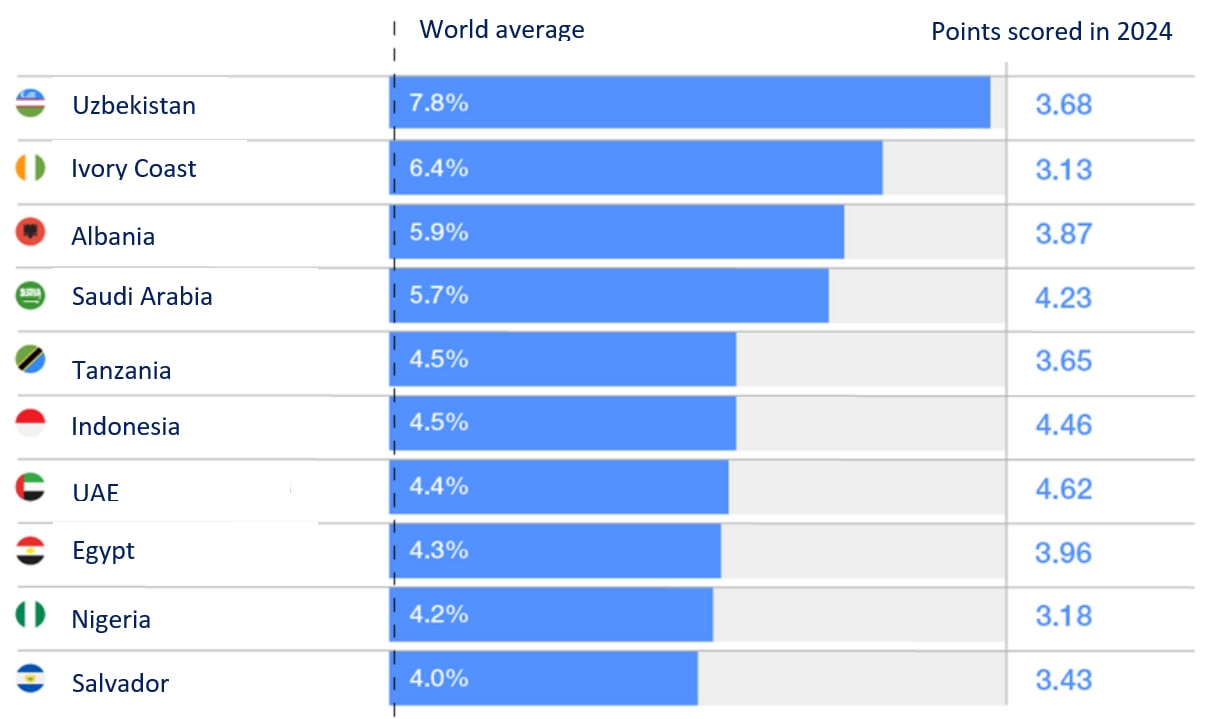
According to the 2024 Travel and Tourism Development Index, Uzbekistan ranked 78th among 119 countries. For comparison, Kazakhstan ranked 52nd, Tajikistan 99th, and Kyrgyzstan 102nd. At the same time, Uzbekistan entered the top 10 countries that showed the most progress between 2019 and 2024 in improving conditions for the development of tourism and travel[1].
Top 10 countries with the greatest development in tourism
(for the period 2019-2024, in percent)
Problems and challenges affecting tourism development
According to research conducted by the UN Tourism group of experts, economic and geopolitical problems continue to pose a significant threat to the sustainable development of tourism and the confidence of travellers.
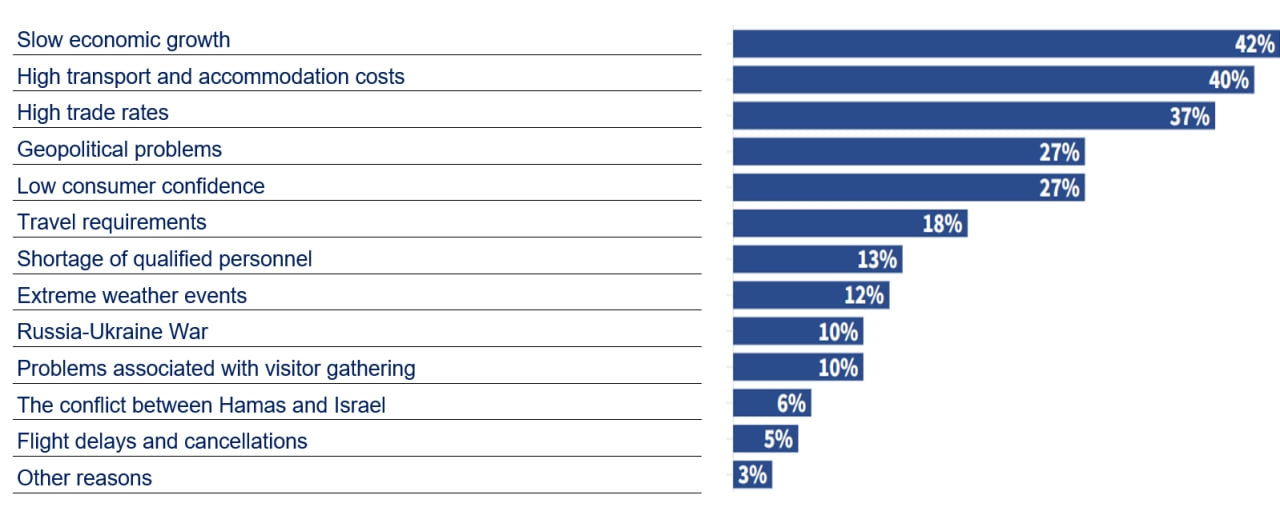
In such conditions, the further growth of international tourist flows is accompanied by a number of challenges. In particular, the greatest impact is exerted by slow economic growth (42%), high transportation and living costs (40%), high trade tariffs (37%), geopolitical problems (27%), low consumer confidence (27%), travel requirements (18%), and a shortage of qualified personnel (13%). These and other factors can significantly hinder the further development of international tourism.
Challenges in promoting international tourism(May 2025 data)[2]
Despite the successes achieved in modernizing the tourism sector in Uzbekistan, including the development of infrastructure in tourist cities and the promotion of cultural heritage, there are still a number of problems requiring a comprehensive approach.
Territorial disparities in tourism infrastructure are among them. Although the main flow of tourists is directed to Samarkand, Bukhara, and Khiva, access to the Fergana Valley, Surkhandarya, Kashkadarya, and Karakalpakstan remains difficult due to the lack of transport and hotel resources. At the meeting, chaired by the President of Uzbekistan on March 29, 2023, on issues of increasing tourism potential, the need for an additional 46 flights and 68 railway routes, as well as the shortage of buses for tourists in Karakalpakstan, Jizzakh, Namangan, and Surkhandarya regions, was noted[3].
The quality of services does not always meet the requirements of international standards. This problem was identified based on the feedback left by foreign tourists visiting Uzbekistan on the TripAdvisor platform. Analysis conducted by specialists of the “Development Strategy” Center on the feedback left by tourists showed that there are many complaints related to:
- hotel sector (26% of all complaints): complaints about the imbalance in the cost and quality of services, outdated equipment, inadequate cleaning of rooms, lack of hot water supply, and poor breakfast quality. Wi-Fi is often unavailable or only available in the hotel lobby, which creates inconvenience for users of digital services;
- restaurants and cafes (21%): long wait for ordered meals (40-60 minutes), lack of menus in English, difficulties in communicating with staff, non-compliance with the description of dishes. Also, the fact that some institutions require payments to be transferred to employees' personal card numbers instead of organizing cashless payments leads to an increase in the risk of distrust and fraud;
- travel agencies and guides (13%): operating without a license, incompetence of tour guides, lack of knowledge about attractions, superficial approach to presenting information;
- transport (11%): difficulties in purchasing train tickets, high taxi prices (especially near train stations and airports), non-compliance of buses with sanitary requirements;
- attractions (9%): obtrusiveness of souvenir sellers, non-issuance of receipt for paid tickets, demand for additional payment for photography, lack of informational materials in English;
- service personnel (8%): rudeness, impoliteness, superficial treatment of visitors, especially in hotels. Also, problems related to the quality of mobile communication in the regions (except for the city of Tashkent) were noted;
- sanitary conditions (6%): a number of complaints regarding waste on the streets, uncleaned public places, unsatisfactory condition of toilets, and a sense of danger in some areas during the dark hours of the day.
Suggestions and recommendations for resolving issues
Taking into account that the “Uzbekistan – 2030” Strategy sets priority goals to increase the number of foreign tourists to 15 million and domestic tourists to 25 million, as well as in order to eliminate the identified issues and increase the tourism potential of Uzbekistan, experts of the “Development Strategy” Center recommend the implementation of the following initiatives:
1. Development of a multifunctional mobile application. Creation of a mobile application integrated with state platforms as a digital guide for tourists. This app must have the following capabilities:
• access to the certified tourist guide database and the possibility of booking excursions, which in turn ensures the quality and reliability of the services provided;
• integration of local taxi call services to ensure the safety and comfort of tourists;
• provide for an interactive map with the possibility of filtering by hotels, restaurants, attractions, ATMs, currency exchange offices, Wi-Fi zones, medical institutions, and tourist police departments;
• envisage the function of creating personalized routes, indicating the time of visit and recommended stops;
• multi-language interface (Uzbek, English, Russian, Chinese, etc.);
• offline access to basic app features (e.g., map and route setting);
• integration with online payment systems;
• envisage a real-time support service to address potential problems of tourists.
Japan Official Travel App - The official mobile application developed by the Japan National Tourism Organization (JNTO) provides support information, information about public transport routes, Wi-Fi points and ATMs, list of hospitals, restaurant menus, luggage storage services, and even about natural disasters[4].
• opportunity to leave feedback on tourist services;
• an effective feedback system with a guarantee of consideration of appeals within a specific timeframe;
• providing for the possibility of selection (moderation) and analysis of feedback in order to identify false complaints and protect the business reputation of tourism sector participants. According to statistics from the Ministry of Italian Enterprises, false complaints can reduce the income of tourism enterprises by 6-30%[5].
The official UK platform VisitBritain considers only complaints from tourists who have visited certified tourist sites. Response is carried out in two stages: confirmation - within two working days, and a full response - within 28 days[6].
2. Promoting a mobile app. It is recommended to actively promote the multifunctional mobile application in places of mass tourist visits: airports, railway stations, metro stations, bus stations, and tourist information centres.
Promotional tools can include eye-catching advertising materials (banners, digital screens, stickers with QR codes), bonuses, or discounts for users who have installed the app and actively use it. This approach helps to build a loyal user base and increases product awareness among tourists.
3. Installing digital information stores (kiosks). It is recommended to place sensor terminals with the possibility of use in several languages in places with a large gathering of tourists (airports, railway stations, historical centres). It is advisable to provide for the use of the following opportunities in information stores:
• get up-to-date information about attractions, transportation, and events;
• interactive maps, booking tickets, calling a taxi;
• it should include the opportunity of printing, translation, device charging, and direct communication with the tourism support service.
South Korea's "Smart Tourist Information System" is a network of interactive stores (kiosks) that provide travel directions recommendations, translation services, travel booking, and support services via number 1330[7].
4. Install QR codes in attractions. In tourist areas, it is advisable to place QR codes that allow travellers to receive information about cultural heritage sites, museums, and historical monuments in several languages. It is necessary to create the possibility of obtaining information through this system by accessing multimedia web pages containing photographs, videos, and text descriptions, and to abandon the practice of forcibly offering tourist guide services.
In Rio de Janeiro, QR codes have been placed on streets and cultural heritage sites since 2023. The first such system was installed on the Arpoador cliff. Tourists got the opportunity to scan it and use a multimedia guide about attractions[8].
5. Using Mobile Positioning Data. When forming official tourism statistics, it is recommended to introduce the practice of using MPD as a source of information. The advantages of this method are: obtaining more accurate, fast, and detailed information, tracking domestic and international movements, and accounting automation without conducting large-scale and expensive surveys.
Estonia has been using MPD as the main source of tourism statistics for 10 years. The procedure for use was developed in cooperation with Positium company and scientists from the University of Tartu, in full compliance with all standards and requirements of the European Union, the UN, and the IMF for the protection of personal data[9].
In turn, the above-proposed measures will improve the quality of tourist services, improve the provision of information to travellers, as well as improve the accounting of tourist flows. The comprehensive implementation of digital solutions and the assimilation of international experience are important steps towards turning Uzbekistan into a competitive tourist destination on a global scale.
 English
 Русский
 О'zbek


