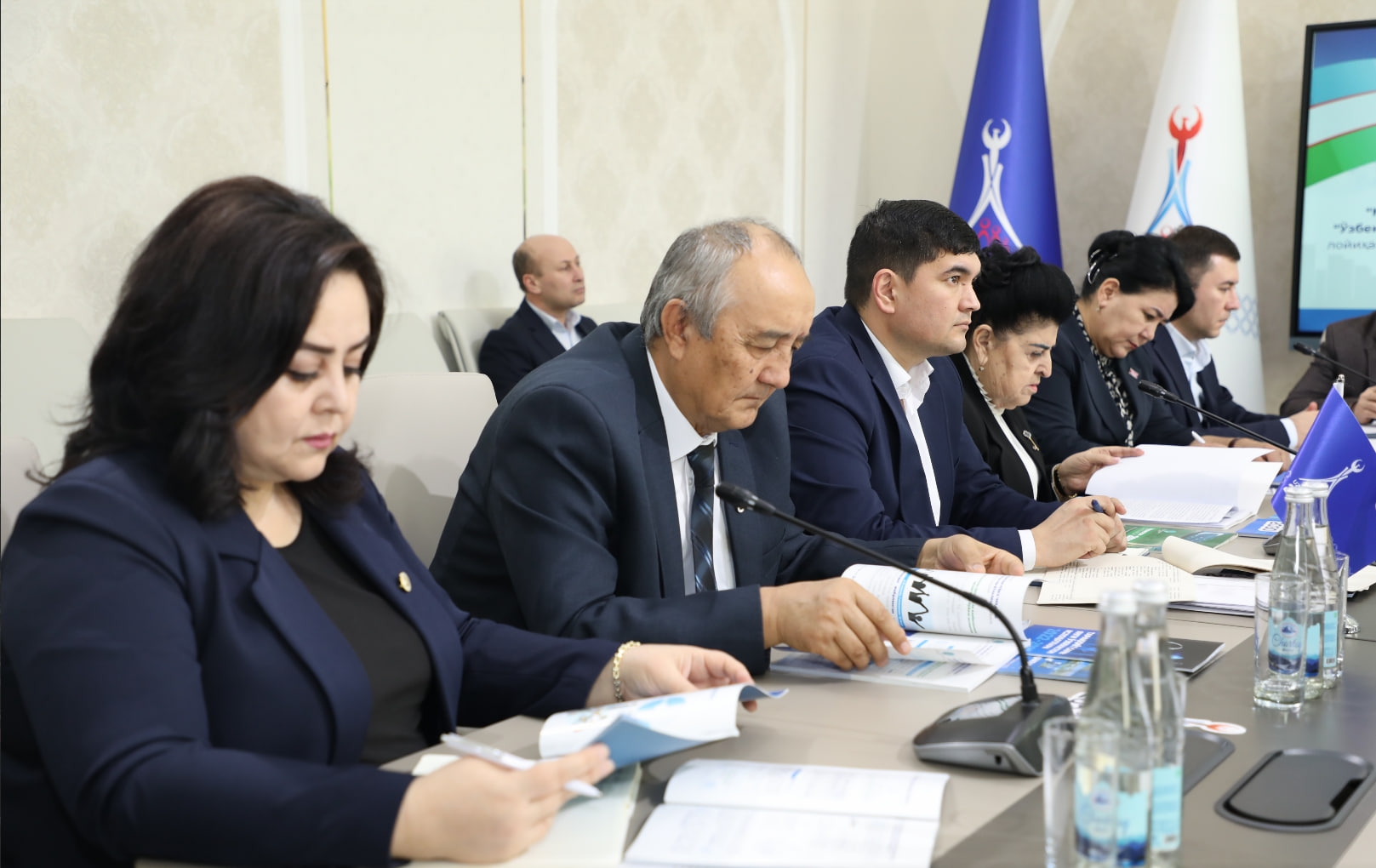
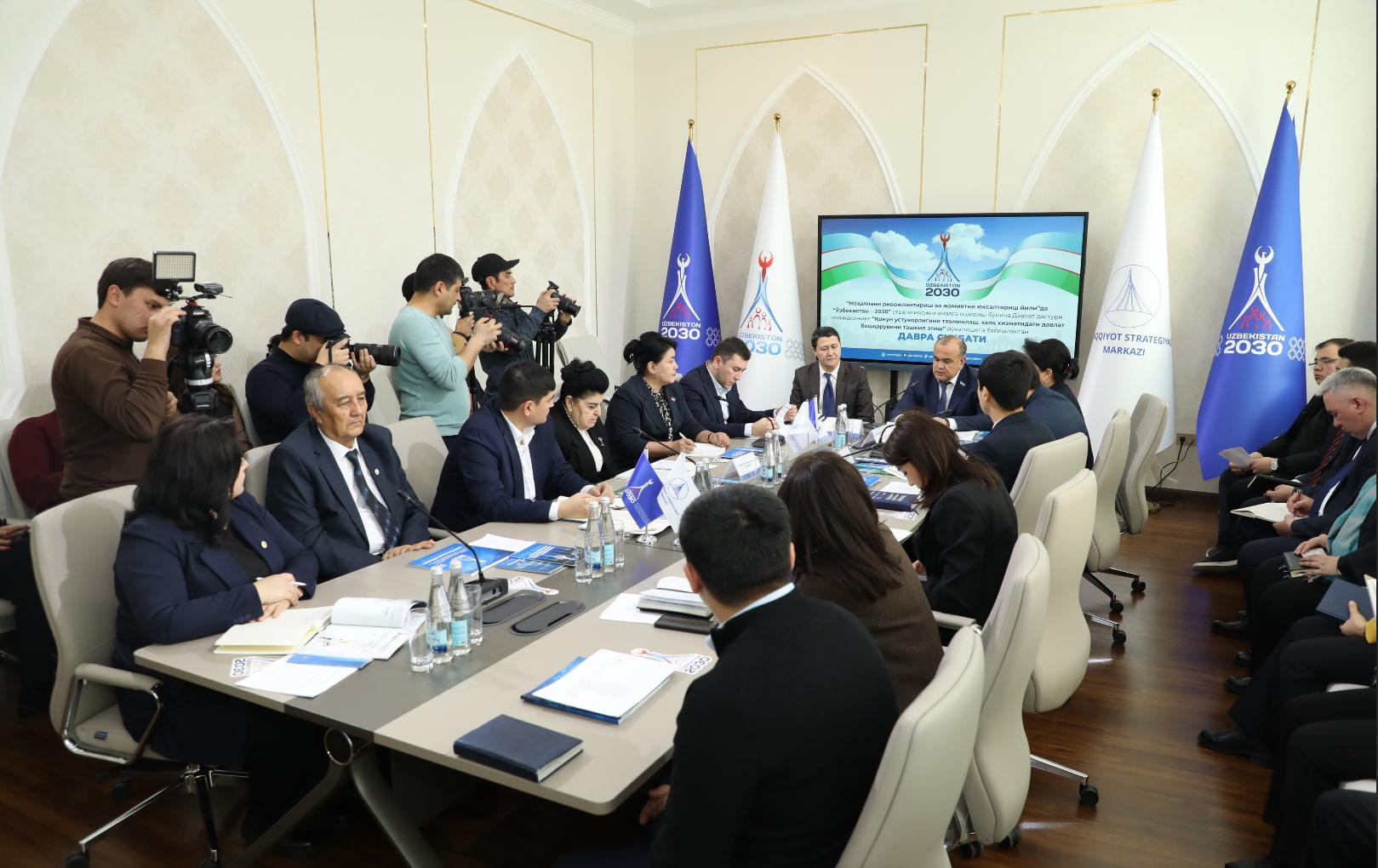
A round table was held at the Development Strategy Center, devoted to the public discussion of reform programs in priority areas within the framework of the “Year of Development of Mahalla and Society”, as well as the draft State Program for the implementation of the “Uzbekistan-2030” Strategy in the direction of “Ensuring the rule of law, organizing public administration in the service of people”.
The event was attended by deputies of the Legislative Chamber of the Oliy Majlis, representatives of the Ministry of Justice, the Ministry of Digital Technologies, the Association of Mahallas of the Republic of Uzbekistan, the Agency for Management Effectiveness under the President of the Republic of Uzbekistan, as well as activists of political parties, experts and representatives of the mass media.
Opening the round table, the Head of Department of the Development Strategy Center, Jamshid Sharipov, emphasized that the tasks aimed at ensuring the rule of law and orienting state governance towards serving the people in the reform programs outlined in the “Year of Development of Mahalla and Society” are of great importance for the country’s development.
The Chairman of the Committee on Science, Education, Culture, Sports and Youth of the Legislative Chamber of the Oliy Majlis, Nodir Jumayev, noted in his speech that ensuring the rule of law and organizing state governance as a system that serves the interests of the people are priority areas in the tasks defined for the coming year. Attention was also drawn to the fact that feeling the practical results of each reform at the mahalla level is crucial for the development of society.
During the discussions, it was noted that the initiatives aimed at increasing the socio-economic potential of the mahalla within the framework of the “Year of Development of Mahalla and Society” and the “Uzbekistan-2030” Strategy have been identified as a priority task. In particular, within the framework of the “Industry and Services in the Mahalla” project, it is planned to create the necessary conditions for the development of production, the service sector, and entrepreneurship in each mahalla.
Within the framework of this initiative, it is planned to implement more than 10 thousand projects in the field of production and services throughout the republic, create an additional 100 thousand new jobs in mahallas, and increase employment, especially the economic activity of youth and women. At the same time, in order to reduce poverty, the task was set to bring the number of mahallas free of poverty to 3.5 thousand.
Also, special attention was paid to launching the “OASIS” digital platform to further facilitate public communication with government bodies, enhance citizens’ participation in mahalla life, and develop public control through the “Stimulating Activity in Society” project.
In the direction of digitalization of public administration, tasks were also discussed to bring the number of services and electronic services provided on the Single Portal of Interactive Public Services to 880, as well as to ensure gender equality by introducing a system of targeted training of women for leadership positions in public service.
Furthermore, it was noted that within the framework of the “Digital Mahalla” electronic platform, with the support of “mahalla seven”, it is planned to develop and launch a unified electronic registry covering the most pressing systemic problems concerning the population in mahallas.
During the round table, representatives of the Ministry of Justice, the Ministry of Digital Technologies, the Association of Mahallas of Uzbekistan, and the Agency for Management Effectiveness presented information on the planned measures for implementing the tasks defined in the draft reform programs and the State Program. Party activists and deputies actively participated in the discussion with their opinions and suggestions.
Development Strategy Center
Information Service
 English
 Русский
 О'zbek


A round table was held at the Development Strategy Center, devoted to the public discussion of reform programs in priority areas within the framework of the “Year of Development of Mahalla and Society”, as well as the draft State Program for the implementation of the “Uzbekistan-2030” Strategy in the direction of “Ensuring the rule of law, organizing public administration in the service of people”.
The event was attended by deputies of the Legislative Chamber of the Oliy Majlis, representatives of the Ministry of Justice, the Ministry of Digital Technologies, the Association of Mahallas of the Republic of Uzbekistan, the Agency for Management Effectiveness under the President of the Republic of Uzbekistan, as well as activists of political parties, experts and representatives of the mass media.
Opening the round table, the Head of Department of the Development Strategy Center, Jamshid Sharipov, emphasized that the tasks aimed at ensuring the rule of law and orienting state governance towards serving the people in the reform programs outlined in the “Year of Development of Mahalla and Society” are of great importance for the country’s development.
The Chairman of the Committee on Science, Education, Culture, Sports and Youth of the Legislative Chamber of the Oliy Majlis, Nodir Jumayev, noted in his speech that ensuring the rule of law and organizing state governance as a system that serves the interests of the people are priority areas in the tasks defined for the coming year. Attention was also drawn to the fact that feeling the practical results of each reform at the mahalla level is crucial for the development of society.
During the discussions, it was noted that the initiatives aimed at increasing the socio-economic potential of the mahalla within the framework of the “Year of Development of Mahalla and Society” and the “Uzbekistan-2030” Strategy have been identified as a priority task. In particular, within the framework of the “Industry and Services in the Mahalla” project, it is planned to create the necessary conditions for the development of production, the service sector, and entrepreneurship in each mahalla.
Within the framework of this initiative, it is planned to implement more than 10 thousand projects in the field of production and services throughout the republic, create an additional 100 thousand new jobs in mahallas, and increase employment, especially the economic activity of youth and women. At the same time, in order to reduce poverty, the task was set to bring the number of mahallas free of poverty to 3.5 thousand.
Also, special attention was paid to launching the “OASIS” digital platform to further facilitate public communication with government bodies, enhance citizens’ participation in mahalla life, and develop public control through the “Stimulating Activity in Society” project.
In the direction of digitalization of public administration, tasks were also discussed to bring the number of services and electronic services provided on the Single Portal of Interactive Public Services to 880, as well as to ensure gender equality by introducing a system of targeted training of women for leadership positions in public service.
Furthermore, it was noted that within the framework of the “Digital Mahalla” electronic platform, with the support of “mahalla seven”, it is planned to develop and launch a unified electronic registry covering the most pressing systemic problems concerning the population in mahallas.
During the round table, representatives of the Ministry of Justice, the Ministry of Digital Technologies, the Association of Mahallas of Uzbekistan, and the Agency for Management Effectiveness presented information on the planned measures for implementing the tasks defined in the draft reform programs and the State Program. Party activists and deputies actively participated in the discussion with their opinions and suggestions.
Development Strategy Center
Information Service