Tulkin Tursunov,
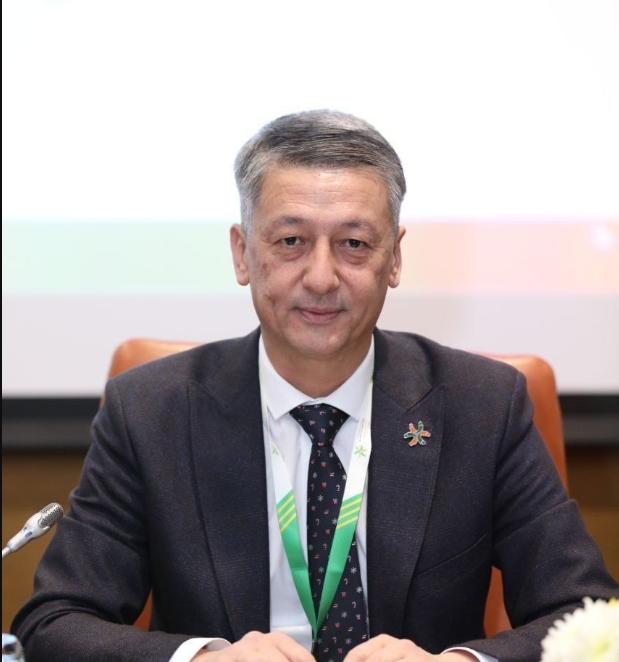 Head of the Department of the Development Strategy Centre
As a result of an open, pragmatic, thoughtful, and proactive foreign policy, New Uzbekistan is steadily strengthening its position as one of the global centers of peace and diplomacy. Thus, during 2025, high-level visits were carried out to 26 foreign countries, and for the first time in modern history, visits of heads of a number of countries to Uzbekistan were organized. The multilateral dialogues in the “Central Asia Plus” format have become productive.
In recent years, strategic partnerships have been established with 11 states, bringing their total number to 19, and allied relations have been established with Kazakhstan, Azerbaijan, and Tajikistan[1].
An important direction of foreign policy was the further expansion of its geography. Along with traditional partners in the CIS, Europe, and Asia, our country intensified contacts with the countries of Eastern Europe, the Middle East, Africa, and South America. Since 2017, 16 new diplomatic and consular missions have been opened abroad, bringing their total number to 60, and the number of states with which diplomatic relations have been established to 165.
In the Address of the President of the Republic of Uzbekistan Shavkat Mirziyoyev to the Oliy Majlis and the people of Uzbekistan, it is noted that “the country has recently become an international dialogue platform where global issues are discussed. In particular, this year Uzbekistan hosted the 150th anniversary Assembly of the Inter-Parliamentary Union, the session of the UNESCO General Conference, the “Central Asia – European Union” summit, and the International Climate Forum”[2].
The “Uzbekistan – 2030” Strategy is a key policy document that defines the country’s medium- and long-term development directions. It outlines the overall logic of reforms, priority goals, and practical mechanisms for shaping the New Uzbekistan. In recent years, the country has achieved significant results in the areas of socio-economic development, public administration, human rights, and the strengthening of civil society institutions. At the same time, public life and global processes are in a state of constant flux. New economic conditions, technological changes, and transformations on the international stage are presenting new challenges for public policy.
Within the framework of implementing the tasks outlined in the Address of the President of the Republic of Uzbekistan, an updated “Uzbekistan-2030” Strategy[3] has been adopted, which updates the performance indicators for medium-term goals. This document provides for new tasks and calls for action, as well as important global changes aimed at the consistent implementation of policies based on the principle of a “safe and peaceful state”, in the interests of the people and the state. In particular, the Strategy provides for increasing the number of countries that Uzbek citizens can enter without a visa to 50, and through a simplified procedure to 60. In addition, it provides for increasing the share of official and targeted labor migration in the share of labor migrants abroad by more than 15 percent.
The diplomatic strategy of New Uzbekistan, as an integral part of the large-scale socio-economic reforms being carried out in the country, was aimed at creating favorable external conditions for modernizing the economy, attracting investment and foreign tourists, expanding export potential, and strengthening humanitarian and cultural ties. The foreign policy course was invariably based on the principles of openness, equal partnership, mutual respect, non-interference in the internal affairs of states, and strict observance of international law.
Diplomatic and consular protection of human rights is an important and relevant topic in today’s world. It aims to protect and ensure human rights at the international level through the use of diplomatic, consular, and legal mechanisms. International relations and cooperation between states have a direct impact on respect for human rights around the world. Combating human rights violations beyond national borders requires special attention to ensuring justice and protecting the rights and interests of citizens in other countries.
Another significant event was the participation of the President of Uzbekistan in the UN General Assembly meeting. The head of state’s speech at this major international forum confirmed the country’s commitment to the principles of multilateralism, peaceful dialogue, and the collective search for solutions to pressing global issues.
In 2025, at the initiative of Uzbekistan, the UN General Assembly adopted four resolutions reflecting the country’s priorities in the areas of sustainable development, regional security, and humanitarian cooperation.
In addition, Uzbekistan was elected to a number of authoritative UN bodies, which was evidence of the growing trust of the international community.
The signing of the Extended Partnership and Cooperation Agreement with the European Union and President Shavkat Mirziyoyev’s visit to Brussels marked the transition of relations with the EU to a qualitatively new level. The document created a solid legal basis for deepening political dialogue, expanding trade and economic ties, attracting investment, and developing cooperation in the areas of sustainable development, green economy, and digitalization. It also reflected the high appreciation of European partners for the reforms being carried out in Uzbekistan.
In the new Uzbekistan, large-scale work is being carried out to fully implement the noble idea of “In the name of human honor and dignity”, consistently incorporate international standards in the field of human rights and freedoms into national legislation, and gradually introduce them into the law enforcement activities of state bodies. Strengthening guarantees for the protection of human rights and freedoms, ensuring the rule of law, and the universal implementation of these principles in society and in the lives of every citizen are key elements of New Uzbekistan’s domestic and foreign policy.
In April 2023, for the first time, a nationwide referendum approved the new version of the Constitution of Uzbekistan, the cornerstone of which was ensuring human rights and interests, protecting human dignity. The new Constitution defines the priorities of Uzbekistan as a sovereign, legal, secular, democratic, and social state[4]. The number of constitutional norms concerning human rights has increased more than 3 times and amounts to more than 50 articles. The Constitution affirms adherence to the principles of human rights, freedom of speech and conscience, and the equality of all citizens, regardless of their nationality, language, or religion. The new Constitution of Uzbekistan enshrines such universally recognized institutions of jurisprudence as Miranda Rules, Habeas Corpus, Pro Bone, i.e., free legal aid.
In addition, large-scale work has been carried out to further improve the system of reliable protection of the rights, freedoms, and interests of women and children, to form the legal framework for a national preventive mechanism to prevent torture, and to eradicate forced and child labor. In accordance with the recommendations of international bodies, legislative acts have been adopted to strengthen the powers of national human rights institutions. A national preventive mechanism for the prevention of torture has been created based on the “Ombudsman Plus” model. The Children’s Ombudsman, the National Human Rights Center, and the Business Ombudsman are also authorized to monitor penitentiary institutions.
Over the past short period, significant progress has been achieved in interaction with UN human rights structures. A vivid example of this is the active efforts of Uzbekistan as a member of the Human Rights Council, close cooperation with the High Commissioner for Human Rights and special rapporteurs on human rights issues. At the initiative of Uzbekistan, a number of UN Human Rights Council resolutions on the rights of youth and children have been adopted, and a number of international forums, including the Asian Forum on Human Rights and the Global Forum on Youth Rights, have been held jointly with international partners.
One of the recognized forms of protecting the rights and legitimate interests of citizens abroad is diplomatic and consular protection. The state possesses the right to diplomatic or consular protection of citizens abroad, this right arises from its national sovereignty. The implementation of diplomatic protection by a state is carried out through its diplomatic bodies for foreign affairs (MFA) in accordance with the principles of international law.
Article 23 of the Constitution of the Republic of Uzbekistan guarantees its citizens protection and patronage abroad. The guarantees provided by this article include the state’s obligations to provide assistance and support to its citizens, in case of violation of their rights abroad. Regardless of their location, citizens of Uzbekistan have the right to consular and diplomatic protection from their state. In addition, the state, in accordance with the norms of international law, cares for the preservation and development of ties with compatriots living abroad.
During 2025, within the framework of consular-legal activities:
162 376 citizens of Uzbekistan were provided with consular services;
15 215 compatriots received assistance in finding employment abroad;
4 085 citizens who found themselves in difficult financial situations were provided with assistance totaling $746,500;
2 thousand citizens held in temporary detention facilities of foreign states were released;
250 citizens who found themselves in difficult life circumstances, including minors left without parental care, as well as victims of human trafficking, were returned to their Homeland.
In addition, during the year, 154 181 appeals from individuals and legal entities were received, most of which were reviewed in the through the established procedure and were resolved in a practical manner. These indicators clearly demonstrate the consistent implementation of Uzbekistan’s consular policy based on the principles of openness, convenience, and, most importantly, protection of citizens’ rights and interests.
The results of 2025 show that Uzbekistan’s foreign policy course has truly transformed into “result-based diplomacy”. Priority towards practical achievements has allowed the country to enter the new year with high expectations and a clear action plan.
2026 will be dedicated to systematizing diplomacy mechanisms through officially defined KPIs, institutional reforms, and strengthening the role of foreign policy in the economy and the protection of citizens.
Thus, it can be confidently stated that Uzbekistan's foreign policy has demonstrated a high degree of maturity, consistency, and effectiveness. During this period, the country's foreign policy declared itself not only as active and consistent but also achieving concrete political results, broad international recognition, and global trust. The country not only strengthened its position in the international arena but also used diplomatic instruments to promote domestic development, increase investment attractiveness, and improve the quality of life of citizens.
[1] See: Priorities on upgrading the activities of Ministry of Foreign Affairs and foreign diplomatic missions determined // https://president.uz/en/lists/view/8861
[2] Address of the President of the Republic of Uzbekistan Shavkat Mirziyoyev to the Oliy Majlis and the people of Uzbekistan // https://president.uz/en/lists/view/8834
[3] Presidential Decree No. UP-21 of February 16, 2026, “On Additional Measures for the Consistent Continuation and Advancement of Reforms within the Framework of Priority Areas of Development for the Country until 2030.”. // https://lex.uz/ru/docs/8050774
[4] Constitution of the Republic of Uzbekistan. Official publication. /In Uzbek and Russian. - T.: Adolat, 2023.
 English
 Русский
 О'zbek


