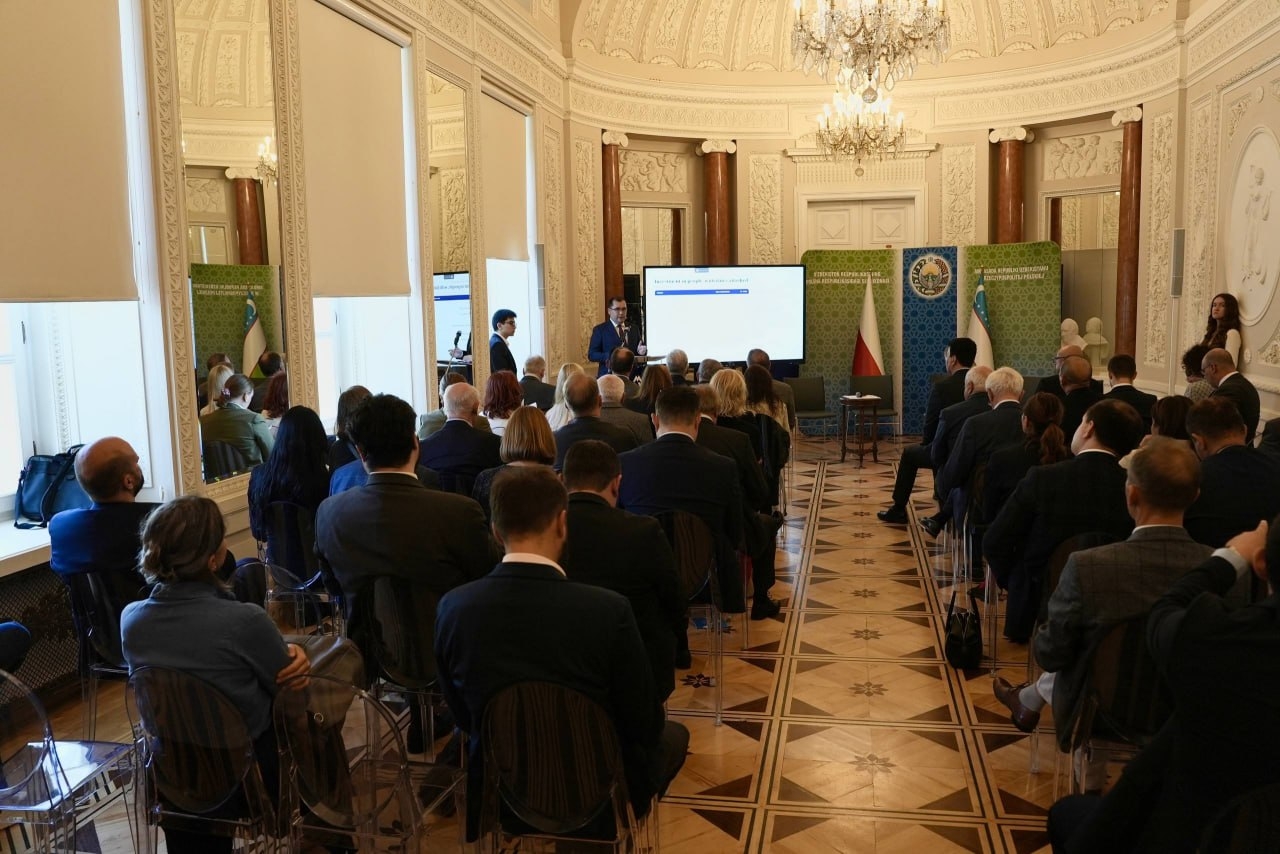
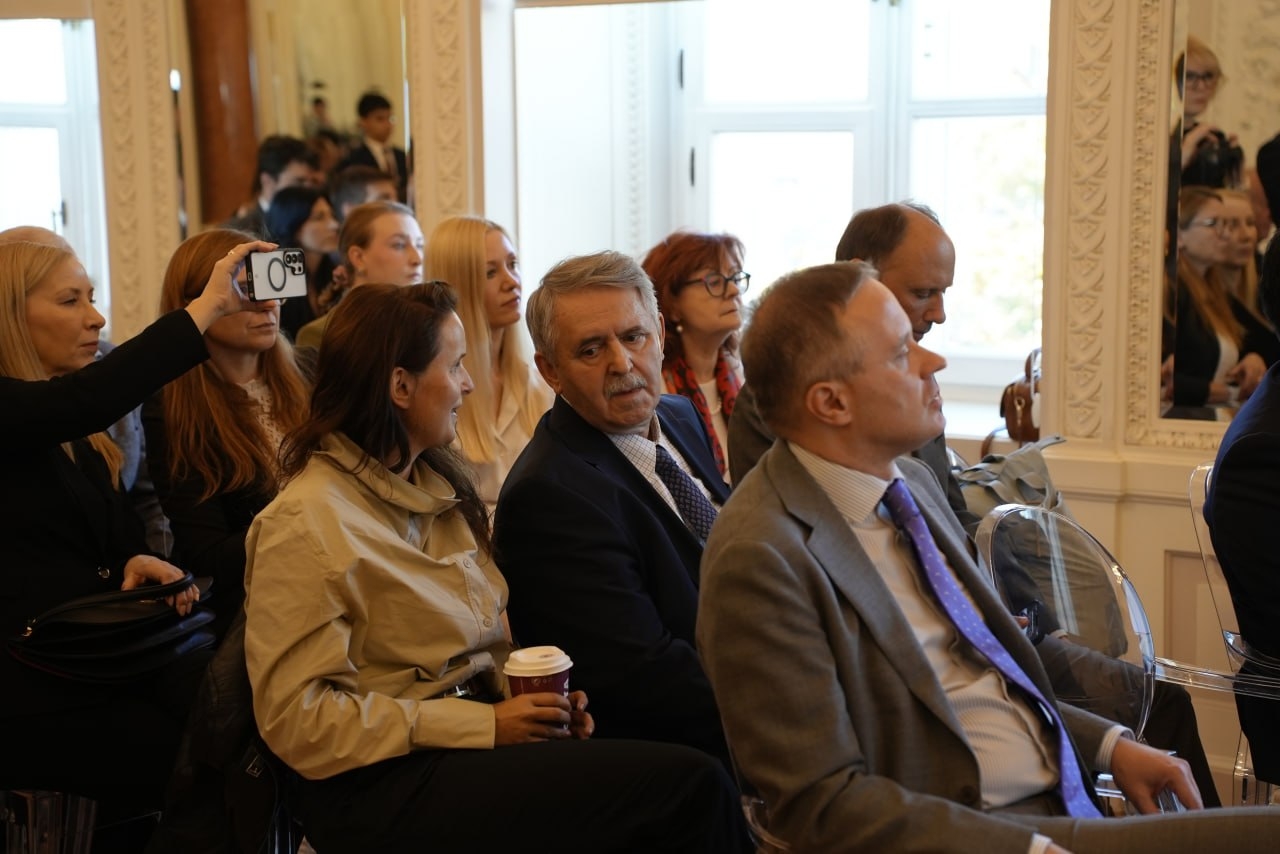
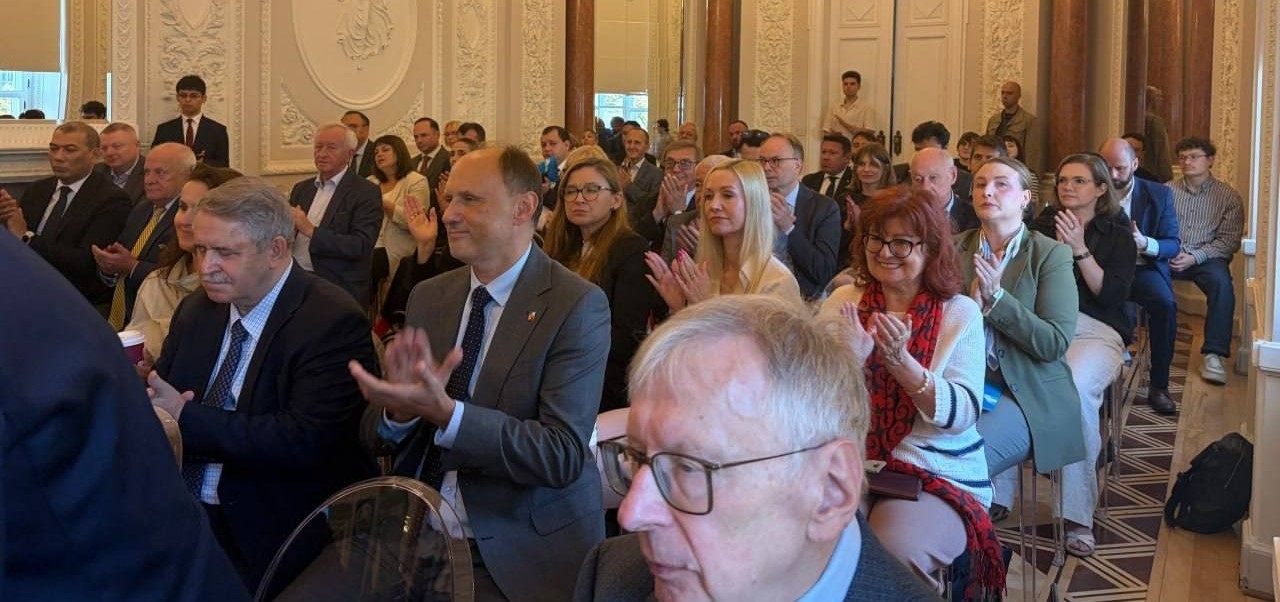
An international conference titled “Reforms of New Uzbekistan and the ‘Uzbekistan – 2030’ Strategy” was held at the University of Warsaw to mark the 35th anniversary of the independence of the Republic of Uzbekistan.
The event was organized at the initiative of the Embassy of the Republic of Uzbekistan in Poland, in cooperation with the Legislative Chamber of the Oliy Majlis, the Development Strategy Center, the Faculty of Political Science and International Studies of the University of Warsaw, the Amicus Europae Foundation of Aleksander Kwaśniewski, and the Perspektywy Education Foundation.
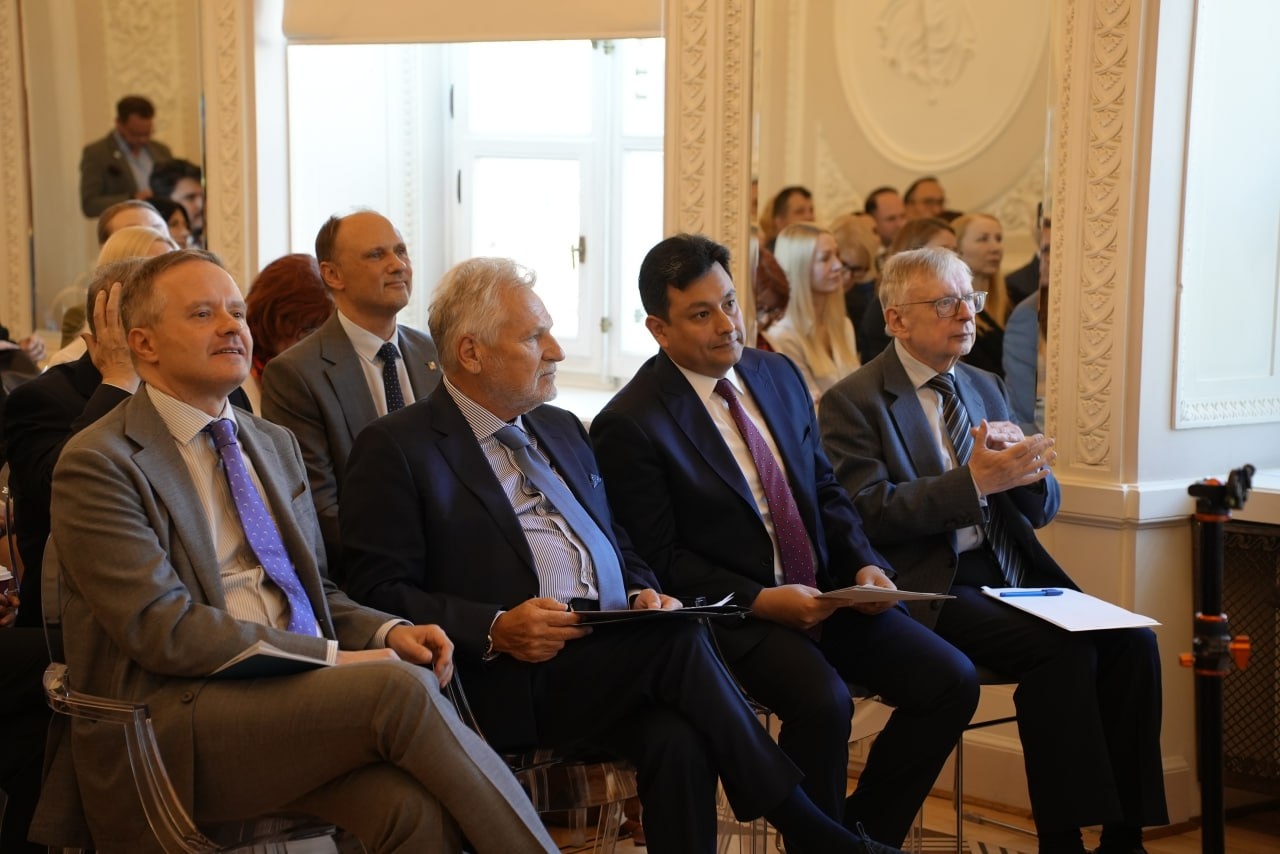
The conference brought together former President of the Republic of Poland Aleksander Kwaśniewski, Deputy Marshal of the Senate of the Republic of Poland Michał Tomasz Kamiński, Deputy Speaker of the Legislative Chamber of the Oliy Majlis Rakhimjon Hakimov, Ambassador Extraordinary and Plenipotentiary of the Republic of Uzbekistan to Poland Amirsayid Agzamkhodjaev, Executive Director of the Development Strategy Center Eldor Tulyakov, Vice-Rector of the University of Warsaw Maciej Raś, as well as representatives of government bodies, parliaments, the diplomatic corps, expert and academic communities, and the media.
The conference addressed the political, legal, economic, and social reforms being implemented as part of the construction of New Uzbekistan, their practical outcomes, and the priority tasks facing the country at its new stage of development.
Deputy Speaker of the Legislative Chamber of the Oliy Majlis Rakhimjon Hakimov noted that reforms over the past decade had brought profound changes to society, the economy, and public administration. In particular, he highlighted the elimination of forced and child labour, the removal of restrictions on currency conversion, the abolition of the residence registration system, and the strengthening of Parliament’s role and oversight powers. He also noted the strengthened separation between executive and representative authorities at the local level, with 33 powers of regional governors transferred to local Councils.
The 2023 constitutional reform also received particular attention. It was noted that more than 220,000 proposals were submitted by citizens during the constitutional reform process, while 65 percent of the text of the Constitution in its new edition was revised based on public proposals.
The discussion of economic reforms focused on the results of changes in the currency, tax, customs, and investment sectors aimed at making the country’s economy more open and competitive. According to data presented at the event, the volume of foreign investment has reached USD 40–50 billion annually, while Uzbekistan’s position in the Index of Economic Freedom has improved by 80 places.
Significant results were also highlighted in the social sector. In particular, the poverty rate declined from nearly 35 percent in 2017 to 4 percent. Preschool education coverage reached 78 percent, while higher education coverage increased to more than 42 percent, compared with 9 percent in 2016.
“UZBEKISTAN – 2030” STRATEGY PRESENTED IN POLISH
One of the central topics of the conference was the “Uzbekistan – 2030” Strategy and the priority tasks outlined by President of the Republic of Uzbekistan Shavkat Mirziyoyev in his address at the ceremony marking the 35th anniversary of the country’s independence.
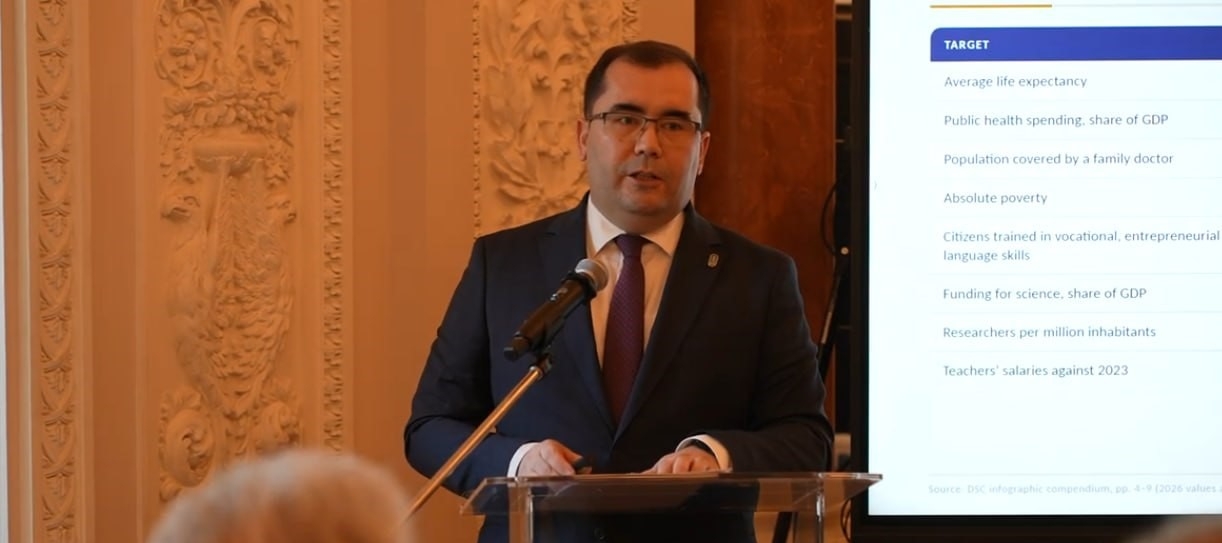
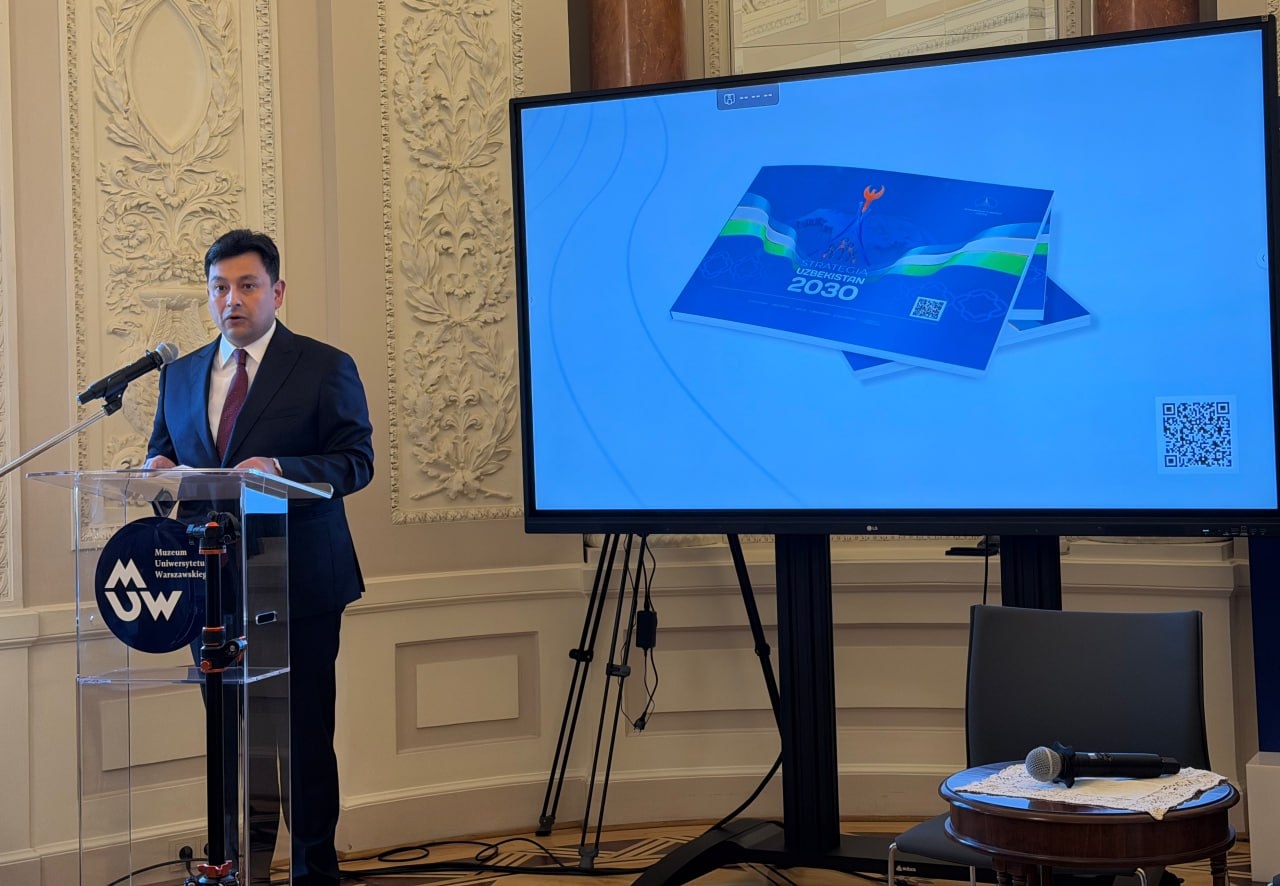
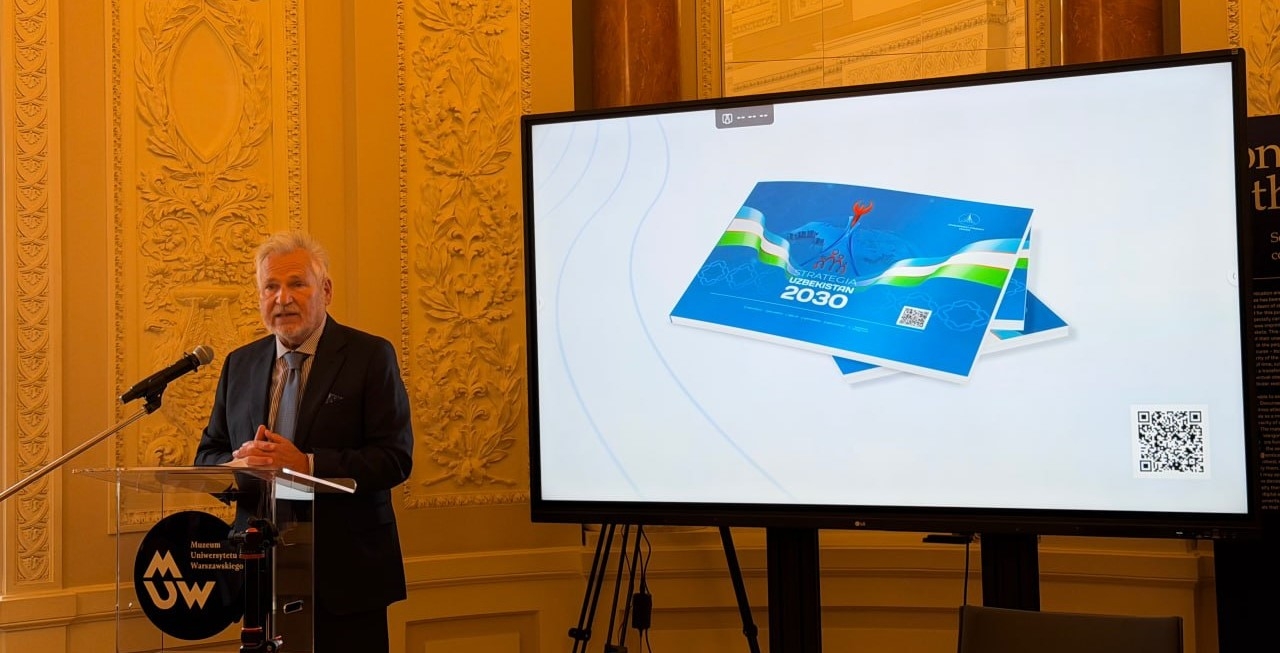
As part of the event, the Polish-language edition of the “Uzbekistan – 2030” Strategy was presented to participants. Executive Director of the Development Strategy Center Eldor Tulyakov outlined the Strategy’s main areas, its objectives, and the priority outcomes envisaged for the future.
It was noted that the Strategy covers such priority areas as developing human capital, education, and healthy lifestyles; transforming the economy through high technologies and increased labour productivity; ensuring the rational use of water and natural resources; strengthening judicial independence; and upholding the rule of law.
The Strategy sets such strategic goals for the coming decade as attracting USD 450 billion in foreign investment, increasing GDP to USD 300 billion by 2030, and raising GDP per capita to more than USD 10,000.
ALEKSANDER KWAŚNIEWSKI: “UZBEKISTAN IS UNDERGOING A LARGE-SCALE TRANSFORMATION PROCESS”
Former President of the Republic of Poland Aleksander Kwaśniewski, speaking about the changes taking place in Uzbekistan, highlighted the country’s broad process of economic, social, and institutional modernization.
He noted that the “Uzbekistan – 2030” Strategy provides a long-term foundation for this transformation and is aimed at building a more prosperous, competitive, and modern state.
It was also noted that Uzbekistan’s location at the heart of Central Asia, at the crossroads of major transport and trade routes, creates significant opportunities for the country to become an important link connecting Europe, Central Asia, and Asia.
INTEREST AMONG POLISH PARLIAMENTARIANS IN UZBEKISTAN IS GROWING
Deputy Marshal of the Senate of the Republic of Poland Michał Tomasz Kamiński noted that interest among Polish parliamentarians in Uzbekistan, its international significance, and its political position has been growing in recent years.
He highlighted Uzbekistan’s importance for Poland in a number of areas, emphasizing the country’s role in Central Asia, its historical and cultural heritage, and its significance in the Turkic world.
He also shared his impressions of his recent visit to the Center of Islamic Civilization in Uzbekistan, describing it as an important educational and research institution showcasing the country’s rich historical and spiritual heritage.
At the conclusion of the conference, participants emphasized the importance of further developing political, interparliamentary, academic, and expert dialogue between Uzbekistan and Poland, strengthening ties between research and expert communities, and continuing open dialogue on the reforms being implemented in Uzbekistan.
The conference served as an important platform for expanding dialogue among the expert, parliamentary, and academic communities of the two countries, as well as for presenting the substance and key directions of the reforms of New Uzbekistan and the “Uzbekistan – 2030” Strategy to the international community.
Information Service of the
Development Strategy Center
 English
 Русский
 О'zbek


An international conference titled “Reforms of New Uzbekistan and the ‘Uzbekistan – 2030’ Strategy” was held at the University of Warsaw to mark the 35th anniversary of the independence of the Republic of Uzbekistan.
The event was organized at the initiative of the Embassy of the Republic of Uzbekistan in Poland, in cooperation with the Legislative Chamber of the Oliy Majlis, the Development Strategy Center, the Faculty of Political Science and International Studies of the University of Warsaw, the Amicus Europae Foundation of Aleksander Kwaśniewski, and the Perspektywy Education Foundation.
The conference brought together former President of the Republic of Poland Aleksander Kwaśniewski, Deputy Marshal of the Senate of the Republic of Poland Michał Tomasz Kamiński, Deputy Speaker of the Legislative Chamber of the Oliy Majlis Rakhimjon Hakimov, Ambassador Extraordinary and Plenipotentiary of the Republic of Uzbekistan to Poland Amirsayid Agzamkhodjaev, Executive Director of the Development Strategy Center Eldor Tulyakov, Vice-Rector of the University of Warsaw Maciej Raś, as well as representatives of government bodies, parliaments, the diplomatic corps, expert and academic communities, and the media.
The conference addressed the political, legal, economic, and social reforms being implemented as part of the construction of New Uzbekistan, their practical outcomes, and the priority tasks facing the country at its new stage of development.
Deputy Speaker of the Legislative Chamber of the Oliy Majlis Rakhimjon Hakimov noted that reforms over the past decade had brought profound changes to society, the economy, and public administration. In particular, he highlighted the elimination of forced and child labour, the removal of restrictions on currency conversion, the abolition of the residence registration system, and the strengthening of Parliament’s role and oversight powers. He also noted the strengthened separation between executive and representative authorities at the local level, with 33 powers of regional governors transferred to local Councils.
The 2023 constitutional reform also received particular attention. It was noted that more than 220,000 proposals were submitted by citizens during the constitutional reform process, while 65 percent of the text of the Constitution in its new edition was revised based on public proposals.
The discussion of economic reforms focused on the results of changes in the currency, tax, customs, and investment sectors aimed at making the country’s economy more open and competitive. According to data presented at the event, the volume of foreign investment has reached USD 40–50 billion annually, while Uzbekistan’s position in the Index of Economic Freedom has improved by 80 places.
Significant results were also highlighted in the social sector. In particular, the poverty rate declined from nearly 35 percent in 2017 to 4 percent. Preschool education coverage reached 78 percent, while higher education coverage increased to more than 42 percent, compared with 9 percent in 2016.
“UZBEKISTAN – 2030” STRATEGY PRESENTED IN POLISH
One of the central topics of the conference was the “Uzbekistan – 2030” Strategy and the priority tasks outlined by President of the Republic of Uzbekistan Shavkat Mirziyoyev in his address at the ceremony marking the 35th anniversary of the country’s independence.
As part of the event, the Polish-language edition of the “Uzbekistan – 2030” Strategy was presented to participants. Executive Director of the Development Strategy Center Eldor Tulyakov outlined the Strategy’s main areas, its objectives, and the priority outcomes envisaged for the future.
It was noted that the Strategy covers such priority areas as developing human capital, education, and healthy lifestyles; transforming the economy through high technologies and increased labour productivity; ensuring the rational use of water and natural resources; strengthening judicial independence; and upholding the rule of law.
The Strategy sets such strategic goals for the coming decade as attracting USD 450 billion in foreign investment, increasing GDP to USD 300 billion by 2030, and raising GDP per capita to more than USD 10,000.
ALEKSANDER KWAŚNIEWSKI: “UZBEKISTAN IS UNDERGOING A LARGE-SCALE TRANSFORMATION PROCESS”
Former President of the Republic of Poland Aleksander Kwaśniewski, speaking about the changes taking place in Uzbekistan, highlighted the country’s broad process of economic, social, and institutional modernization.
He noted that the “Uzbekistan – 2030” Strategy provides a long-term foundation for this transformation and is aimed at building a more prosperous, competitive, and modern state.
It was also noted that Uzbekistan’s location at the heart of Central Asia, at the crossroads of major transport and trade routes, creates significant opportunities for the country to become an important link connecting Europe, Central Asia, and Asia.
INTEREST AMONG POLISH PARLIAMENTARIANS IN UZBEKISTAN IS GROWING
Deputy Marshal of the Senate of the Republic of Poland Michał Tomasz Kamiński noted that interest among Polish parliamentarians in Uzbekistan, its international significance, and its political position has been growing in recent years.
He highlighted Uzbekistan’s importance for Poland in a number of areas, emphasizing the country’s role in Central Asia, its historical and cultural heritage, and its significance in the Turkic world.
He also shared his impressions of his recent visit to the Center of Islamic Civilization in Uzbekistan, describing it as an important educational and research institution showcasing the country’s rich historical and spiritual heritage.
At the conclusion of the conference, participants emphasized the importance of further developing political, interparliamentary, academic, and expert dialogue between Uzbekistan and Poland, strengthening ties between research and expert communities, and continuing open dialogue on the reforms being implemented in Uzbekistan.
The conference served as an important platform for expanding dialogue among the expert, parliamentary, and academic communities of the two countries, as well as for presenting the substance and key directions of the reforms of New Uzbekistan and the “Uzbekistan – 2030” Strategy to the international community.
Information Service of the
Development Strategy Center