Development Strategy Center has hosted the second workshop with representatives of the Peace Nexus Foundation (Switzerland) as part of the project ‘Development of Transport Corridors in Central Asia and the Effect of the Belt and Road Initiative’.
The project was implemented with the participation of representatives of the Institute of Strategic and Interregional Studies under the President of the Republic of Uzbekistan, National Institute for Strategic Studies of the Kyrgyz Republic, expert and analytical centers of the Eurasian Integration of the Republic of Kazakhstan and Eurasian research institutes.
The study is aimed at estimating the level of relations between the states of the region on the issues of transport and energy corridors, at identifying mutual and diverging interests. It also focuses on assessing the potential of resources and mechanisms for cooperation between Central Asian states on the one hand, and for their interaction with leading countries, on the other hand.
The transport and logistics sector, being one of major priorities of the foreign policy of Uzbekistan, proves key and relevant in the formation of constructive and mutually beneficial relations with the Central Asian states.
The shortest routes connecting major international markets pass through the region. Its transport and transit potential is conditioned by its geostrategic position in the heart of the Great Silk Road, which historically served as a bridge between East and West, North and South. Speaking at a consultative meeting of the heads of Central Asian states in Nursultan in 2018, President Shavkat Mirziyoyev emphasized that the implementation of transport and communication projects should become the priority to connect Central Asia with the largest seaports and world markets.
One of the important issues facing the Central Asian countries today is about the creation of conditions for the transportation of goods through their territory. This primarily refers to the modernization of transport infrastructure and the arrangement of logistics services in a way that the speed of land transportation of goods and lower costs would make it competitive against sea transport. This is especially relevant in view of the fact that, by 2020, it is expected that transportation of all goods between Asia and Europe by road and rail will scale up from the current 1-2% to 10%.
Meanwhile, the countries of the region do not have direct access to seaports. According to experts, today more than 90% of freight traffic in intercontinental trade between Asia and Europe is carried out by sea. Landlocked developing countries spend about 18% of their export earnings for transport services, while in general developing countries spend 9%.
According to UNCTAD, in many cases transportation costs for Central Asian countries reach 60% of the value of imported goods.
The countries of the region are making active efforts to create a highly developed and functional transport infrastructure on their territory in line with up-to-date requirements.
Also, they strive to build a full-fledged own transport system that contributes to the implementation of the political, economic and other tasks. Moreover, an extensive transport network, integrated with similar communications of other countries, allows for the transportation of its own international as well as transit goods, which is an additional item to replenish the budget.
Central Asia is an important bridge for world trade, a transcontinental connection linking transport corridors along the North-South and West-East routes. To date, Central Asia has turned into a hub of transit corridor system, which helps increase the flow of goods and capital amid world production centers in Asia and Europe.
Upon the workshop, the participants agreed on the preparation of the joint report on the development of transport corridors in Central Asia over the past five years, and on the presentation of this report at the next workshop in December.
 English
 Русский
 О'zbek


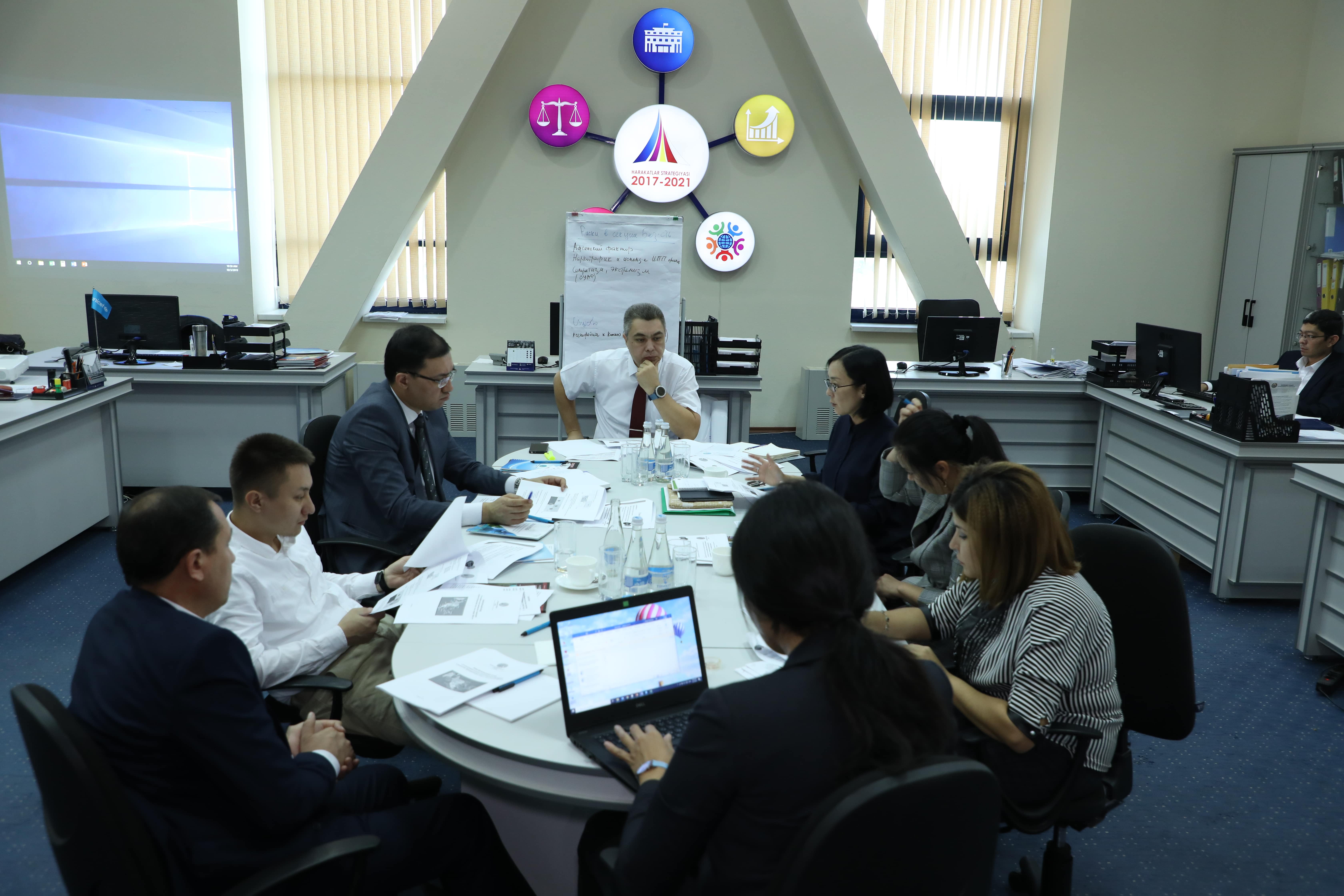




Development Strategy Center has hosted the second workshop with representatives of the Peace Nexus Foundation (Switzerland) as part of the project ‘Development of Transport Corridors in Central Asia and the Effect of the Belt and Road Initiative’.
The project was implemented with the participation of representatives of the Institute of Strategic and Interregional Studies under the President of the Republic of Uzbekistan, National Institute for Strategic Studies of the Kyrgyz Republic, expert and analytical centers of the Eurasian Integration of the Republic of Kazakhstan and Eurasian research institutes.
The study is aimed at estimating the level of relations between the states of the region on the issues of transport and energy corridors, at identifying mutual and diverging interests. It also focuses on assessing the potential of resources and mechanisms for cooperation between Central Asian states on the one hand, and for their interaction with leading countries, on the other hand.
The transport and logistics sector, being one of major priorities of the foreign policy of Uzbekistan, proves key and relevant in the formation of constructive and mutually beneficial relations with the Central Asian states.
The shortest routes connecting major international markets pass through the region. Its transport and transit potential is conditioned by its geostrategic position in the heart of the Great Silk Road, which historically served as a bridge between East and West, North and South. Speaking at a consultative meeting of the heads of Central Asian states in Nursultan in 2018, President Shavkat Mirziyoyev emphasized that the implementation of transport and communication projects should become the priority to connect Central Asia with the largest seaports and world markets.
One of the important issues facing the Central Asian countries today is about the creation of conditions for the transportation of goods through their territory. This primarily refers to the modernization of transport infrastructure and the arrangement of logistics services in a way that the speed of land transportation of goods and lower costs would make it competitive against sea transport. This is especially relevant in view of the fact that, by 2020, it is expected that transportation of all goods between Asia and Europe by road and rail will scale up from the current 1-2% to 10%.
Meanwhile, the countries of the region do not have direct access to seaports. According to experts, today more than 90% of freight traffic in intercontinental trade between Asia and Europe is carried out by sea. Landlocked developing countries spend about 18% of their export earnings for transport services, while in general developing countries spend 9%.
According to UNCTAD, in many cases transportation costs for Central Asian countries reach 60% of the value of imported goods.
The countries of the region are making active efforts to create a highly developed and functional transport infrastructure on their territory in line with up-to-date requirements.
Also, they strive to build a full-fledged own transport system that contributes to the implementation of the political, economic and other tasks. Moreover, an extensive transport network, integrated with similar communications of other countries, allows for the transportation of its own international as well as transit goods, which is an additional item to replenish the budget.
Central Asia is an important bridge for world trade, a transcontinental connection linking transport corridors along the North-South and West-East routes. To date, Central Asia has turned into a hub of transit corridor system, which helps increase the flow of goods and capital amid world production centers in Asia and Europe.
Upon the workshop, the participants agreed on the preparation of the joint report on the development of transport corridors in Central Asia over the past five years, and on the presentation of this report at the next workshop in December.