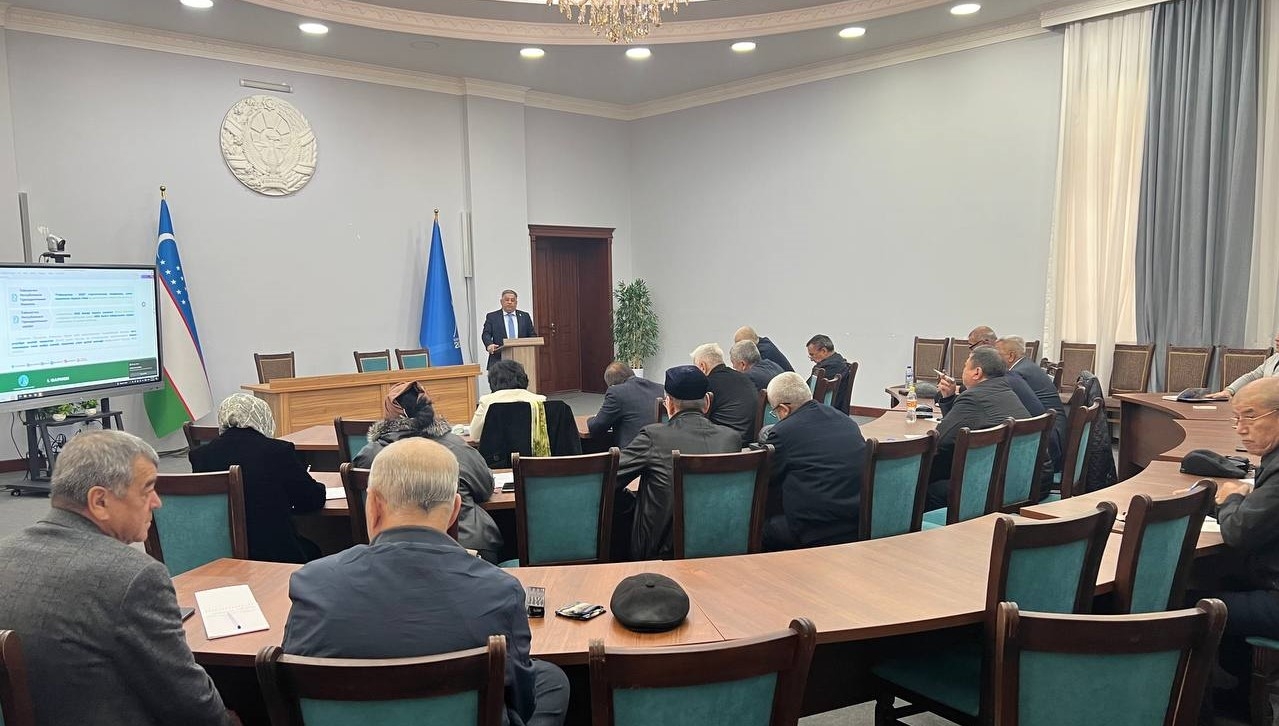
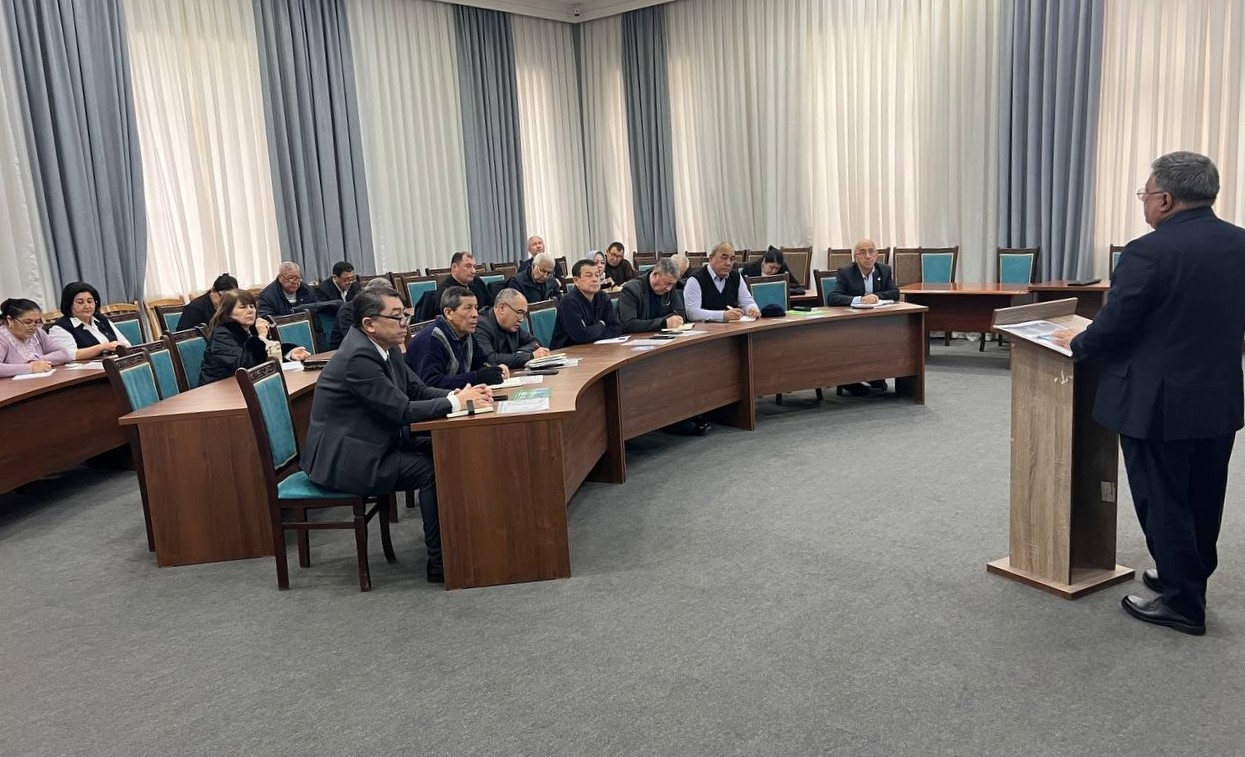
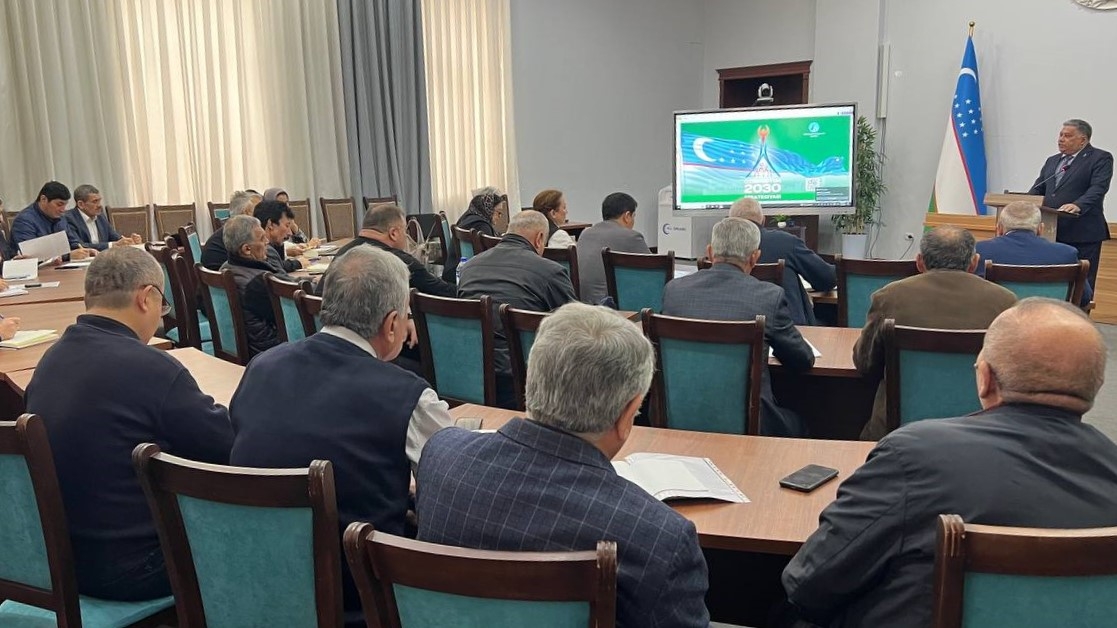
Today, the activities of the “mahalla seven” members have been launched in order to more quickly identify and solve the problems of the population, develop entrepreneurship in the mahalla, ensure employment of the population, and reduce poverty. The goal of this action is to achieve effective implementation of reforms starting from the lowest level. The content of the scheduled roundtable discussion held at the Center for Advanced Training of Employees of Citizen Self-Government Bodies under the Tashkent City Administration was focused on this issue.
The discussion focused on the role of the "mahalla seven" in effectively implementing the goals outlined in the "Uzbekistan - 2030" strategy. Avazbek Kholbekov, Head of Department at the Development Strategy Center, shared views on how mahallas and government agencies can work together to manage public affairs and strengthen their activities.
The Center's expert also discussed the tasks outlined in the "Uzbekistan - 2030" strategy, which aim to ensure the population's well-being and transform the mahalla into a "bridge" between public and state bodies in resolving everyday regional issues.
In particular, by 2030 the Strategy envisages the implementation of the practice of directing mahalla funds to infrastructure projects according to the voice of the population, increasing the amount of funds allocated to solve problems in mahallas by at least 3 times, increasing the funds allocated to improve infrastructure at the initiative of the population up to 24 trillion soums, establishing the provision of more than 100 public services in mahallas in a “one-step” manner, 100% digitizing processes aimed at working with the population, and launching “electronic service points” in each mahalla.
During the meeting, it was emphasized that it is necessary to increase the activity of the “mahalla seven” in the timely and effective implementation of such reforms. The mahalla chairmen who participated in the event expressed their opinions within the framework of the topic.
It should be noted that various events, roundtables and dialogues, aimed at increasing the role of the “mahalla seven” in the effective implementation of the goals set in the “Uzbekistan – 2030” strategy are regularly held throughout the regions of our republic.
Development Strategy Center
Information service
 English
 Русский
 О'zbek


Today, the activities of the “mahalla seven” members have been launched in order to more quickly identify and solve the problems of the population, develop entrepreneurship in the mahalla, ensure employment of the population, and reduce poverty. The goal of this action is to achieve effective implementation of reforms starting from the lowest level. The content of the scheduled roundtable discussion held at the Center for Advanced Training of Employees of Citizen Self-Government Bodies under the Tashkent City Administration was focused on this issue.
The discussion focused on the role of the "mahalla seven" in effectively implementing the goals outlined in the "Uzbekistan - 2030" strategy. Avazbek Kholbekov, Head of Department at the Development Strategy Center, shared views on how mahallas and government agencies can work together to manage public affairs and strengthen their activities.
The Center's expert also discussed the tasks outlined in the "Uzbekistan - 2030" strategy, which aim to ensure the population's well-being and transform the mahalla into a "bridge" between public and state bodies in resolving everyday regional issues.
In particular, by 2030 the Strategy envisages the implementation of the practice of directing mahalla funds to infrastructure projects according to the voice of the population, increasing the amount of funds allocated to solve problems in mahallas by at least 3 times, increasing the funds allocated to improve infrastructure at the initiative of the population up to 24 trillion soums, establishing the provision of more than 100 public services in mahallas in a “one-step” manner, 100% digitizing processes aimed at working with the population, and launching “electronic service points” in each mahalla.
During the meeting, it was emphasized that it is necessary to increase the activity of the “mahalla seven” in the timely and effective implementation of such reforms. The mahalla chairmen who participated in the event expressed their opinions within the framework of the topic.
It should be noted that various events, roundtables and dialogues, aimed at increasing the role of the “mahalla seven” in the effective implementation of the goals set in the “Uzbekistan – 2030” strategy are regularly held throughout the regions of our republic.
Development Strategy Center
Information service