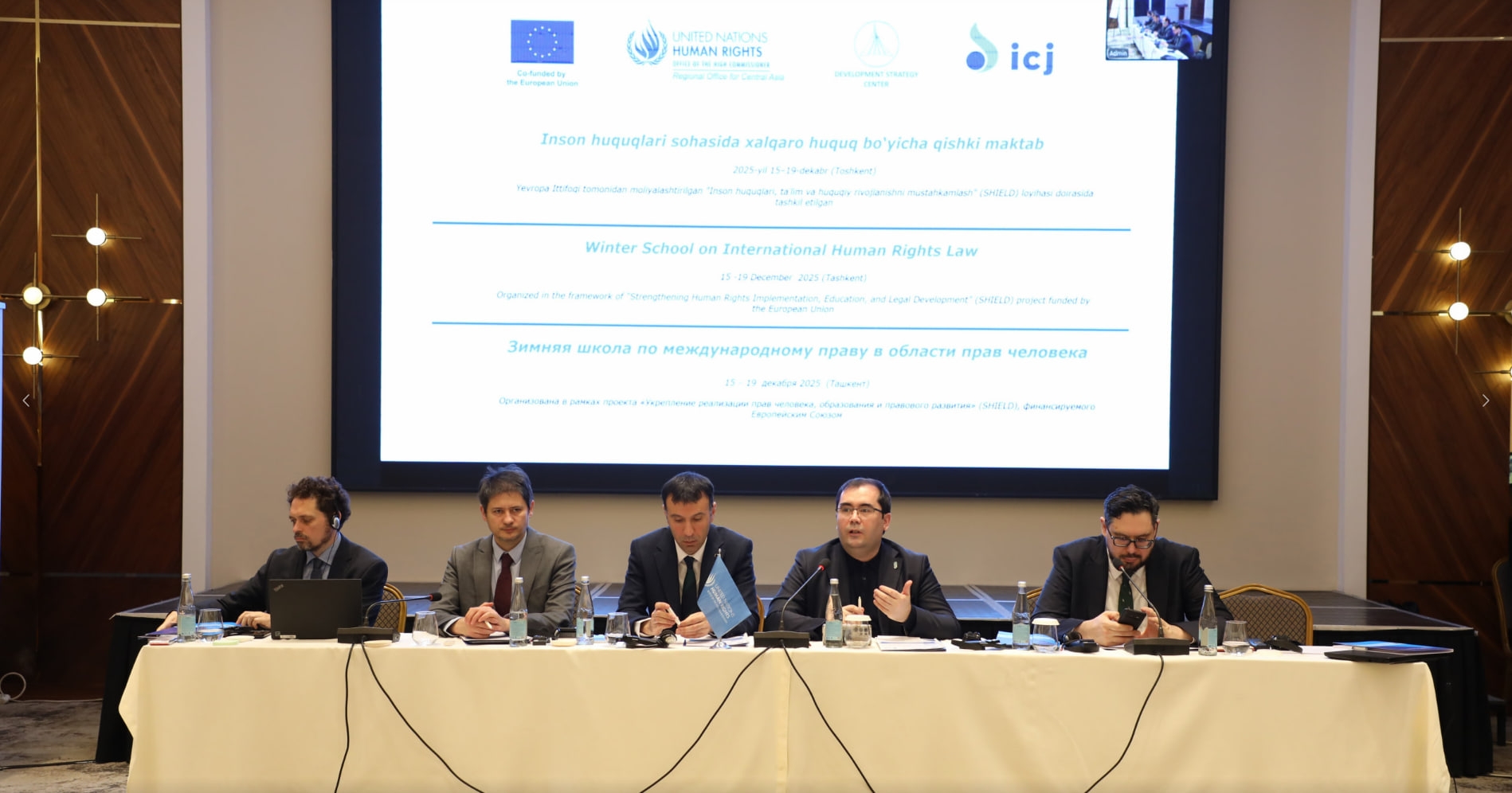
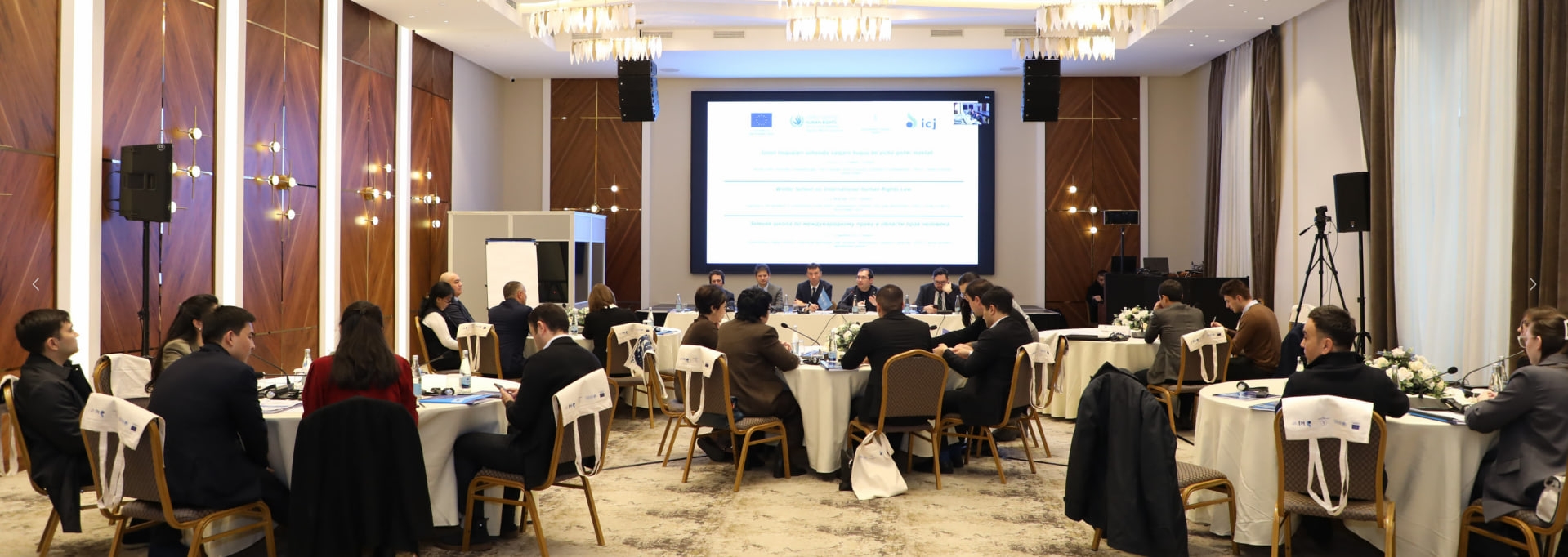
On 15-19 December this year, a training course entitled ‘Winter School’ on international human rights law was held in Tashkent. The event was organised by the Development Strategy Centre in conjunction with the Regional Office of the Office of the High Commissioner for Human Rights for Central Asia (OHCHR-ROCA) and the International Commission of Jurists (ICJ).
The event focused on the implementation of international legal norms and standards in the field of human rights in national practice, with an emphasis on the activities and significance of UN treaty bodies. The Winter School agenda included studying key universal international human rights treaties and explaining the provisions of UN treaty bodies.
The training sessions were attended by representatives of the National Centre for Human Rights of the Republic of Uzbekistan, the Academy of Justice, the National Agency for Social Protection, the Ombudsman of the Oliy Majlis of the Republic of Uzbekistan for Human Rights and Children’s Rights, the Ministry of Justice, the Bar Association, the Law Enforcement Academy, the Association of Persons with Disabilities, the University of World Economy and Diplomacy, and Tashkent State Law University.
As part of the event, participants attended theoretical and practical sessions on the sources and principles of international law, the UN human rights protection system, rights to freedom, economic, social and cultural rights, the right to adequate housing, the right to education, women’s rights, the Convention on the Rights of the Child, the Convention on the Rights of Persons with Disabilities, etc.
In the introductory part of the Winter School, welcoming remarks were made by the Director of the National Centre for Human Rights of the Republic of Uzbekistan, Academician Akmal Saidov, and the Executive Director of the Development Strategy Centre, E. Tulyakov, who emphasised that in recent years, Uzbekistan has been implementing comprehensive measures and reforms to ensure human rights. In turn, cooperation in this area is also being activated on the international stage. For example, for the first time in history, a representative of Uzbekistan was elected to the UN Human Rights Committee (HRC) for the period 2025-2028. In addition, since gaining independence, Uzbekistan has signed key UN conventions.
Former member of the UN Committee on the Rights of the Child Mikiko Otani, member of the UN Committee on the Rights of Persons with Disabilities Markus Schäfer, human rights advisor to the OHCHR Regional Office for Central Asia Omer Fischer, and Director of the Europe and Central Asia Programme at the International Legal Assistance Consortium Temur Shakirov were invited to serve as trainers for the Winter School. Foreign experts shared their international experience on the functioning of UN treaty bodies for the protection of the rights of women, children, and persons with disabilities. They also presented information on the human rights situation in Japan and Switzerland.
An international expert discussion was held to summarise the results of the Winter School and discuss issues related to strengthening the implementation of international standards in the areas of gender, child protection and disability through UN treaty bodies.
During the discussion, international experts summarised the results of the Winter School training sessions and reviewed global trends in the protection of the rights of women, children and persons with disabilities.
In their speeches, representatives of international and foreign organisations particularly noted that Uzbekistan occupies one of the leading positions in the region in forming and maintaining a sustainable dialogue on the protection and promotion of human rights. It was noted that Uzbekistan’s fulfilment of its international obligations demonstrates its commitment to universal international standards in the field of human rights.
 English
 Русский
 О'zbek


On 15-19 December this year, a training course entitled ‘Winter School’ on international human rights law was held in Tashkent. The event was organised by the Development Strategy Centre in conjunction with the Regional Office of the Office of the High Commissioner for Human Rights for Central Asia (OHCHR-ROCA) and the International Commission of Jurists (ICJ).
The event focused on the implementation of international legal norms and standards in the field of human rights in national practice, with an emphasis on the activities and significance of UN treaty bodies. The Winter School agenda included studying key universal international human rights treaties and explaining the provisions of UN treaty bodies.
The training sessions were attended by representatives of the National Centre for Human Rights of the Republic of Uzbekistan, the Academy of Justice, the National Agency for Social Protection, the Ombudsman of the Oliy Majlis of the Republic of Uzbekistan for Human Rights and Children’s Rights, the Ministry of Justice, the Bar Association, the Law Enforcement Academy, the Association of Persons with Disabilities, the University of World Economy and Diplomacy, and Tashkent State Law University.
As part of the event, participants attended theoretical and practical sessions on the sources and principles of international law, the UN human rights protection system, rights to freedom, economic, social and cultural rights, the right to adequate housing, the right to education, women’s rights, the Convention on the Rights of the Child, the Convention on the Rights of Persons with Disabilities, etc.
In the introductory part of the Winter School, welcoming remarks were made by the Director of the National Centre for Human Rights of the Republic of Uzbekistan, Academician Akmal Saidov, and the Executive Director of the Development Strategy Centre, E. Tulyakov, who emphasised that in recent years, Uzbekistan has been implementing comprehensive measures and reforms to ensure human rights. In turn, cooperation in this area is also being activated on the international stage. For example, for the first time in history, a representative of Uzbekistan was elected to the UN Human Rights Committee (HRC) for the period 2025-2028. In addition, since gaining independence, Uzbekistan has signed key UN conventions.
Former member of the UN Committee on the Rights of the Child Mikiko Otani, member of the UN Committee on the Rights of Persons with Disabilities Markus Schäfer, human rights advisor to the OHCHR Regional Office for Central Asia Omer Fischer, and Director of the Europe and Central Asia Programme at the International Legal Assistance Consortium Temur Shakirov were invited to serve as trainers for the Winter School. Foreign experts shared their international experience on the functioning of UN treaty bodies for the protection of the rights of women, children, and persons with disabilities. They also presented information on the human rights situation in Japan and Switzerland.
An international expert discussion was held to summarise the results of the Winter School and discuss issues related to strengthening the implementation of international standards in the areas of gender, child protection and disability through UN treaty bodies.
During the discussion, international experts summarised the results of the Winter School training sessions and reviewed global trends in the protection of the rights of women, children and persons with disabilities.
In their speeches, representatives of international and foreign organisations particularly noted that Uzbekistan occupies one of the leading positions in the region in forming and maintaining a sustainable dialogue on the protection and promotion of human rights. It was noted that Uzbekistan’s fulfilment of its international obligations demonstrates its commitment to universal international standards in the field of human rights.