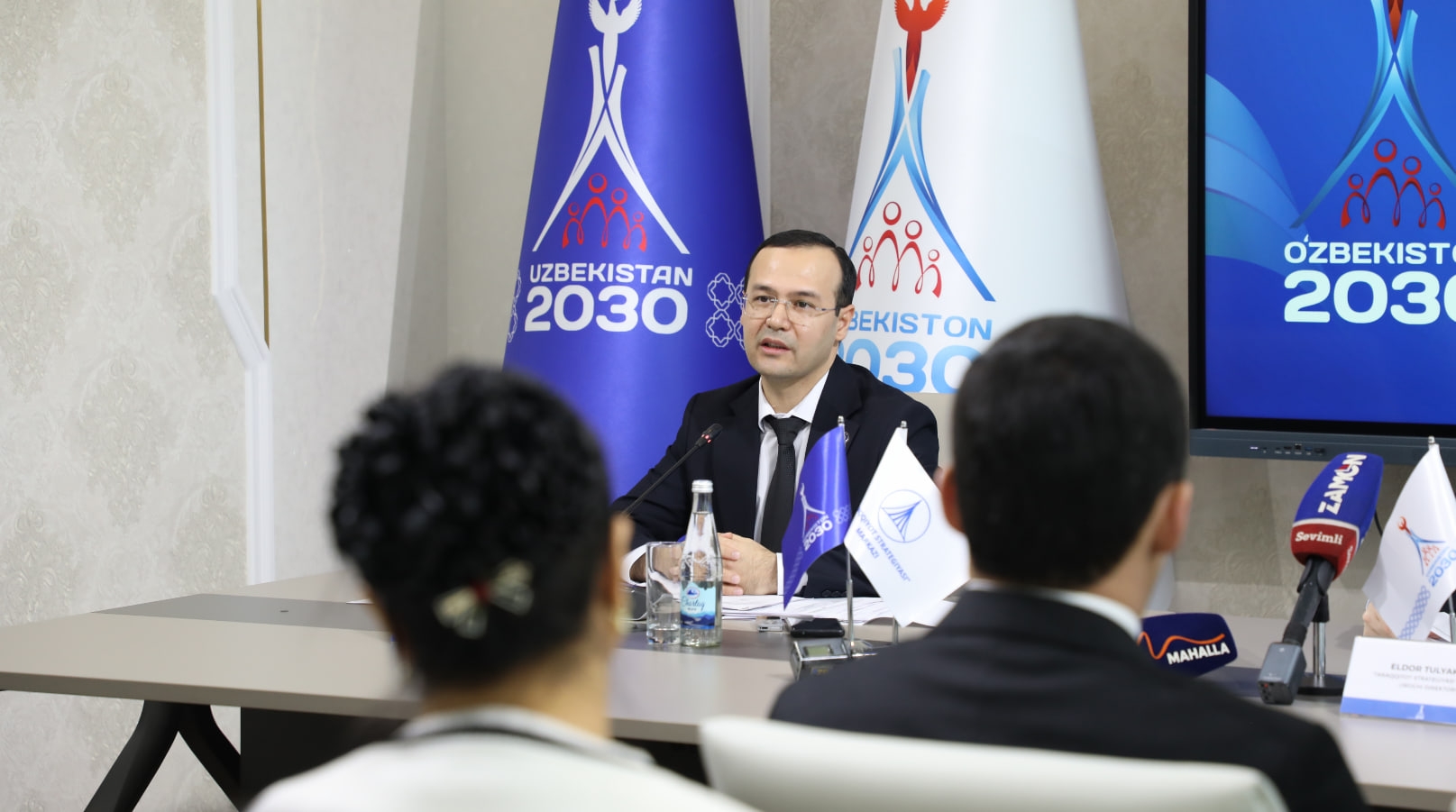
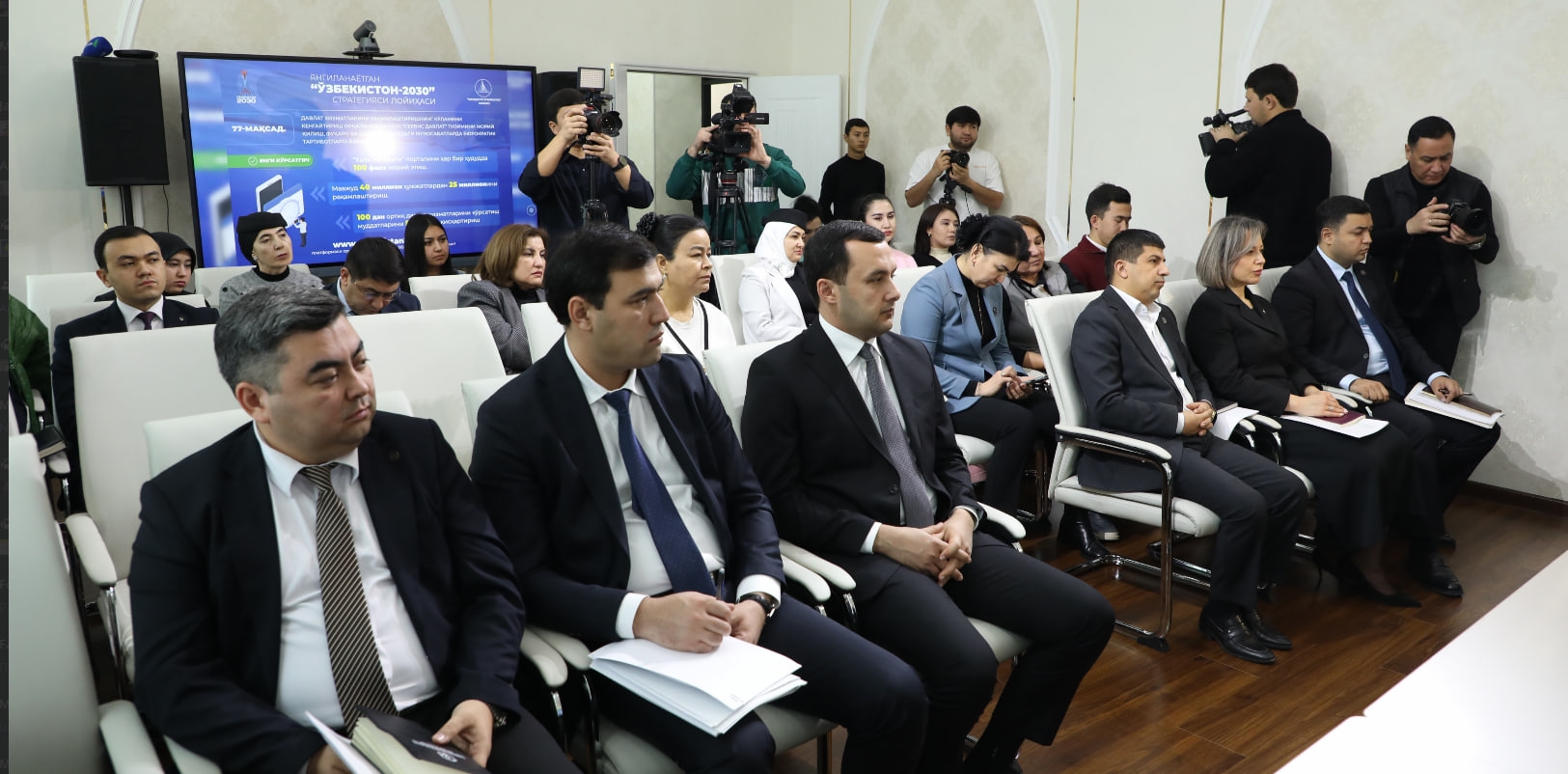
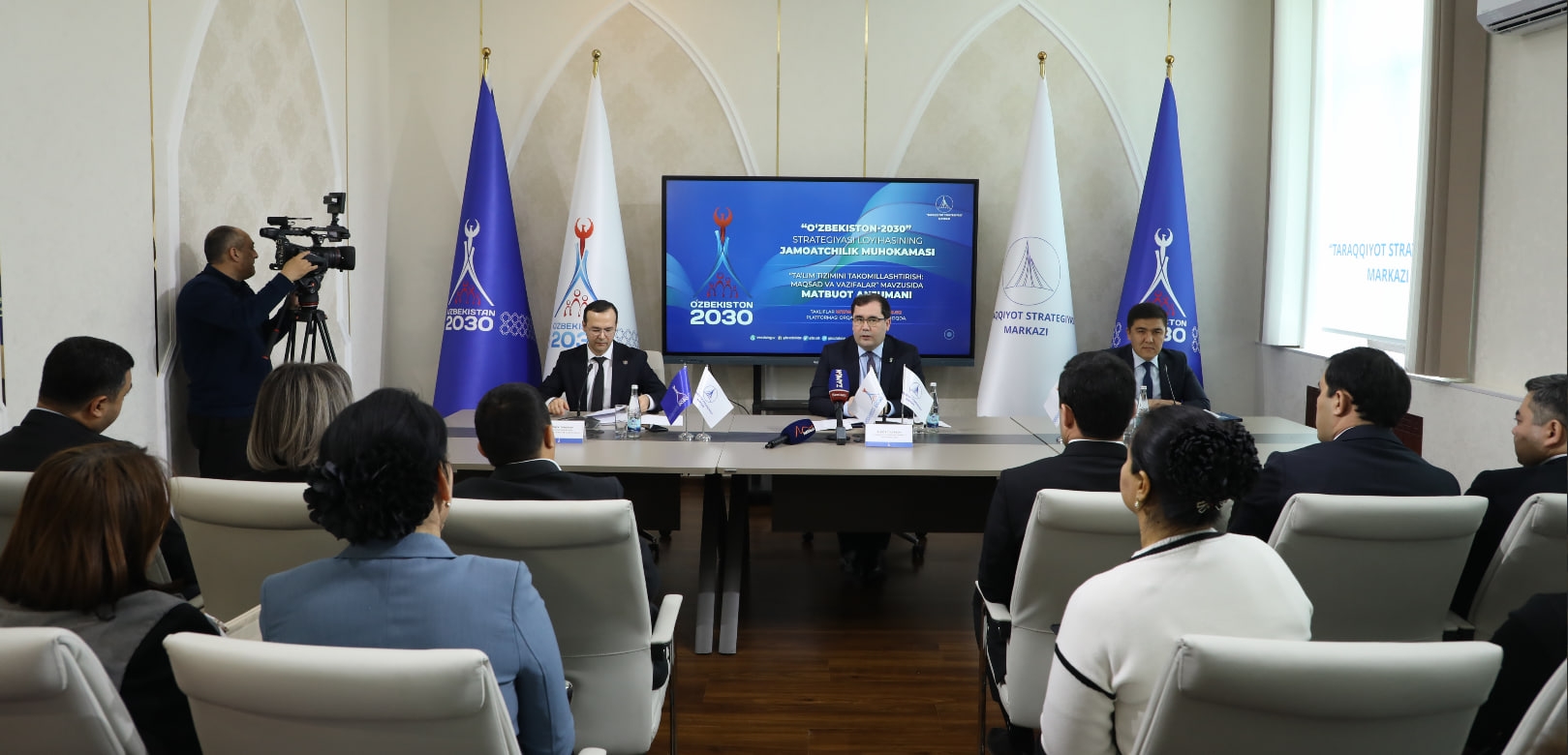
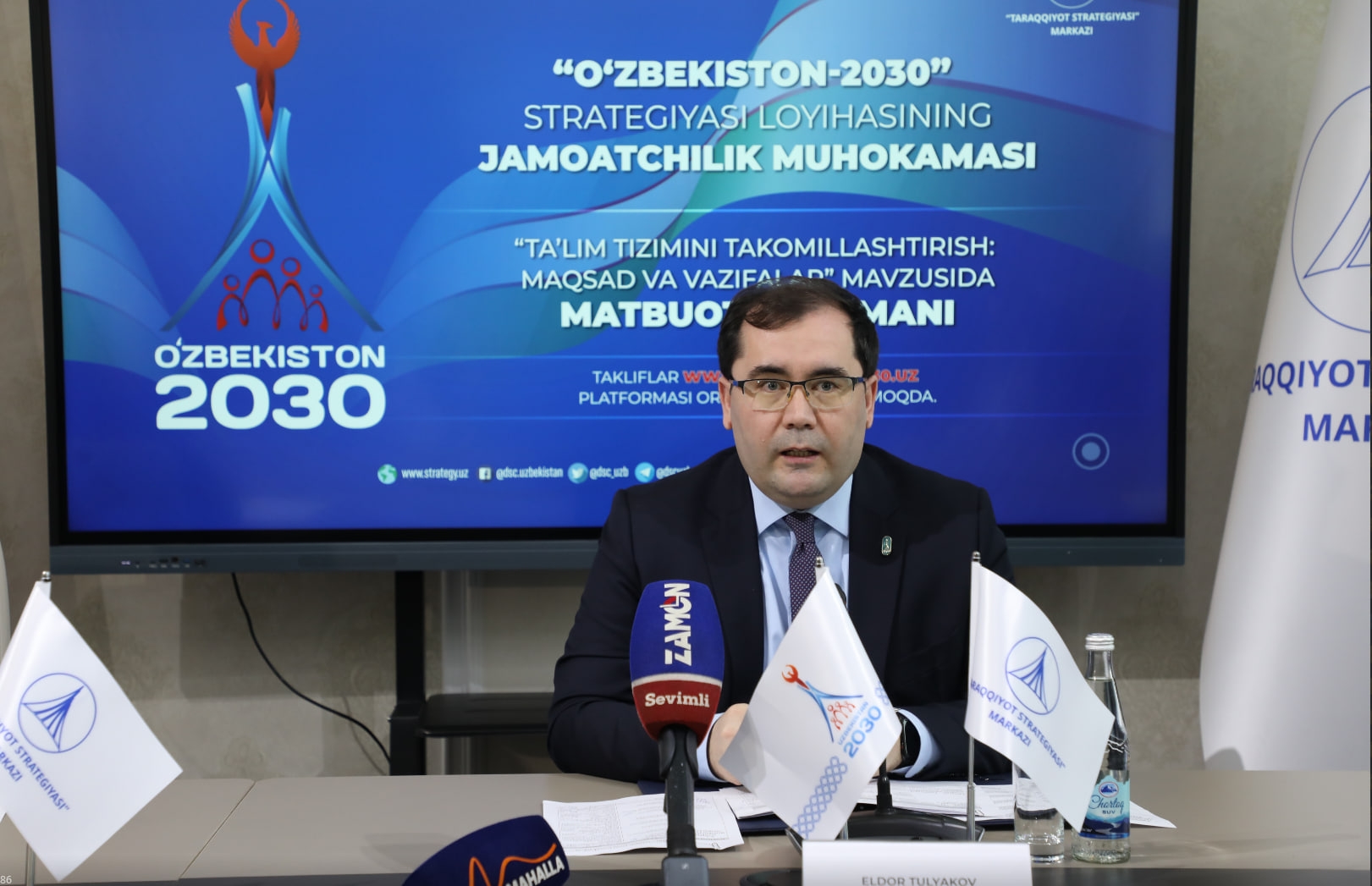
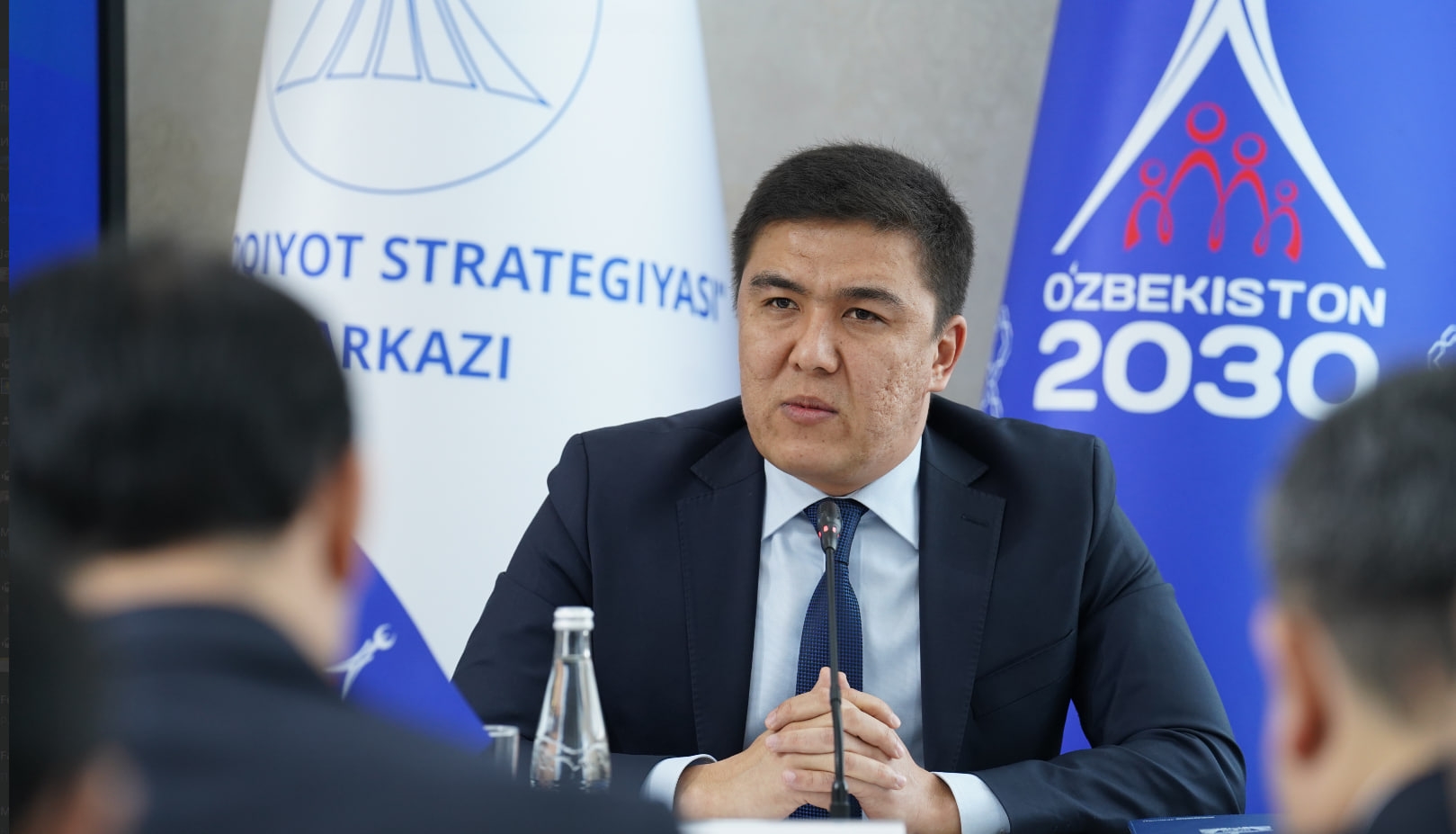
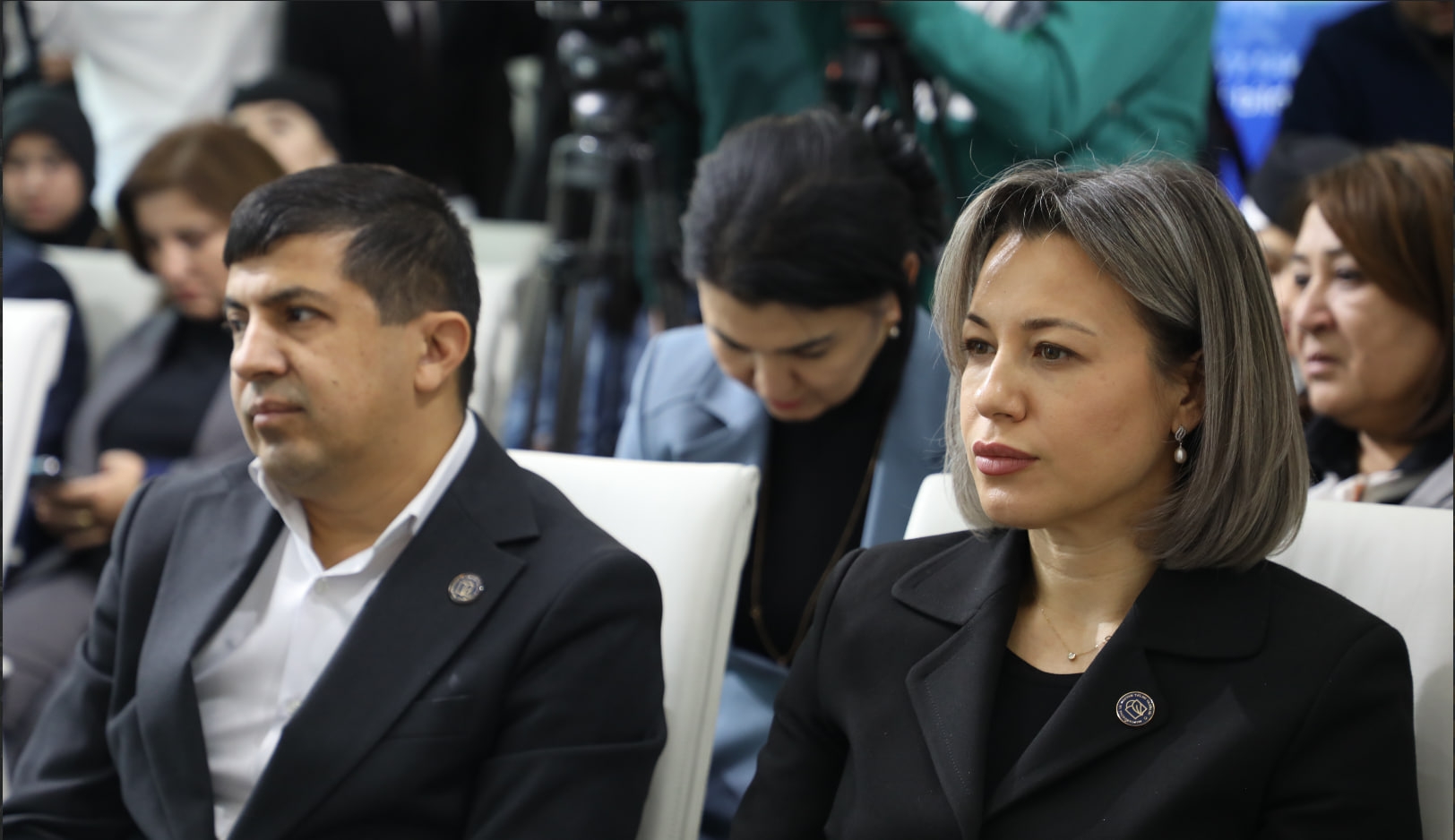
A press conference on “Improving the Education System: Goals and Objectives” held at the Development Strategy Center was dedicated to the public discussion of the draft “Uzbekistan-2030” Strategy under review.
The event was attended by representatives of the Ministry of Preschool and School Education, the Ministry of Higher Education, Science and Innovation, the Ministry of Digital Technologies, the Republican Scientific and Methodological Center for the Development of Education, experts, and media representatives.
The event, hosted by Eldor Tulyakov, Executive Director of the Development Strategy Centre, focused on the objectives set out in the Uzbekistan 2030 Strategy, the results achieved, the need for its improvement at present, the work being done in this direction, and the milestones planned for the next five years.
It was noted that in recent years, the country has undergone large-scale reforms aimed at liberalising the economy, ensuring population employment and developing human capital, bringing the social protection system to a new level, supporting entrepreneurial activity, creating a favourable investment climate and improving the system of public administration.
In this regard, the Uzbekistan 2030 Strategy, adopted on 11 September 2023, defined the country’s medium-term priorities and development goals, as well as performance indicators for their achievement. The priority areas for the modernisation of the state and society are sustainable economic growth, creation of an innovative education, healthcare and social protection system, creation of favourable environmental conditions, building a fair and modern state focused on serving the people, and guaranteed sovereignty and security of the country.
However, the global changes taking place in the world today, fluctuations in international markets, rapid industrial and technological development, the transformation of energy markets, and the restructuring of global supply chains require new approaches from Uzbekistan as well.
At the same time, attention was drawn to the fact that improving the ‘Uzbekistan-2030’ Strategy and updating the tasks set out in it are important for the development of the country and the well-being of the people, and that the active participation of the general public in discussing the draft will ensure further improvement and popularisation of the objectives set.
Representatives of ministries and agencies participating in the event explained the objectives related to their areas of responsibility, as well as the objectives set out in the draft Strategy ‘Uzbekistan-2030’.
In particular, Deputy Minister of Preschool and School Education Azizbek Turdiev reported on the objectives for further reforming the education system. In particular, he presented an analysis of ways to achieve the goals of bringing the level of preschool education coverage to 80 per cent, providing 100 per cent of general education institutions with clean drinking water and modern sanitary and hygienic infrastructure, annually attracting 600 ‘native-speaking’ foreign specialists to educational institutions, bringing the share of general education institutions that have implemented the Presidential and Specialised Schools assessment system to 100 per cent, and bringing the share of personnel trained on the basis of state grants in the fields of pedagogical education for applicants from remote areas and in fields that are in high demand to 17 per cent.
Abdusamad Mamanazarov, Head of Department at the Ministry of Higher Education, Science and Innovation, analysed the target indicators set out in the draft Strategy. In particular, he explained the importance of such indicators as bringing the indicator of improving the quality of education and upgrading the material and technical base of vocational educational institutions to 70 per cent in order to increase the effectiveness of education by introducing new methods into the system of secondary specialised and higher education, creating 14 regional technical colleges of advanced professional skills and ‘Town of Professions’, ensuring the employment of graduates in their speciality and bringing the indicator of work in their speciality to 70 per cent within 1-3 years, bringing the number of higher education programmes that have undergone international accreditation to 200, increasing the number of fundamental research projects implemented with funds allocated from the state budget to 400, increasing the funds allocated from the state budget to science to 1 per cent of gross domestic product
At the end of the press conference, journalists received detailed answers to their questions.
Development Strategy Center
Information Service
 English
 Русский
 О'zbek


A press conference on “Improving the Education System: Goals and Objectives” held at the Development Strategy Center was dedicated to the public discussion of the draft “Uzbekistan-2030” Strategy under review.
The event was attended by representatives of the Ministry of Preschool and School Education, the Ministry of Higher Education, Science and Innovation, the Ministry of Digital Technologies, the Republican Scientific and Methodological Center for the Development of Education, experts, and media representatives.
The event, hosted by Eldor Tulyakov, Executive Director of the Development Strategy Centre, focused on the objectives set out in the Uzbekistan 2030 Strategy, the results achieved, the need for its improvement at present, the work being done in this direction, and the milestones planned for the next five years.
It was noted that in recent years, the country has undergone large-scale reforms aimed at liberalising the economy, ensuring population employment and developing human capital, bringing the social protection system to a new level, supporting entrepreneurial activity, creating a favourable investment climate and improving the system of public administration.
In this regard, the Uzbekistan 2030 Strategy, adopted on 11 September 2023, defined the country’s medium-term priorities and development goals, as well as performance indicators for their achievement. The priority areas for the modernisation of the state and society are sustainable economic growth, creation of an innovative education, healthcare and social protection system, creation of favourable environmental conditions, building a fair and modern state focused on serving the people, and guaranteed sovereignty and security of the country.
However, the global changes taking place in the world today, fluctuations in international markets, rapid industrial and technological development, the transformation of energy markets, and the restructuring of global supply chains require new approaches from Uzbekistan as well.
At the same time, attention was drawn to the fact that improving the ‘Uzbekistan-2030’ Strategy and updating the tasks set out in it are important for the development of the country and the well-being of the people, and that the active participation of the general public in discussing the draft will ensure further improvement and popularisation of the objectives set.
Representatives of ministries and agencies participating in the event explained the objectives related to their areas of responsibility, as well as the objectives set out in the draft Strategy ‘Uzbekistan-2030’.
In particular, Deputy Minister of Preschool and School Education Azizbek Turdiev reported on the objectives for further reforming the education system. In particular, he presented an analysis of ways to achieve the goals of bringing the level of preschool education coverage to 80 per cent, providing 100 per cent of general education institutions with clean drinking water and modern sanitary and hygienic infrastructure, annually attracting 600 ‘native-speaking’ foreign specialists to educational institutions, bringing the share of general education institutions that have implemented the Presidential and Specialised Schools assessment system to 100 per cent, and bringing the share of personnel trained on the basis of state grants in the fields of pedagogical education for applicants from remote areas and in fields that are in high demand to 17 per cent.
Abdusamad Mamanazarov, Head of Department at the Ministry of Higher Education, Science and Innovation, analysed the target indicators set out in the draft Strategy. In particular, he explained the importance of such indicators as bringing the indicator of improving the quality of education and upgrading the material and technical base of vocational educational institutions to 70 per cent in order to increase the effectiveness of education by introducing new methods into the system of secondary specialised and higher education, creating 14 regional technical colleges of advanced professional skills and ‘Town of Professions’, ensuring the employment of graduates in their speciality and bringing the indicator of work in their speciality to 70 per cent within 1-3 years, bringing the number of higher education programmes that have undergone international accreditation to 200, increasing the number of fundamental research projects implemented with funds allocated from the state budget to 400, increasing the funds allocated from the state budget to science to 1 per cent of gross domestic product
At the end of the press conference, journalists received detailed answers to their questions.
Development Strategy Center
Information Service